Are Memories Transferable? Meet the Scientists Replicating an Infamous Study to Find Out
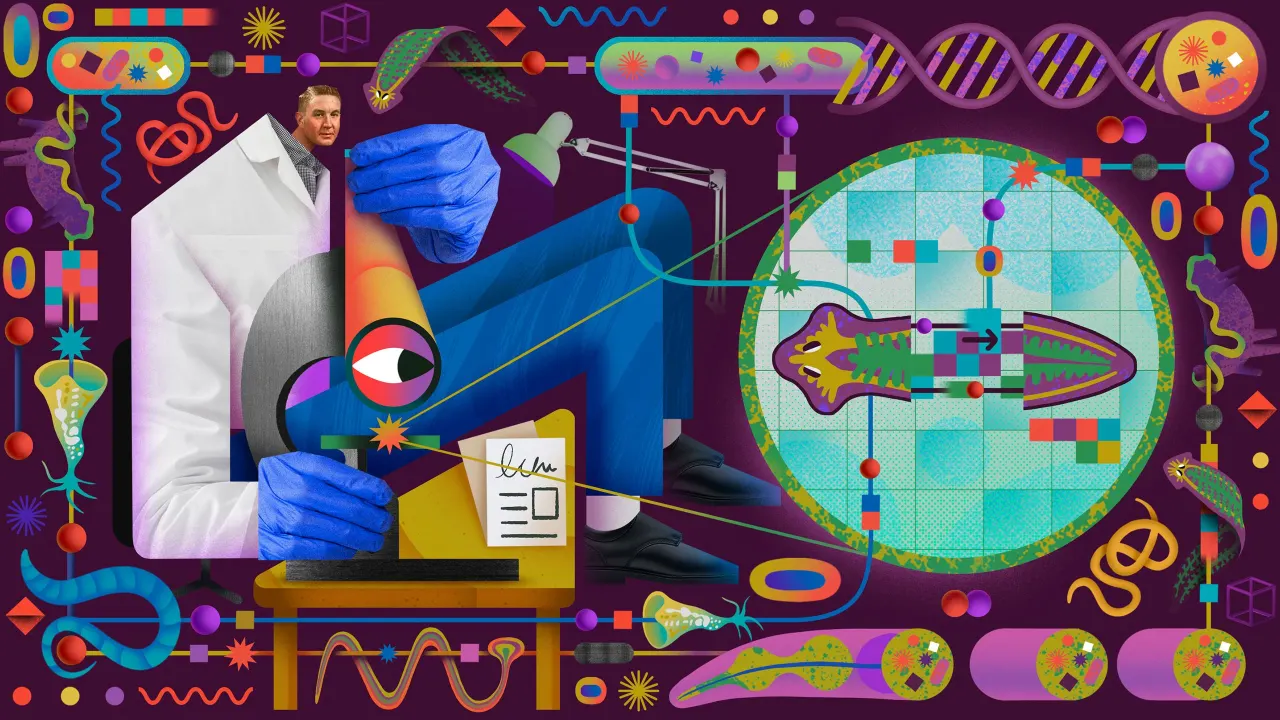
Harvard neuroscientist Sam Gershman’s lab is trying to reproduce 1960s experiments that appeared to show planarian flatworms could be trained and pass memories to other worms through cannibalism. The work matters because confirming those claims could offer clues about memory beyond the brain, while repeated failures raise questions about the original findings.
Research assistant Kelso collected wild worms from rivers and lakes after laboratory-supplied specimens proved unsuitable, but none learned to associate a bright light with an electric shock as earlier studies reported. Planarians can regenerate from tiny fragments, and past researchers said trained worms’ memories could transfer when they were eaten; the article describes a mystery that has persisted for about 60 years.
In short
- Harvard researchers are revisiting claims that worms can learn.
- Earlier studies said memories transferred through cannibalism.
- Modern attempts have not reproduced the reported learning.
Steelman: both sides, in good faith
The strongest fair case each way — we don't pick a winner.
The case for
If the original findings can be reproduced, they could reveal that memory depends on biological processes beyond the brain and broaden how scientists understand learning and regeneration. The unusual claims are worth testing carefully because they could open new lines of research, even if the mechanism remains unknown.
The case against
Repeated failures to train the worms, including in the current work, make the original claims difficult to rely on without robust replication. Extraordinary conclusions about memory transfer require clear, repeatable evidence, and the early results may have reflected experimental limitations or chance rather than a real effect.
Explained simply
Planarians are small flatworms that can regrow much of their bodies after being cut. In the 1960s, researchers reported that they could teach the worms to react to light and that another worm might acquire the response by eating a trained one.
Harvard neuroscientist Sam Gershman and his lab are now trying to repeat those experiments, using worms gathered from rivers and lakes after supplied specimens proved unsuitable. Their attempts have not produced the reported learning response.
The question matters because reproducing the findings could help scientists understand how memory works, while continued failures could cast doubt on the original results. Researchers have been trying to resolve the puzzle for about 60 years.
Americas Research Science World