At least ten killed in large-scale Russian missile and drone strikes on Kyiv
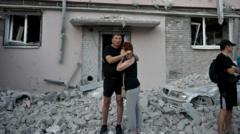
Russian forces conducted a substantial overnight assault on Ukraine's capital using missiles and drones, resulting in at least ten confirmed deaths across multiple neighbourhoods. The strikes produced visible destruction including blast craters, fires that engulfed buildings such as a hotel and ambulance station, and extensive damage to residential infrastructure. Civilians sheltered in underground metro stations and designated areas as air defence systems engaged throughout the attack, with children reportedly among the casualties.
Russia's Defence Ministry attributed the strikes to energy and defence infrastructure in retaliation for recent Ukrainian attacks on Russian power facilities, whilst Ukrainian officials stated Moscow had deliberately targeted residential areas and civilians. The attack came after President Zelensky received intelligence warnings and cut short an official visit, marking the first major assault of this scale in more than two weeks. Poland activated fighter jets as a protective measure following the strike, and the assault occurred as Russian forces continue their advance in eastern Ukraine toward the strategically significant city of Kostyantynivka.
In short
- Russian forces launched a major overnight missile and drone attack on Kyiv, killing at least 10 civilians and striking multiple residential areas and civilian infrastructure.
- Russia claimed the strikes targeted energy and defence facilities in response to Ukrainian attacks; Ukraine accused Moscow of deliberately targeting civilians.
- First large-scale assault in over two weeks; Poland activated defensive fighter jets after Zelensky warned of the incoming attack.
Steelman: both sides, in good faith
The strongest fair case each way — we don't pick a winner.
The case for
Russia maintains that Ukraine's critical energy and defence infrastructure represents a legitimate military target in wartime, as these facilities directly support the adversary's war-fighting capability. Attacks on such infrastructure are lawful under international humanitarian law when they serve a clear military purpose, even if civilians are located nearby; the presence of civilians does not automatically render military infrastructure off-limits if reasonable precautions have been taken. Russia has responded with broadly equivalent strikes following Ukrainian attacks on Russian power infrastructure, arguing this constitutes a proportional response within accepted practices of modern warfare.
The case against
Ukraine argues that Russia's pattern of strikes demonstrates deliberate targeting of civilian areas and purely civilian infrastructure—residential buildings, a hotel, and ambulance stations—facilities with no credible military purpose. The timing of night-time assaults, when civilians shelter indoors, and the scale of destruction in densely populated neighbourhoods suggest intent to harm the civilian population itself rather than achieve a specific military objective. International humanitarian law prohibits attacks causing excessive civilian harm relative to any military advantage; a systematic campaign destroying civilian housing cannot be justified as proportional or necessary, and may constitute war crimes.