World news and discussion on TalkFuse.
AWS Confirms Permanent Data Loss from Iranian Drone Strikes on Gulf Infrastructure
Developed over time first seen 2 months ago
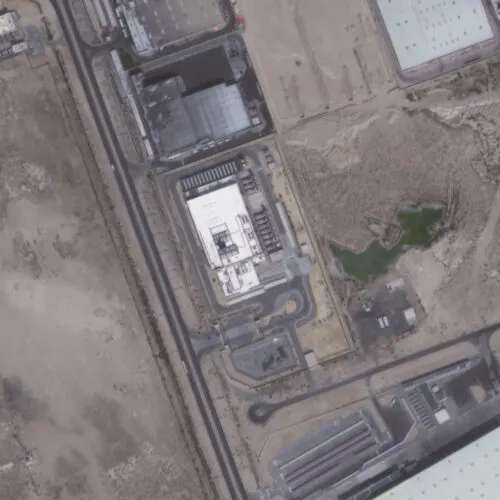
Newly obtained photographs, provided to the BBC's US partner CBS by active military personnel, reveal extensive Iranian drone strike damage to American bases in Saudi Arabia and Kuwait that officials say was not fully disclosed to the public. The images, released alongside a Pentagon watchdog report, corroborate and expand on earlier revelations that the same Iranian campaign caused permanent data loss for some Amazon Web Services customers whose information was stored at affected Gulf data centres, underlining the broad civilian and military fallout from the strikes.
The photographs show a Boeing E-3 Sentry radar aircraft torn in half at Prince Sultan Air Base, along with flattened trailers and a damaged four-storey building at Camp Buehring and Camp Arifjan in Kuwait. The Pentagon inspector general's report found that Iranian strikes damaged or destroyed hundreds of buildings across bases in Kuwait, Bahrain, Qatar, the UAE, Saudi Arabia, Iraq, Oman and Jordan, with equipment losses totalling $3.7bn (£2.8bn) and overall US war spending reaching $33.4bn (£24.7bn) by 29 June. A former national security official said the damage showed America "had not adequately prepared its defences" and suggested China and Russia may have assisted Iran's targeting, while US Central Command did not immediately respond to requests for comment.
- Sources
- 2
- Outlets
- 2
- Left · Centre · Right
- 0 · 1 · 0
In short
- New photos show severe Iranian strike damage at US Gulf bases
- Pentagon watchdog: hundreds of buildings hit, $3.7bn in equipment lost
- Builds on AWS's confirmed permanent data loss from the same strikes
How this story developed
- 2 months ago In March 2026, Iranian drone strikes damaged critical infrastructure across the Persian Gulf region, affecting both U.S. military installations in Saudi Arabia and Kuwait as well as commercial data centre facilities in Bahrain and the United Arab Emirates.
- 2 months ago Newly obtained photographs, provided to the BBC's US partner CBS by active military personnel, reveal extensive Iranian drone strike damage to American bases in Saudi Arabia and Kuwait that officials say was not fully disclosed to the public.
Full account
Amazon Web Services (AWS) has confirmed that some customer data hosted in its Bahrain and United Arab Emirates cloud regions has been permanently lost, roughly six months after Iranian drone strikes struck data centre facilities in both countries. In a dashboard update posted on 15 September and first reported by Reuters, AWS said it had been "unable to restore access to the resources and data" in several of the affected facilities, indicating that the damage inflicted in the opening days of the wider conflict was more severe than the company had previously disclosed.
According to the update, the loss was uneven across the two regions. In the UAE, data was irretrievably lost in only one of three availability zones (mec1-az2), with AWS saying it continues to work on recovering resources in the remaining two. In Bahrain, however, the company said it could not restore access across all three of its availability zones, stating that the cumulative damage "spanned multiple Availability Zones and exceeded what our regional and multi-AZ services are designed to withstand" — an admission that the facilities suffered harm beyond the resilience built into AWS's disaster-recovery architecture. The Bahrain and UAE regions were first hit on 1 March, in the early days of a war that began after US-Israeli strikes on Iran on 28 February; Bahrain was struck again on 1 April, and a further, more targeted missile strike attributed to Iran's Islamic Revolutionary Guard Corps hit a remaining Amazon facility there on 24 July, damage later corroborated by satellite imagery. AWS said it had urged customers early on to migrate workloads and use off-site backups, and reportedly issued around $150 million in service credits, with most affected customers having already relocated their operations by the time of the later strikes. The company has pledged a further update on Bahrain's long-term recovery in early 2027.
The disclosure sits within a broader picture of damage to Western infrastructure and military installations across the Gulf during the conflict. Separately, the BBC and its US partner CBS reported obtaining undated photographs, supplied by active-duty military personnel, showing extensive destruction at American bases in Saudi Arabia and Kuwait, including a Boeing E-3 Sentry radar aircraft torn apart at Prince Sultan Air Base, flattened trailers and a shredded tent structure at Camp Buehring, and a damaged multi-storey building at Camp Arifjan. That reporting followed a Pentagon watchdog assessment that hundreds of buildings and structures at US Middle East bases had been damaged or destroyed. An anonymous service member told CBS the scale of the damage had not been properly communicated to the American public, while Centcom did not immediately respond to requests for comment and the White House referred enquiries to the command.
Commentators cited by the BBC suggested the pattern of destruction pointed to broader shortcomings in regional defences. Brian Katulis, a former national security official who has served under both Democratic and Republican administrations, said the images indicated the United States had not adequately prepared its defences, and pointed to what he described as strong evidence that adversaries such as China and Russia may have assisted Iran with targeting — while also criticising the Trump administration for inaction on the underlying vulnerabilities. AWS's statement, by contrast, made no reference to military installations or allegations of external assistance to Iran, framing the episode strictly in terms of its own infrastructure's resilience and its commercial response to customers.
Where outlets differ
From the full account, which is AI-written from the sources:
The two accounts cover related but distinct aspects of the same conflict: the AWS-focused reporting concerns permanent commercial cloud-data loss in Bahrain and the UAE, while the BBC/CBS reporting concerns physical damage to US military bases in Saudi Arabia and Kuwait — there is no overlap in named facilities.
The AWS-derived account is sourced to a company dashboard statement and Reuters' initial report, giving a corporate, largely uncontested narrative; the BBC/CBS account relies on unverified photos from anonymous military personnel and a Pentagon watchdog report, and includes contested political commentary (Katulis's claims about inadequate US defences and possible Chinese/Russian assistance to Iran) that the AWS-focused reporting does not touch.
Centcom and the White House did not comment for the BBC's story, whereas AWS spoke directly and at length via its own dashboard update, with no indication in the source material that Amazon's account was independently verified beyond the July satellite imagery.
The BBC report emphasises an allegation of a transparency gap — that the extent of damage "hasn't been communicated to the American public" — a framing absent from the AWS-focused reporting, which instead emphasises AWS's proactive customer communications and credits.
Steelman: both sides, in good faith
The strongest fair case each way — we don't pick a winner.
The case for
Critics, including the former national security official quoted in the report, argue that the scale of destruction shown in these photographs and detailed in the Pentagon inspector general's findings should have been disclosed to the public and to Congress far sooner. They contend that withholding the true extent of damage to bases, aircraft and allied civilian infrastructure such as AWS data centres undermines democratic accountability, obscures genuine shortfalls in air and missile defence readiness, and leaves troops, allied nations and paying customers unable to make informed decisions about risk. On this view, transparency about failures is essential to prompting the investment and reform needed to prevent recurrence.
The case against
Others, including defenders of the Pentagon's handling of the episode, would argue that phased and measured disclosure during an active or recently concluded conflict is standard practice rather than concealment, since premature release of damage assessments can hand adversaries valuable targeting feedback and complicate ongoing operations or negotiations. They would note that an inspector general's report being produced and released at all demonstrates functioning oversight, that no defence system can intercept every drone in a large-scale, possibly state-assisted campaign, and that judging military preparedness with the benefit of hindsight risks unfairly punishing commanders who made reasonable decisions under genuine uncertainty.
Explained simply
Iranian drones and missiles struck a series of US and allied military bases across the Gulf earlier this year, hitting sites in Saudi Arabia, Kuwait, Bahrain, Qatar, the UAE, Iraq, Oman and Jordan. These bases sit alongside civilian infrastructure in the region, including data centres used by cloud computing firms such as Amazon Web Services, which is how a military strike ended up affecting ordinary internet users and businesses whose data was stored there.
The key players are the Iranian military, which carried out the strikes, and US Central Command, which oversees American forces in the region. A Pentagon internal watchdog has also been examining how much damage occurred and how it was reported, while new photographs supplied by serving military personnel have added detail beyond what was previously made public.
This matters because it links a geopolitical and military event to everyday digital services, showing how damage to physical infrastructure in a conflict zone can cause real, sometimes permanent, consequences for cloud storage customers far removed from the fighting. It also raises questions about transparency, since officials say the scale of the damage was not fully disclosed at the time.
Coverage · 2 sources
Americas Art Culture Middle East World