AWS mumbles about its cost-busting networking tech when it should be shouting
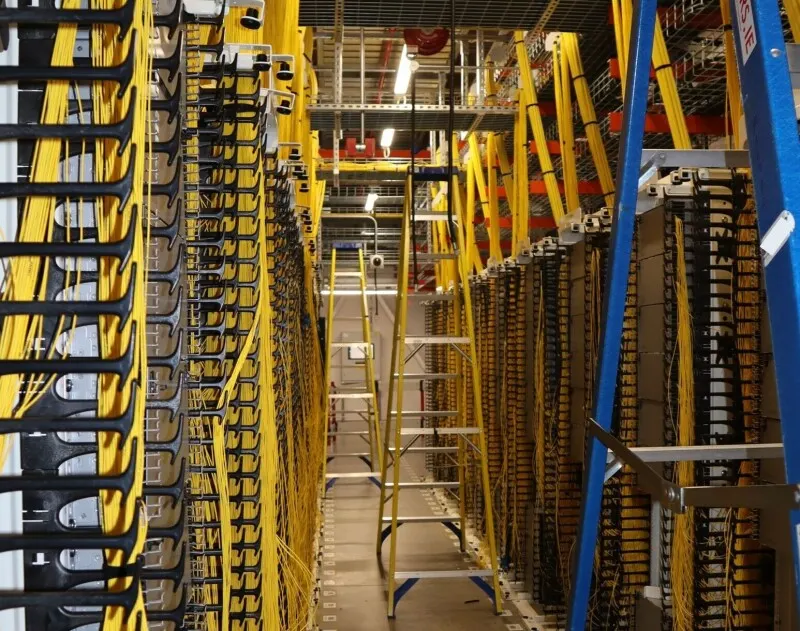
AWS has developed a datacentre networking design that uses a flat, single-tier architecture and commodity hardware, aiming to make its infrastructure more resilient and cheaper to operate. The article argues that AWS has not promoted the achievement strongly enough, despite claims that the approach can reduce energy use by up to 40 per cent and is now standard in many new facilities. It matters because networking savings at AWS’s scale could materially affect cloud costs, margins and the environmental footprint of expanding datacentres.
AWS executives acknowledged that much of the resulting efficiency gain has effectively improved the company’s margins rather than being directly passed on to customers. However, the article notes that AWS has generally kept prices unchanged for many existing services since 2020, aside from areas such as public IPv4 addresses and certain GPU capacity products. It also highlights that AWS’s pricing bundles extensive underlying infrastructure, security and operational costs into individual service charges, while newer Graviton-based instance generations have seen only limited price increases.
- AWS says its new network design can cut energy use by up to 40 per cent.
- The savings have largely strengthened AWS margins rather than directly lowering prices.
- AWS has mostly held existing cloud service prices steady despite rising costs.
New here? Start with this
Amazon Web Services (AWS) is a major cloud computing provider, renting businesses and organisations access to computing power, storage and other online services. Those services depend on large datacentres, where networks connect thousands of machines and help keep services running if equipment fails.
AWS’s newer network design uses a single layer of connections and widely available hardware, rather than more complex arrangements. The approach can reduce the energy and equipment needed to move data around its datacentres, which could affect the cost and environmental impact of operating them at scale.
Those savings may influence AWS’s costs and profits, as well as the prices customers pay. AWS prices its services to cover many parts of running the cloud, so infrastructure savings do not necessarily show up as lower bills.
Both sides, in good faith
The strongest fair case each way — we don't pick a winner.
The case for
AWS should publicise the networking design more clearly because it appears to be a significant engineering achievement with potential benefits for resilience, energy consumption and the economics of cloud computing. Greater transparency would help customers and policymakers understand how hyperscale providers are reducing the footprint of new datacentres, while competition could encourage wider adoption of similar techniques. If the savings improve AWS’s cost base, advocates may also argue that explaining the innovation would strengthen trust that stable prices and future service investment rest on genuine efficiency gains.
The case against
AWS has reasonable grounds to communicate cautiously, since infrastructure innovations are complex, commercially sensitive and difficult to reduce to a headline claim without overstating their effect on individual customer bills. The company can reasonably retain efficiency gains to fund reliability, security, capacity expansion and returns on the substantial risks and capital investment involved in running a global cloud platform. Stable prices for many established services, alongside bundled operational benefits and relatively modest pricing changes for newer products, may indicate that customers already receive part of the value even if it is not presented as a direct networking discount.