Bank of England governor: AI risks forcing global economic downturn
Developed over time first seen 2 months ago
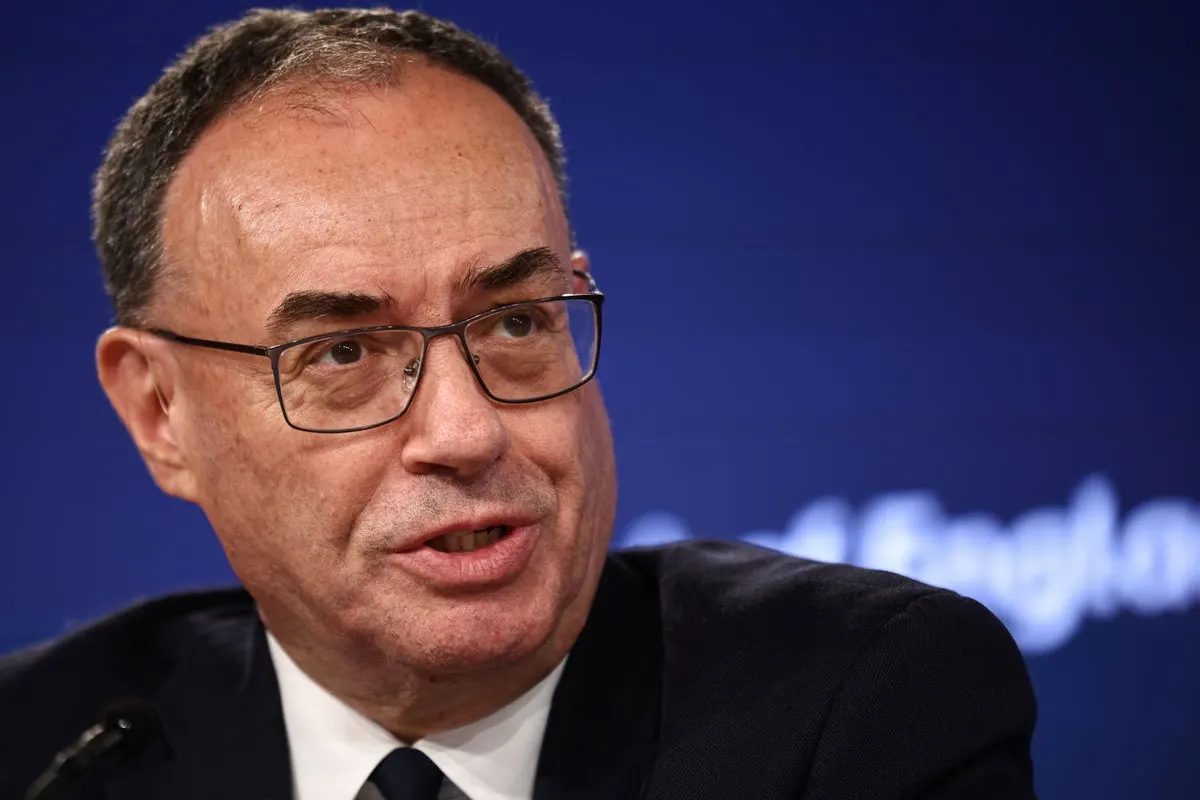
Bank of England governor Andrew Bailey has warned G20 finance ministers, meeting in North Carolina, that a collapse of the artificial intelligence investment boom could trigger a disorderly market correction spreading across global borders. Writing as chairman of the Financial Stability Board, he said markets remain vulnerable given fragilities in sovereign debt markets, with rising leverage combined with high valuations and growing cross-investment between AI firms and hyper-scalers threatening to amplify any downturn. He also flagged volatility linked to energy supply shocks stemming from the US-Iran war, saying he remained concerned that a large shock, or combination of shocks, could trigger multiple vulnerabilities at once.
The warning coincided with Chancellor John Healey announcing a £100 million fund to back British AI start-ups, part of the Government's push to build "Sovereign AI" capacity so the UK is less reliant on foreign-developed technology and infrastructure. Ministers want firms to compete for the funding to tackle challenges such as NHS waiting lists and patient care, as well as strengthening cybersecurity and defence. Healey said the scheme would help ensure AI's benefits reach "every UK postcode" and give Britain "a lead role" in harnessing the technology for jobs, public services and growth.
- Bailey warns AI investment bubble could spark global market correction
- Cites leverage, high valuations and AI-hyperscaler cross-investment risks
- Healey unveils £100m fund for British AI start-ups the same day
New here? Start with this
Bank of England governor Andrew Bailey, who also chairs the international Financial Stability Board, has warned G20 finance ministers that a sudden slump in the artificial intelligence investment boom could spark a wider global economic downturn. The concern centres on how much money has flowed into AI companies and the technology firms supporting them, and whether current valuations and debt levels leave the system exposed if confidence suddenly drops.
The warning matters because AI has become one of the biggest drivers of stock market growth and business investment worldwide in recent years. If that momentum reversed sharply, the effects could spread well beyond the tech sector, touching pension funds, other markets and economies already dealing with pressures such as government debt and energy price swings.
At the same time, the UK government is pushing ahead with its own AI ambitions. Chancellor John Healey has unveiled a £100 million fund to support British AI start-ups, part of a broader "Sovereign AI" strategy aimed at reducing the UK's reliance on foreign technology and using AI to help with areas such as the NHS, cybersecurity and defence.
Both sides, in good faith
The strongest fair case each way — we don't pick a winner.
The case for
Advocates of pressing ahead with AI investment, including the Government's new £100 million fund, argue that artificial intelligence is a genuinely transformative technology and that nations which hesitate risk being permanently left behind economically and strategically. Building domestic, or "sovereign", AI capability is seen as prudent statecraft, reducing dependence on foreign firms for critical infrastructure while directing benefits towards public priorities such as NHS waiting lists, cybersecurity and defence. On this view, a modest, targeted public fund is a proportionate way to seed a competitive homegrown industry and ensure growth and jobs are spread across the country, rather than a reckless bet on a speculative bubble.
The case against
Those who share Andrew Bailey's caution argue that his warning reflects the sober responsibility of a central bank governor to flag systemic risk before it materialises, not opposition to AI itself. They point to genuinely worrying features he has identified: rising leverage, stretched valuations, and dense cross-investment between AI firms and hyperscalers that could transmit a shock rapidly through global markets, compounded by fragile sovereign debt markets and energy volatility from the US-Iran war. From this perspective, prudence means strengthening financial safeguards and being clear-eyed about concentration risk before committing further public or private capital, since a disorderly correction could cause far greater harm to jobs, pensions and public finances than the cost of moving cautiously now.
More coverage
AI Art Business Culture Markets Politics Technology UK World