World news and discussion on TalkFuse.
“Barely playing three notes”: the guitarists Angus Young knew made “the greatest solos”
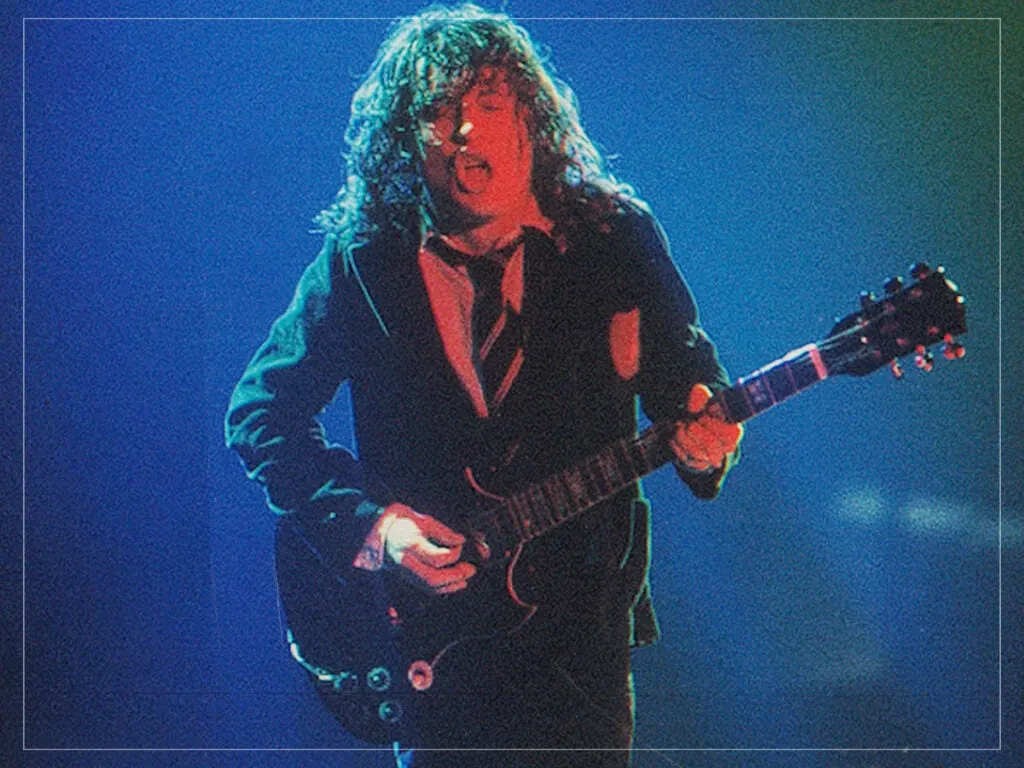
AC/DC achieved lasting success by adhering to a minimal musical formula that prioritises simplicity over innovation. Angus Young and his brother Malcolm built their reputation on straightforward riffs—such as the three-chord foundation of 'Back in Black'—delivered with precision and impact. Rather than chase contemporary trends like acoustic experimentation or electronic elements, they maintained their core identity, trusting that effective execution of basic structures would resonate more powerfully with audiences than complex arrangements.
Young's guitar philosophy stems from his deep roots in blues music, where he discovered that the most compelling solos came not from technical virtuosity but from authentic emotional expression. He credits blues legends like Freddie King and Albert King as inspirations, noting their ability to convey depth and feeling using minimal note choices. In his view, a guitarist's value lies not in how they demonstrate technique but in how they interpret and deliver the music itself, a principle that has shaped his distinctive playing style throughout his career.
In short
- Angus Young prioritises emotional simplicity over technical complexity in his guitar playing
- AC/DC's enduring approach relies on refined execution of minimalist, blues-influenced musical formulas
- Young credits blues legends rather than rock virtuosos as his primary creative influences
Steelman: both sides, in good faith
The strongest fair case each way — we don't pick a winner.
The case for
Simplicity executed with emotional authenticity and precision, rooted in blues tradition, resonates more profoundly with audiences than technical complexity or contemporary trend-chasing. AC/DC's sustained success demonstrates that clear, purposeful execution of fundamental musical structures carries more weight than elaborate arrangements. Angus Young's philosophy shows that a guitarist's value lies in conveying genuine feeling and delivering impactful performances, not in demonstrating technical virtuosity for its own sake.
The case against
Musical artistry naturally evolves as musicians develop new techniques and explore broader creative possibilities, and constraining oneself to a deliberately simple formula represents artistic caution rather than clarity. Emotional expression and technical sophistication need not conflict; accomplished musicians integrate innovation and contemporary approaches whilst maintaining authentic feeling and connection. Dismissing complexity as mere trend-chasing presents a false dichotomy, for genuine artistic growth requires challenging oneself to expand beyond established patterns, even at the risk of occasional missteps.
Explained simply
AC/DC are an Australian rock band formed by brothers Angus and Malcolm Young. Angus plays lead guitar, while Malcolm helped shape the band’s sound with rhythm guitar and songwriting. Their music is known for strong, repeated guitar riffs and a direct rock style.
Angus Young has often pointed to blues guitarists Freddie King and Albert King as influences. Blues solos can use a small number of notes, with phrasing and tone carrying much of the expression. That tradition helps explain why Young values how a guitarist makes notes sound as much as technical complexity.
AC/DC’s approach has stayed rooted in that simple, forceful sound across decades of changing musical fashions. Its success has made the band a prominent example of how repetition and precision can give familiar musical structures a lasting appeal.
Americas Art Culture Entertainment Music World