Culture news and discussion on TalkFuse.
Battlefield 6’s newest and largest map is good, but I worry it will end up being nothing more than a curiosity
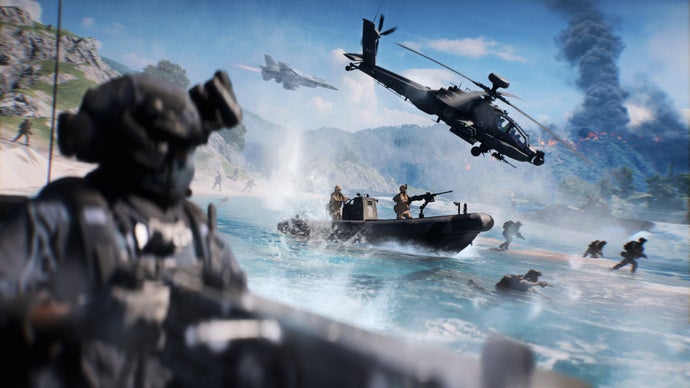
A Eurogamer preview of Battlefield 6's Season 4 update previews Tsuru Reef, the game's largest map to date, set to launch the following day. The writer, having spent three hours testing all nine capture points ahead of release, praises the map's ambitious scale and its ability to accommodate ground, air and naval combat, but expresses concern that its sheer size may make it a rarely played novelty rather than a regular favourite among the wider map roster.
The map was built following the popularity of Season 3's large Golmud remake, aiming to be Battlefield Studios' definitive showcase of the series' scale, with almost every ground, air and water vehicle available, some unlocking later in matches or after capturing specific points. Aircraft and boats benefit most from the extra space, with jets able to hunt from a distance, each team starting with two transport helicopters, and the return of BF4-style server-synced waves for naval combat, though the writer notes the novelty of boat combat wore off faster than expected.
In short
- Battlefield 6's biggest-ever map, Tsuru Reef, launches with Season 4
- Nine capture points support ground, air and naval combat at scale
- Reviewer praises its ambition but fears it may be rarely played
Steelman: both sides, in good faith
The strongest fair case each way — we don't pick a winner.
The case for
Defenders of large-scale maps argue that Battlefield's core identity rests on vehicular combat across expansive terrain. Tsuru Reef's scale enables genuine air combat with proper dogfighting distance, meaningful naval engagement in separate battle zones, and ground tactics that reward diverse approaches—strengths that differentiate the franchise from competitors. The previous Golmud remake's success demonstrates player appetite for ambitious maps, and such scale creates emergent gameplay across multiple distinct areas that smaller, tighter designs cannot match.
The case against
Critics contend that sheer size does not guarantee engagement if the map feels empty or overwhelming to navigate. Multiplayer communities often prefer tightly-designed, balanced maps with responsive pacing rather than sprawling terrain that can feel sparse. If Tsuru Reef underperforms in regular play—as the writer worries—it becomes a wasted resource; a rarely-played map means reduced server populations when it rotates in, creating hollow, unsatisfying matches. The writer's own note that boat combat novelty wore off quickly suggests the map's ambitious features lack staying power, and development effort might have been better distributed across several focused, consistently popular alternatives.
Explained simply
Battlefield 6 is a large-scale multiplayer shooter where players fight across expansive maps with vehicles like tanks, helicopters and jets. The game receives regular seasonal updates that introduce new maps, each designed to offer different gameplay experiences.
Tsuru Reef is the largest map Battlefield 6 has released, featuring multiple capture points scattered across land, air and sea environments. It includes spawns for numerous vehicles, from transport helicopters to fighter jets to naval vessels, with some unlocking only after key objectives are captured.
The map's development follows positive reception given to a large-scale map remake in the previous season. It features expansive areas specifically designed for ground, air and naval combat to unfold simultaneously across different parts of the map.