Beijing uses Great Firewall of China to stop its citizens seeing coverage of Nepal-Tibet floods
Developed over time first seen 2 months ago
The article reports that Chinese authorities have tightly restricted coverage of severe flooding and mudslides affecting Nepal and Tibet, limiting what people inside China can see about the damage. It argues that this censorship matters because it obscures the scale of a disaster in Tibet, where access for journalists is already heavily controlled.
It says floodwaters destroyed the Rasuwagadhi border crossing near Friendship Bridge and that rescuers reached the site only after roads were washed away. China reported seven bodies recovered and more than 500 people missing, while Nepal reported 668 deaths and 2,426 missing; the article says Nepal has released far more footage and updates than China.
- China reportedly restricted coverage of flooding in Tibet.
- Rasuwagadhi border crossing was reportedly destroyed.
- Nepal reported substantially higher casualty figures.
Both sides, in good faith
The strongest fair case each way — we don't pick a winner.
The case for
Authorities could argue that restricting unverified disaster coverage helps prevent rumours, panic and misleading reports while rescue operations are under way. They may also say that centralising updates through official channels supports coordinated emergency response and protects sensitive information around a tightly controlled border region.
The case against
Critics would argue that limiting reporting prevents people from understanding the disaster’s scale, checking official accounts and sharing information that could help locate those missing. With journalists’ access already restricted in Tibet, censorship also weakens public scrutiny and makes it harder to assess why Chinese and Nepalese figures and coverage differ.
Full account
Beijing has sharply restricted information about severe flooding and landslides affecting areas around the Nepal–Tibet border, according to one report. Videos from the disaster zone showed a fast-moving surge of water, mud and debris engulfing the Rasuwagadhi border crossing near Friendship Bridge, as people attempted to escape through the narrow mountain valley. The report says that, despite the impact on Tibet, Chinese state outlets have published very limited imagery and independent journalists have not been able to reach the area.
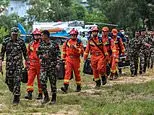
Chinese authorities have reported recoveries of bodies and a large number of people unaccounted for, while Nepalese figures cited in the reports are substantially higher. Rescue teams have been sent into Gyirong and surrounding areas, where damaged roads and steep terrain have complicated access. State media described rescuers travelling on foot through forest and over cliffs to reach the destroyed border complex, but little visual evidence or testimony from survivors has been made public.
A separate report focuses on footage said to show the apparent trigger for the disaster: a glacier collapse on or near Langtang Lirung in the Himalayas. Filmed by a Chinese tour guide in Tibet and reportedly verified by The New York Times, the footage shows ice and debris breaking from a ridge before a large dust cloud rises from the valley. The account says the collapse caused a landslide, temporarily impounded water and then released a destructive flow into downstream river channels.
Search operations have been affected by poor weather, although helicopters reportedly resumed flights when conditions improved. The reports also describe concern about further flooding from upstream lakes and say that foreign visitors may have been among those caught in the affected trekking and pilgrimage areas. Britain was reported to have sent a rapid deployment team to Nepal to assist British nationals and their families.
Where outlets differ
Source 1 concentrates on Chinese censorship, restricted access to Tibet and the limited imagery released by state media; Source 2 concentrates on newly surfaced footage and the possible glacial-collapse sequence behind the flooding.
The casualty figures are presented differently: Source 1 contrasts China’s reported toll with much larger Nepalese figures, whereas Source 2 gives a combined death toll of 676 and says nearly 3,000 people were missing.
Source 2 adds details about foreign tourists, British nationals, helicopter operations and upstream lakes; these are not the principal focus of Source 1.
Source 2 attributes verification of the glacier footage to The New York Times, while Source 1 does not discuss that footage or independently establish the disaster’s cause.