Big Walk Ending, Explained: What Happens Once You Unlock the Gate
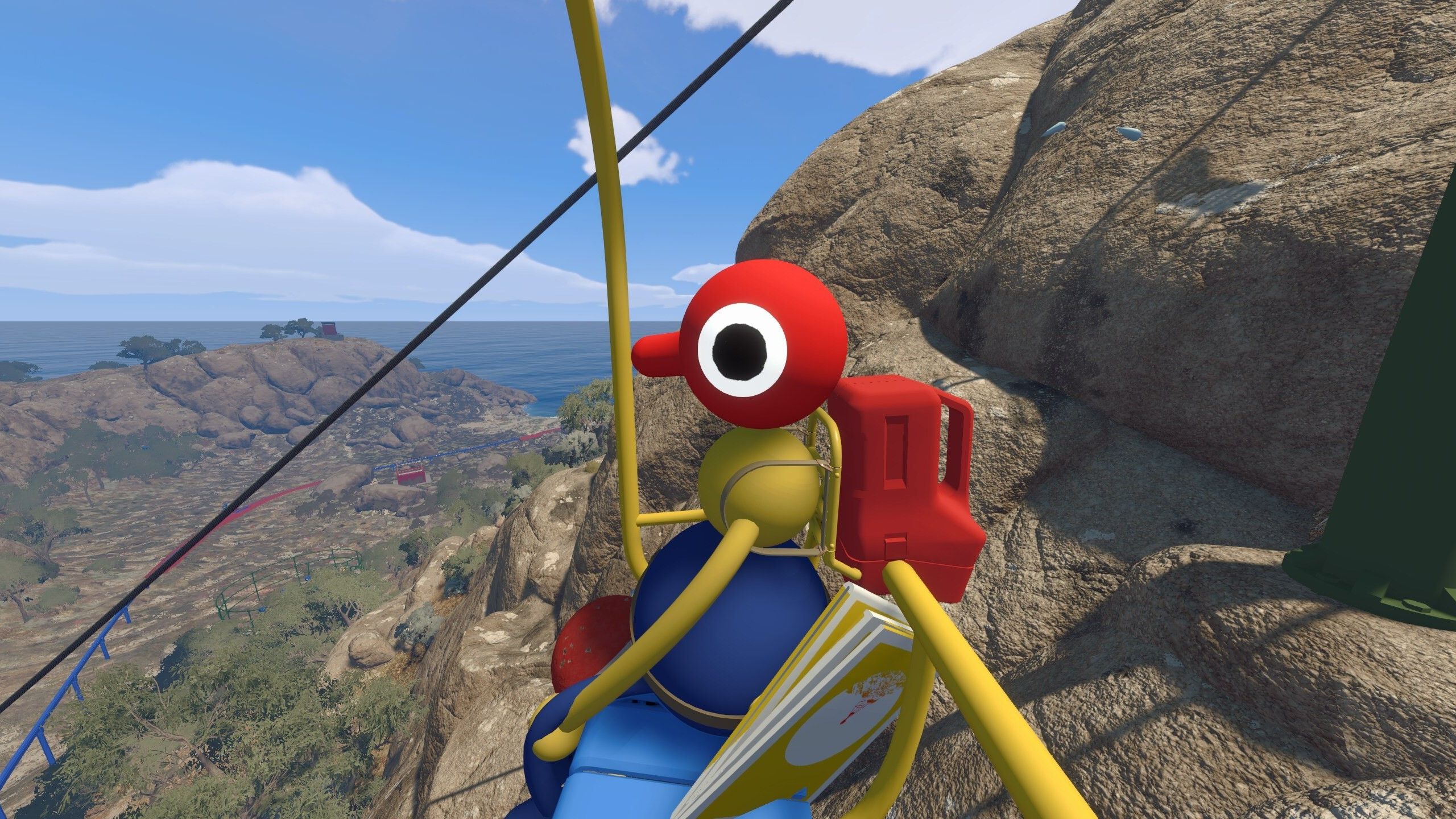
Big Walk, the chilled-out co-operative puzzle game from developer House House, features a finale that transforms its playful open-world exploration into an unexpectedly powerful emotional experience. Players spend the game exploring an island of towers, collecting gourds to unlock keys and gradually opening a giant gate, while learning to communicate through body language, gestures and improvised signals rather than always relying on speech.
In the closing sequence, players pass through the gate into a surreal tower where voice communication is removed entirely and each character's distinguishing colour is stripped away, forcing the group to rely purely on the non-verbal cues and trust built up over the course of the game. Far from being frustrating, this culminates in a poignant moment as players, now recognising one another only through learned mannerisms and in-jokes, exit the tower to watch the end credits together, closing out what the writer describes as one of the most emotionally affecting experiences they've had with a video game.
- Big Walk's ending strips away voice chat and player colours entirely.
- Players must rely on learned body language and trust to finish.
- The finale delivers a surprisingly emotional, memorable co-op payoff.
New here? Start with this
Big Walk is a co-operative video game made by House House, a small studio known for playful, character-driven titles. Players work together to explore an island dotted with towers, solving puzzles and gathering items called gourds to unlock keys, all while gradually opening a large gate that serves as the game's central goal. Communication in the game leans heavily on body language and improvised gestures rather than spoken dialogue.
The game has drawn attention for how its ending changes the experience players have grown used to. Once the gate is opened, a final sequence strips away tools players relied on earlier, such as voice chat and the colours used to tell characters apart, leaving them to recognise each other only through habits and cues picked up during play.
This shift has been highlighted as an unusually effective piece of game design, turning a light-hearted exploration game into something more reflective by the time the credits roll. The story matters to readers interested in how games can create emotional or social experiences through mechanics alone, without relying on dialogue or a conventional narrative.