Big Walk review
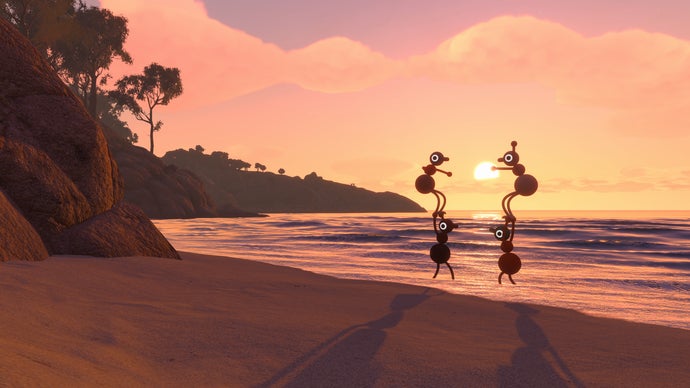
Big Walk is a new co-operative puzzle-adventure from House House, the Melbourne studio behind Untitled Goose Game, released for small groups of friends to play together online. Rather than repeating the goose-based slapstick of its predecessor, the game carves out its own niche as a "hangout game," blending relaxed exploration with focused, collaborative puzzle-solving, and stands out as an unusually accomplished example of this increasingly popular multiplayer genre.
The game is designed for two to twelve players, with certain elements retuned depending on group size, and is set on a sprawling island wilderness dotted with colourful man-made landmarks. A deliberately aggressive proximity-chat system means players easily drift out of earshot of one another, reinforcing a recurring tension between togetherness and isolation that the review says defines the experience. Progression revolves around collecting round, gourd-like objects (nicknamed "kongs" by the reviewer's group) that unlock new abilities but are prone to comically rolling away, generating the kind of shared in-jokes and communication mishaps the game is built around.
- House House's follow-up to Untitled Goose Game reviewed positively
- Big Walk is a co-operative "hangout" puzzle-adventure for 2-12 players
- Proximity chat and rolling collectible objects drive its humour and teamwork
New here? Start with this
Big Walk is a new online multiplayer game made by House House, an Australian studio best known for the surprise 2019 hit Untitled Goose Game. Rather than another slapstick goose romp, this is a "hangout game," a growing genre built for friends to explore and chat together online, mixed with light co-operative puzzle-solving.
Groups of two to twelve players roam an island filled with quirky landmarks, working together to find items that unlock new abilities, while a chat system that only lets you hear nearby players means the group easily gets split up and separated. The review looks at how well this design captures the playful, sometimes chaotic feel of hanging out with friends, and considers it a strong new example of a genre that has become increasingly popular in recent years.