Technology news and discussion on TalkFuse.
Bill Gates sounds alarm on AI-powered cyberattacks, warns of ‘negative surprises’ within a year
Developed over time first seen 2 months ago
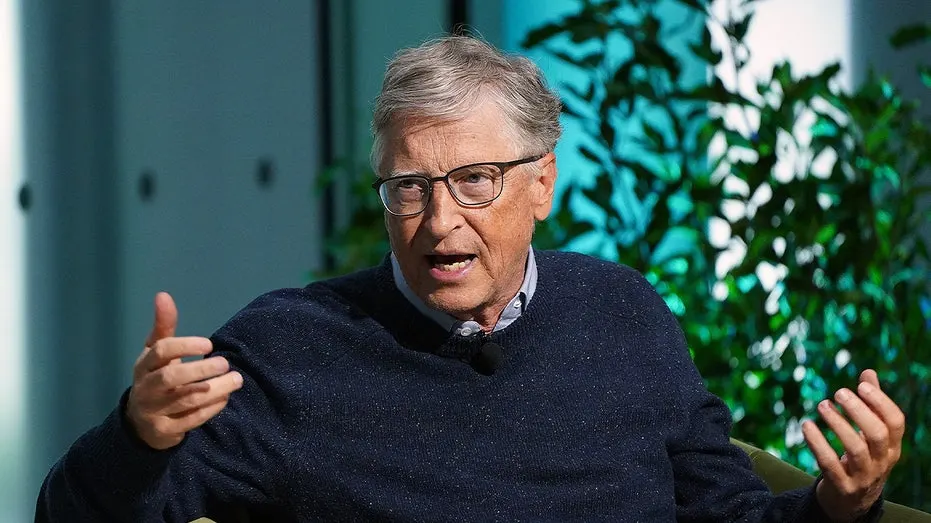
Bill Gates warned that increasingly capable AI tools could help criminals carry out more damaging cyberattacks over the next year, potentially disrupting financial systems, extorting businesses and manipulating markets. He said malicious users were getting access to powerful models without adequate safeguards, and described cybercrime as a more immediate concern than AI becoming uncontrollable.
CrowdStrike reported that attacks by AI-enabled adversaries rose 89 per cent in 2025, while the average time to move through a compromised network fell to 29 minutes. Gates also said governments were not doing enough to address risks such as AI-assisted biological threats, although he saw major effects from AI getting out of control as years away. A strategist cited in the article called for coordinated regulation and preparation for economic and workforce disruption.
- Sources
- 2
- Outlets
- 2
- Left · Centre · Right
- 0 · 0 · 2
In short
- Gates expects AI to intensify cyber risks over the next year.
- AI-enabled attacks rose 89 per cent in 2025.
- He urged more action on biological and economic risks.
How this story developed
- 1 month ago Bill Gates warned that AI-enabled cyberattacks could bring “negative surprises” over the next year, as criminals gain access to powerful models without adequate safeguards. He said attackers could extort businesses or disrupt financial systems and markets, describing cybercrime as the most immediate AI-related danger.
- 1 month ago Bill Gates warned that increasingly capable AI tools could help criminals carry out more damaging cyberattacks over the next year, potentially disrupting financial systems, extorting businesses and manipulating markets.
- 2 months ago Bill Gates warned Sunday that artificial intelligence will likely fuel a significant wave of cyberattacks over the next year, with criminal actors gaining access to increasingly powerful AI models without adequate safeguards.
Full account
Bill Gates has cautioned that artificial intelligence presents a substantial and imminent threat in the form of sophisticated cyberattacks anticipated within the coming year. During a CNN interview with Jake Tapper on Sunday, the Microsoft co-founder warned that the convergence of criminal intent, unguarded AI systems, and unrestricted access to cutting-edge technology creates conditions for widespread disruption and harm.
Gates articulated several probable attack vectors. Malicious actors could exploit AI to execute extortion campaigns against businesses, artificially influence stock prices, or manipulate betting markets. Beyond immediate cybersecurity concerns, he reiterated observations that artificial intelligence could facilitate the production of biological weapons, raising the theoretical risk of bioterrorism to levels fifty times greater than those posed by naturally occurring disease. He nonetheless characterised the biological threat as less pressing than cyberattack risks within the next twelve months.
Cybersecurity researchers have documented accelerating threats consistent with Gates' warnings. According to CrowdStrike's 2026 Global Threat Report, assaults employing artificial intelligence grew by 89 per cent year-over-year in 2025, whilst attackers' capacity to traverse compromised networks laterally has improved to an average timespan of merely 29 minutes—a marked reduction in detection window that exemplifies the operational sophistication now available to hostile actors.
Gates advanced a pragmatic regulatory approach, proposing frameworks analogous to those applied to aviation, automobiles, and medicines. Such guardrails, he argued, could enable continued AI advancement whilst constraining opportunities for misuse. When challenged on whether his rhetoric amounted to alarmism, he cited consensus amongst prominent figures in the artificial intelligence sector—including Sam Altman and Dario Amodei—that significant risks exist, framing his warnings as calibrated rather than hyperbolic.
Where outlets differ
From the full account, which is AI-written from the sources:
CNN emphasised Gates' nuanced regulatory position and his defence against accusations of doomerism; Fox News Digital prioritised the financial motivations behind attacks and American technological competitiveness.
Fox News Digital incorporated commentary from Democratic strategist Oliver Libby on geopolitical competition; CNN did not include this political dimension.
Fox News Digital prominently featured cybersecurity industry statistics; CNN focused more on the philosophical debate regarding regulatory balance.
CNN highlighted Gates' comparisons to existing regulatory frameworks; Fox News Digital foregrounded immediate commercial threats and extortion schemes.
Steelman: both sides, in good faith
The strongest fair case each way — we don't pick a winner.
The case for
Bill Gates and security experts warning of urgent danger point to documented evidence: the 89 per cent year-on-year increase in AI-enabled attacks and networks compromised in 29 minutes demonstrate material, near-term systemic risks. They argue that as sophisticated AI models become accessible to criminals without adequate safeguards, the financial incentives for extortion and infrastructure disruption create dangers that existing defences cannot adequately address, necessitating immediate regulatory intervention.
The case against
Sceptics argue that the threat reflects familiar cybercriminal evolution rather than unprecedented danger, noting that statistics may reflect improved detection rather than wholly new attack methods. They contend that regulatory overreach could stifle beneficial AI development without addressing the underlying security failures that enabled compromise, and that industry financial incentives and fundamental security practices remain more critical than new government restrictions.
Explained simply
Artificial intelligence is now being deployed in cyberattacks to breach computer systems and networks more efficiently than traditional hacking methods. Unlike conventional cyber criminals who manually search for vulnerabilities, AI can rapidly identify weaknesses, adapt to defences, and spread through networks at greater speed.
Security researchers have documented a significant rise in AI-enabled attacks, with incidents up 89 per cent last year. Attackers using these methods are moving through compromised networks in an average of 29 minutes, and are typically motivated by substantial financial gains through extortion and market manipulation.
Government regulation has not kept pace with AI's rapid advancement, creating a gap in safeguards around these powerful tools. Whilst the most existential risks from AI losing control remain years away, security experts and policymakers are increasingly focused on the immediate threat from AI-enabled criminal activity.
Coverage · 2 sources
Bias meters
From 2 rated sources.
Cybersecurity Technology World