Blame game as Brussels builds ‘Europe’s largest frying pan’ instead of shady square
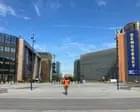
A redevelopment scheme for Schuman Square, the traffic roundabout at the heart of Brussels' EU quarter, has fallen far short of its ambitions, leaving a bare concrete expanse rather than the green, shaded meeting place that was promised. The centrepiece of the design, a steel canopy with a grass roof intended to shelter EU officials, local people and tourists, was never built, prompting critics to dub the space "Europe's largest frying pan" and disappointing the project's original backers.
An international competition in 2017 selected a Belgian-Danish architectural consortium to turn the square, named after EU founding father Robert Schuman, into an "urban agora" with a canopy modelled on the European parliament's hemicycle chamber. Construction did not begin until 2023, six years later, by which point costs had risen sharply due to Covid-era and Ukraine war-driven inflation, while the project was also complicated by underground tunnels, railway and metro infrastructure, security requirements around nearby EU buildings, and the square's use for frequent protests. Pascal Smet, the former Brussels mobility minister who launched the scheme in 2015, said he felt disappointed, angry and sad at the outcome, while the project's architect said he found the political process behind the delays difficult to understand.
- Brussels' revamped Schuman Square lacks its promised green shading canopy
- Costs spiralled after Covid and Ukraine war inflation delayed construction
- Former minister and architect express anger and confusion over the outcome
New here? Start with this
Schuman Square sits at the heart of Brussels' European Quarter, the roundabout ringed by the main EU institutions, including the European Commission's headquarters. In 2015 Brussels authorities launched a plan to redesign the square, and a Belgian-Danish architectural team won an international competition in 2017 with a design featuring a large steel-and-grass canopy meant to shade and shelter the space, turning it into a green gathering point for officials, residents and visitors alike.
Work did not start until 2023, six years after the design was chosen, by which time costs had climbed due to the economic effects of the Covid pandemic and the war in Ukraine. The site also proved technically difficult, with underground tunnels, railway and metro lines, security needs linked to nearby EU buildings, and the square's regular use for demonstrations all adding complications.
The result is a redevelopment that has not delivered the shaded, green centrepiece originally promised, leaving a largely bare paved area instead. The gap between ambition and outcome has drawn criticism and disappointment from those involved in setting the project in motion, including the Brussels official who initiated it and the architect who designed it, and has raised questions about how the scheme was managed as it moved from concept to construction.
Both sides, in good faith
The strongest fair case each way — we don't pick a winner.
The case for
Defenders of how the project was handled would point to a chain of largely unforeseeable and legitimate obstacles: a six-year gap dominated by a global pandemic and the inflationary shock of the Ukraine war, combined with the genuine technical difficulty of building over tunnels, railways and metro infrastructure beneath a square that also has to satisfy strict EU security requirements and remain usable for frequent protests. From this view, delivering a safe, functional public space at all under those constraints was a reasonable achievement, and abandoning or descoping an expensive canopy was a prudent, responsible use of public money once costs spiralled, even if it meant disappointing the original ambition.
The case against
Critics, including the scheme's original architect and its former political sponsor, would argue that a decade-long process which consumed significant public funds should have delivered on its central promise, namely shade and greenery for a square meant to be a genuine meeting place rather than a bare concrete expanse nicknamed 'Europe's largest frying pan'. From this perspective, the repeated delays and the political indecision behind them reflect poor project management and accountability, and if the defining feature of a competition-winning design could not ultimately be built, the public deserved a clearer and earlier explanation rather than a diminished result presented as the finished scheme.