Blizzard Has No Plans To Turn Battle.net Into A Steam Competitor
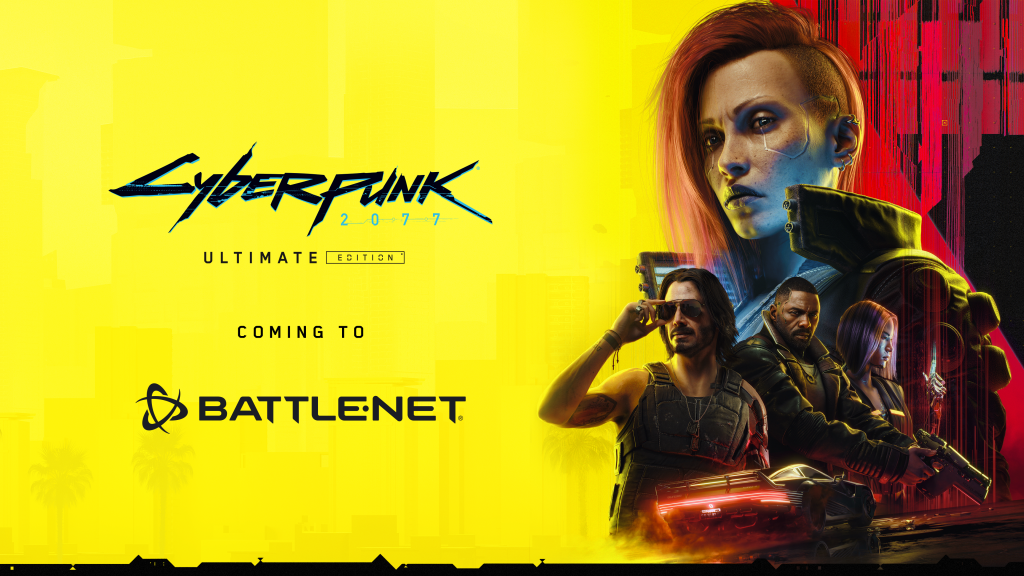
Blizzard has confirmed that CD Projekt Red's The Witcher 3: Wild Hunt Remastered and Cyberpunk 2077 will arrive on Battle.net before the end of the year, marking a notable expansion of third-party content on the platform. However, Blizzard executive Andrew Guerrero told Polygon at BlizzCon that this does not signal an ambition to compete with Steam or the Epic Games Store, stressing that additions will remain selective rather than open to all publishers.
Battle.net launched in 1997 alongside the original Diablo and for years hosted only Blizzard titles, before Destiny 2 became the first outside game to join in 2017. Since then, other Activision, Xbox Game Studios and Bethesda titles, including Call of Duty, Crash Bandicoot, Avowed and Doom: The Dark Ages, have been added following Microsoft's acquisition of Activision Blizzard. Guerrero said Blizzard favours a curated approach focused on what its core audience would enjoy, rather than building a self-publishing platform, and does not foresee Battle.net ever adopting a fully open submission model.
- The Witcher 3 Remastered and Cyberpunk 2077 confirmed for Battle.net this year.
- Blizzard says it won't rival Steam or Epic Games Store.
- Future additions will stay curated and selective, not wide open.
New here? Start with this
Blizzard's Battle.net is the company's own online platform for buying and playing PC games, first launched in 1997 alongside Diablo. For most of its life it only carried Blizzard's own titles, such as World of Warcraft and Overwatch, unlike rival services Steam and the Epic Games Store, which host games from many different publishers.
That began to change after Destiny 2 joined in 2017, and further after Microsoft bought Blizzard's parent company, Activision Blizzard, bringing titles like Call of Duty and Doom onto the platform too. The upcoming addition of CD Projekt Red's Cyberpunk 2077 and The Witcher 3: Wild Hunt Remastered continues this trend, since neither company is owned by Microsoft or Blizzard.
This matters because it raises the question of whether Battle.net is evolving into a broader marketplace open to any publisher, in direct competition with Steam and Epic. Blizzard executive Andrew Guerrero has been addressing that question directly, explaining the company's thinking on how far this expansion will go.
Both sides, in good faith
The strongest fair case each way — we don't pick a winner.
The case for
Advocates of Blizzard's curated approach argue that Battle.net's value lies precisely in its narrow, quality-controlled focus rather than in scale for its own sake. By adding only titles it judges will resonate with its existing community, such as major Activision, Bethesda and Xbox Game Studios releases, Blizzard can maintain a coherent, trusted storefront rather than diluting it with the vast and uneven catalogue that open platforms like Steam carry. This also protects Blizzard from the costs and support burden of running a full self-publishing marketplace, letting it concentrate resources on the games its players actually came for.
The case against
Critics of this cautious strategy would argue that gamers and smaller developers benefit most when platforms compete openly, since broader storefront competition tends to drive down prices, improve features and give players more choice about where to buy and manage their libraries. By deliberately keeping Battle.net closed to all but a handpicked set of publishers, Blizzard is arguably prioritising brand control and predictability over the wider ecosystem benefits that a genuinely open marketplace, with equal access for independent and third-party developers, could offer both consumers and the industry.