World news and discussion on TalkFuse.
‘Blue tsunami’ in US midterms ‘pummels GOP out of power’
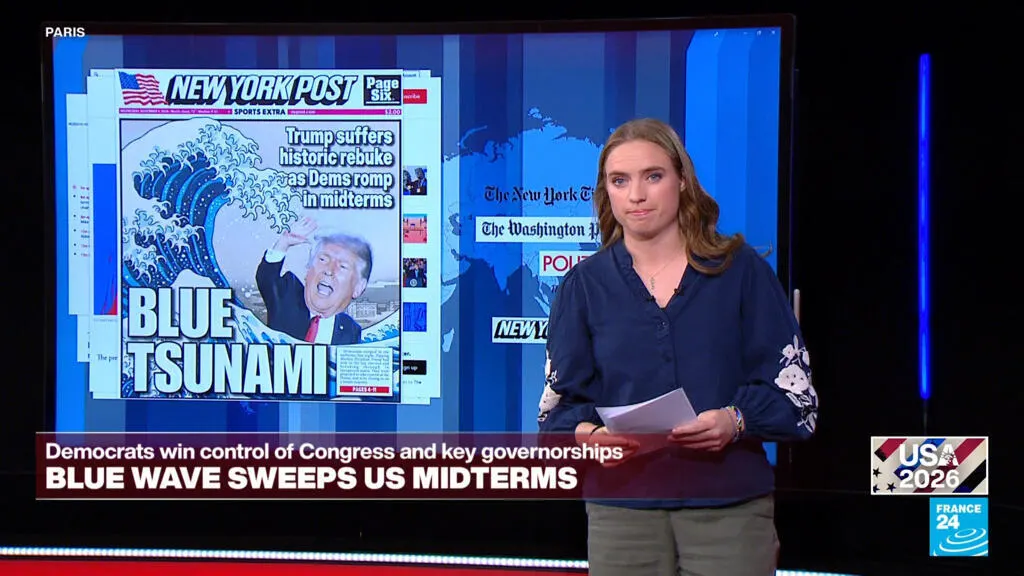
The article reviews US media coverage of midterm results that saw Democrats take control of the Senate and Republicans lose power, in what several publications described as a rebuke to President Donald Trump. It says the result reflects voter dissatisfaction with his presidency and could reshape the remainder of his time in office.
Coverage highlighted several historic outcomes: Florida Republican Byron Donalds became the state’s first Black governor, while Democrat Keisha Lance Bottoms became the first Black woman elected governor in the US. Democrats also won North Carolina’s Senate race for the first time in 18 years, secured an upset in South Carolina, and broke the Republican Party’s three-decade hold on Texas. Commentators pointed to Trump’s tariffs, the war in Iran and political vendettas as factors; the party’s loss could bring congressional investigations and affect business and policy.
In short
- Democrats took the Senate in a midterm rebuke to Trump.
- Historic gubernatorial firsts included Keisha Lance Bottoms in Georgia.
- Democrats’ gains could mean investigations and shifts in policy.
Steelman: both sides, in good faith
The strongest fair case each way — we don't pick a winner.
The case for
Democrats’ gains can be seen as a clear electoral rebuke to Trump: voters dissatisfied with his leadership, tariffs, the war in Iran or political vendettas used the midterms to shift power and demand greater accountability. Their Senate majority could scrutinise the administration and change policy, while the historic wins show that voters in several states were open to alternatives to long-standing Republican control.
The case against
Midterm results are shaped by local contests and a range of concerns, so they need not amount to a single, nationwide verdict on Trump or his presidency. Republicans could argue that voters chose Democratic candidates for state-specific reasons, and that a change in congressional control risks partisan investigations and policy disruption rather than constructive oversight.
Explained simply
US midterms are elections held halfway through a president’s four-year term. Voters choose members of Congress, which makes federal laws and oversees the government, as well as governors and other state officials.
The Senate is one of Congress’s two chambers; the other is the House of Representatives. Control of the Senate affects which bills can pass and how readily the chamber can investigate the president’s administration. Midterm results can therefore limit a president’s influence for the rest of the term and affect national policy.
Donald Trump is the Republican president, and Democrats are his main opposition party. The reported results include changes in who holds several state offices, including governorships, which shape state laws and services.
Americas Elections Government Politics World