Boat carrying migrants capsizes near Djibouti, killing at least 109 including 15 children
Developing story first seen 1 hour ago
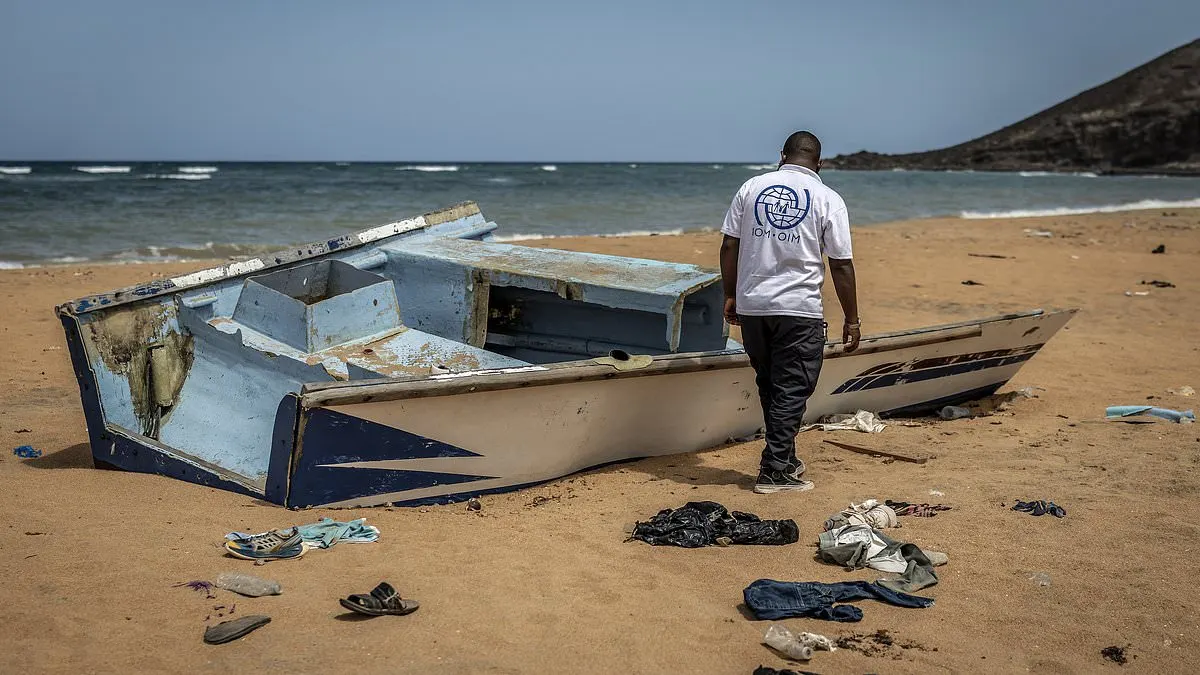
At least 109 migrants, including 15 children, died after a boat carrying 350 people capsized off the coast of Djibouti on Thursday night while travelling to Yemen. The tragedy highlights the extreme dangers migrants from the Horn of Africa face as tens of thousands attempt the perilous journey each year seeking safety and work in Gulf countries, driven by poverty, regional conflict and climate change.
Around 80 people were rescued with dozens still missing, and the IOM is assisting 64 survivors at its response centre in Obock with healthcare and support to restore contact with their families. The route has become increasingly perilous, with more than 900 migrants dying or going missing in 2025 and an 18% increase in attempted crossings reported, demonstrating the growing desperation of those attempting the journey despite known deadly risks.
- 109 migrants including 15 children died in boat capsizing off Djibouti
- Vessel carrying 350 people en route from Djibouti to Yemen capsized
- 18% increase in journey attempts despite 900+ migrant deaths in 2025
New here? Start with this
Thousands of migrants attempt to cross from Djibouti to Yemen each year seeking work and safety in the Arabian Peninsula and surrounding Gulf states. With few official migration pathways available, many rely on informal smuggling networks to arrange boat journeys across the Gulf of Aden. These vessels are typically overcrowded and poorly maintained, making such journeys inherently dangerous.
The route sees regular traffic despite its hazards because migrants view it as their most viable option for reaching Gulf states for employment. The crossing occurs in difficult sea conditions and presents substantial risks. Whilst deaths on this route do occur, incidents of this scale rank among the deadliest recorded on this specific corridor in recent years.
The tragedy illustrates the broader challenges facing people with limited safe and legal options for migration. When formal pathways are unavailable, migrants often resort to dangerous informal channels operated by smugglers. Such incidents underscore the vulnerability of those undertaking these crossings in unsuitable vessels.
Full account
In the early hours of 9 October, a vessel carrying migrants bound for Yemen capsized off the Djibouti coast near the port of Obock, resulting in one of the deadliest recent maritime disasters along this critical migration route. The overcrowded boat sank whilst attempting the perilous crossing from the Horn of Africa to the Arabian Peninsula, prompting extensive emergency operations by regional authorities and international organisations.
Official reports indicate significant loss of life, though estimates vary between sources. Deaths are documented at between 109 and 139 individuals, including 15 children. Bodies recovered comprised 52 men, 42 women, nine girls and six boys. Approximately 80 survivors were retrieved from the water, all identified as Ethiopian nationals, whilst over 80 additional passengers remain unaccounted for. The vessel had been loaded with between 305 and 350 passengers prior to departure.
The International Organisation for Migration (IOM) has coordinated emergency assistance, establishing support services through its facility in Obock to provide medical treatment, psychological counselling, nutritional aid and logistical support. Djibutian authorities continue search operations whilst arranging funerals and coordinating medical care with international partners. Alexandre Coissac, the IOM's mission chief in Djibouti, characterised the tragedy as evidence of the grave perils migrants encounter whilst pursuing better circumstances along this heavily-used corridor.
The Horn of Africa to Arabian Peninsula maritime route experiences substantial annual migration, with participation surging by 18 per cent in the recent period. Hundreds of thousands of people undertake the journey annually, predominantly Ethiopians and Somalis, driven by economic hardship, conflict-induced displacement, regional insecurity and climate-related crises. The same corridor recorded over 900 fatalities and disappearances throughout 2025. Yemen's prolonged civil conflict, intensifying military escalation, and concurrent violence in Ethiopia continue fuelling outward migration despite mounting hazards.
Where outlets differ
Reported death toll: Source 1 cites 'at least 139' deaths whilst Source 2 states 'at least 109', representing a significant variance in confirmed figures
Vessel passenger capacity: Source 1 indicates 'about 305 people' aboard whilst Source 2 states '350 people', suggesting discrepancies in documentation timing or counting methodology
Primary contextual emphasis: Source 1 prioritises Yemen's military escalation and displacement figures (200,000 since mid-September), whereas Source 2 emphasises economic and environmental drivers including poverty and climate change
Statistical depth: Source 2 provides specific 2025 corridor mortality data (900+ deaths/disappearances) and the 18% migration increase rate, whilst Source 1 focuses on broader displacement numbers from Yemen's renewed conflict
Survivor assistance reporting: Source 2 specifies that 64 survivors receive support at the IOM response centre, whilst Source 1 describes assistance categories generically without numerical detail
Coverage
- Daily Mail — At least 109 migrants, including 15 children, die in Djibouti boat capsize
- BBC World — At least 109 migrants, including 15 children, die in Djibouti boat capsize