Culture news and discussion on TalkFuse.
Boat carrying migrants capsizes near Djibouti, killing at least 109 including 15 children
Developed over time first seen 2 months ago
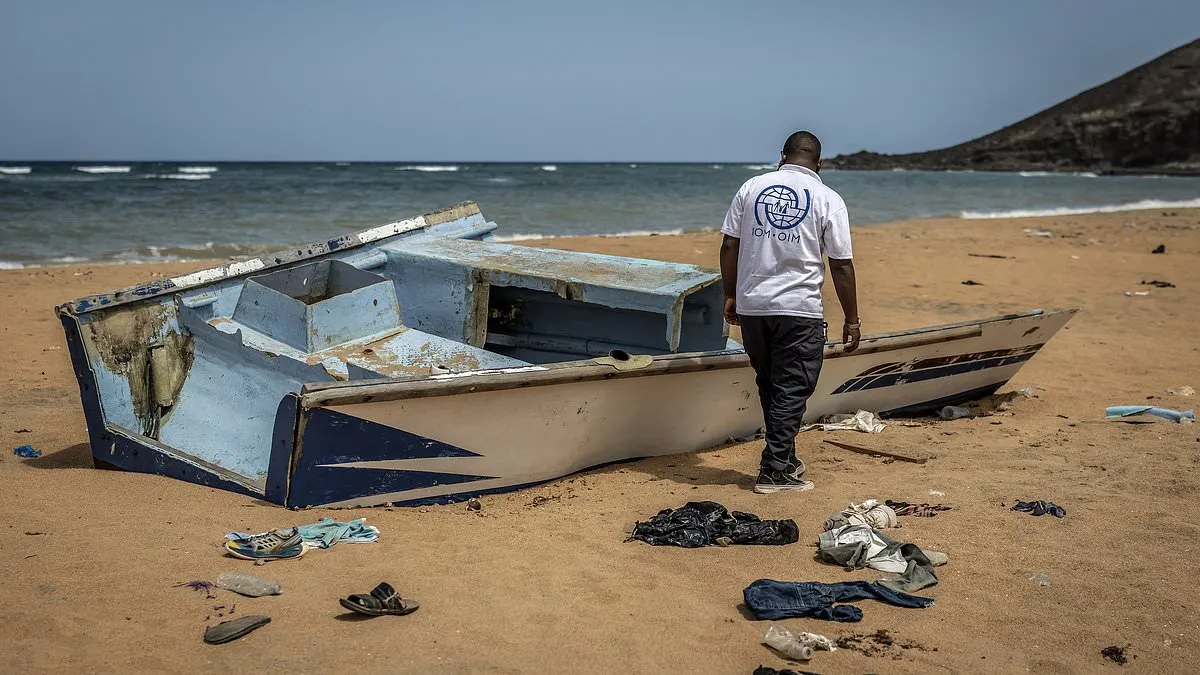
The confirmed death toll from the migrant boat capsizing off Djibouti has risen to at least 139, including 15 children, according to the International Organization for Migration (IOM). The increase matters because the count covers only victims whose bodies have been verified by authorities, and at least 84 people were still missing as of Sunday.
The boat was carrying 305 people from Djibouti towards Yemen when it capsized near Guhere, north of Obock, after leaving on the evening of 8 October. More than 80 people survived; all were Ethiopian nationals and were taken to an IOM centre for medical and psychological support. The Horn of Africa to Arabian Peninsula route is commonly used by migrants seeking work in Gulf countries, but more than 900 people died or went missing along it last year.
- Sources
- 3
- Outlets
- 3
- Left · Centre · Right
- 0 · 1 · 2
In short
- Confirmed deaths have risen to at least 139, including 15 children.
- At least 84 people remained missing as of Sunday.
- The overcrowded boat was carrying 305 people towards Yemen.
How this story developed
- 2 months ago A boat carrying migrants from Djibouti to Yemen capsized off the coast near Obock, killing at least 139 people, including 15 children. The International Organization for Migration (IOM) revised the death toll upwards after more bodies were recovered; dozens remain missing.
- 2 months ago The confirmed death toll from the migrant boat capsizing off Djibouti has risen to at least 139, including 15 children, according to the International Organization for Migration (IOM).
- 2 months ago At least 109 migrants, including 15 children, died after a boat carrying 350 people capsized off the coast of Djibouti on Thursday night while travelling to Yemen.
- 2 months ago A vessel transporting approximately 305 migrants capsized in waters off Djibouti on the night of 8–9 October while en route to Yemen, resulting in at least 109 confirmed deaths, including 15 children.
Full account
In the early hours of 9 October, a vessel carrying migrants bound for Yemen capsized off the Djibouti coast near the port of Obock, resulting in one of the deadliest recent maritime disasters along this critical migration route. The overcrowded boat sank whilst attempting the perilous crossing from the Horn of Africa to the Arabian Peninsula, prompting extensive emergency operations by regional authorities and international organisations.
Official reports indicate significant loss of life, though estimates vary between sources. Deaths are documented at between 109 and 139 individuals, including 15 children. Bodies recovered comprised 52 men, 42 women, nine girls and six boys. Approximately 80 survivors were retrieved from the water, all identified as Ethiopian nationals, whilst over 80 additional passengers remain unaccounted for. The vessel had been loaded with between 305 and 350 passengers prior to departure.
The International Organisation for Migration (IOM) has coordinated emergency assistance, establishing support services through its facility in Obock to provide medical treatment, psychological counselling, nutritional aid and logistical support. Djibutian authorities continue search operations whilst arranging funerals and coordinating medical care with international partners. Alexandre Coissac, the IOM's mission chief in Djibouti, characterised the tragedy as evidence of the grave perils migrants encounter whilst pursuing better circumstances along this heavily-used corridor.
The Horn of Africa to Arabian Peninsula maritime route experiences substantial annual migration, with participation surging by 18 per cent in the recent period. Hundreds of thousands of people undertake the journey annually, predominantly Ethiopians and Somalis, driven by economic hardship, conflict-induced displacement, regional insecurity and climate-related crises. The same corridor recorded over 900 fatalities and disappearances throughout 2025. Yemen's prolonged civil conflict, intensifying military escalation, and concurrent violence in Ethiopia continue fuelling outward migration despite mounting hazards.
Where outlets differ
From the full account, which is AI-written from the sources:
Reported death toll: Source 1 cites 'at least 139' deaths whilst Source 2 states 'at least 109', representing a significant variance in confirmed figures
Vessel passenger capacity: Source 1 indicates 'about 305 people' aboard whilst Source 2 states '350 people', suggesting discrepancies in documentation timing or counting methodology
Primary contextual emphasis: Source 1 prioritises Yemen's military escalation and displacement figures (200,000 since mid-September), whereas Source 2 emphasises economic and environmental drivers including poverty and climate change
Statistical depth: Source 2 provides specific 2025 corridor mortality data (900+ deaths/disappearances) and the 18% migration increase rate, whilst Source 1 focuses on broader displacement numbers from Yemen's renewed conflict
Survivor assistance reporting: Source 2 specifies that 64 survivors receive support at the IOM response centre, whilst Source 1 describes assistance categories generically without numerical detail
Centre outlets 1
Right-leaning outlets 2
- At least 109 migrants, including 15 children, die in Djibouti boat capsizeDaily Mail
- At least 139 migrants dead, 84 missing after overcrowded boat capsizes off DjiboutiFox News
Only here: dead, missing, overcrowded, capsizes
Every side used: least, migrants, including, children, djibouti, boat
Headline columns compared word for word; nothing in them is AI-written.
Explained simply
Thousands of migrants attempt to cross from Djibouti to Yemen each year seeking work and safety in the Arabian Peninsula and surrounding Gulf states. With few official migration pathways available, many rely on informal smuggling networks to arrange boat journeys across the Gulf of Aden. These vessels are typically overcrowded and poorly maintained, making such journeys inherently dangerous.
The route sees regular traffic despite its hazards because migrants view it as their most viable option for reaching Gulf states for employment. The crossing occurs in difficult sea conditions and presents substantial risks. Whilst deaths on this route do occur, incidents of this scale rank among the deadliest recorded on this specific corridor in recent years.
The tragedy illustrates the broader challenges facing people with limited safe and legal options for migration. When formal pathways are unavailable, migrants often resort to dangerous informal channels operated by smugglers. Such incidents underscore the vulnerability of those undertaking these crossings in unsuitable vessels.
Coverage · 3 sources
Bias meters
From 3 rated sources.
Culture Geopolitics Politics Travel World