World news and discussion on TalkFuse.
Brazil’s Amazon sees sharp decline in size of area burned in 2025
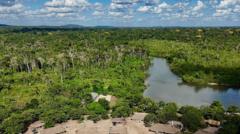
The area of Brazil's Amazon rainforest destroyed by fire fell sharply in 2025, according to monitoring group MapBiomas, marking a significant improvement after a record-breaking year of destruction in 2024. The figures will be welcomed by President Luiz Inácio Lula da Silva, who pledged to protect the Amazon when he took office and is seeking re-election in October, though researchers caution it is too early to call this an established trend.
MapBiomas recorded 3.1 million hectares burned in the Amazon in 2025, down from 15.8 million hectares in 2024, the smallest area since records began in 1985. Across Brazil as a whole, roughly 12.7 million hectares burned in 2025 compared with 30 million in 2024. The decline, described as a 31% drop against the historical average, is attributed largely to the lowest number of Amazon fires in 41 years and cooler La Niña conditions replacing the warmer El Niño pattern, though experts warn El Niño's return could lengthen the dry season and raise fire risk again.
In short
- Amazon fire damage in Brazil fell dramatically in 2025 versus 2024's record
- Lowest burned area since records began in 1985, MapBiomas says
- Boost for Lula ahead of October re-election bid, but experts urge caution
Steelman: both sides, in good faith
The strongest fair case each way — we don't pick a winner.
The case for
Environmental advocates argue that this decline demonstrates the effectiveness of Lula's protection policies working in concert with favourable conditions. They point to enhanced enforcement against illegal logging, improved monitoring systems, and genuine investment in sustainable practices as evidence that active government commitment produces measurable results. Whilst cooler weather assists, they contend that without such institutional effort and political will, the Amazon's destruction would have continued regardless of natural conditions.
The case against
Sceptics argue that the primary drivers are natural weather patterns—cooler La Niña conditions and the lowest fire count in 41 years—rather than policy innovation. They emphasise that researchers explicitly caution against treating this as an established trend, and that El Niño's projected return threatens to reverse gains independent of governance. From this perspective, crediting policy for weather-driven improvements risks complacency about the deeper vulnerabilities that determine the Amazon's fate.
Explained simply
The Amazon rainforest in Brazil is one of the world's most important natural resources, covering an area roughly the size of Western Europe. The forest is home to roughly one in ten of all species on Earth and absorbs vast amounts of carbon dioxide, playing a crucial role in stabilising the global climate. Forest fires destroy this ecosystem, releasing stored carbon and threatening the wildlife and indigenous communities that live there.
Brazil experienced devastating forest fires in 2024, with destruction surpassing all previous years since monitoring began in 1985. These fires resulted from a combination of human activities such as illegal logging and land clearance, alongside natural climate patterns that created hot, dry conditions. The scale of devastation alarmed environmental organisations and governments worldwide, raising serious concerns about the Amazon's long-term survival.
Brazil's President Luiz Inácio Lula da Silva made protecting the Amazon a key priority when he took office, pledging to tackle illegal deforestation. Brazil controls the largest portion of the Amazon, making its government's actions crucial to the forest's future and the planet's climate stability. Environmental protection has become increasingly central to the Brazilian government's political agenda.