World news and discussion on TalkFuse.
Brazil’s President Lula hails oil discovery near Amazon river
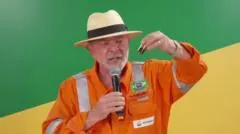
Brazilian President Luiz Inácio Lula da Silva has welcomed the discovery of oil near the mouth of the Amazon river, describing it as potentially "a passport to the country's future". The find, announced by state oil company Petrobras, follows exploratory drilling that Lula controversially approved in the biodiverse Brazilian Equatorial Margin, a decision that drew heavy criticism from environmentalists concerned about the risk of spills devastating nearby reefs and coastal wetlands. The announcement comes as Lula seeks re-election in October and attempts to balance the economic appeal of oil development against environmental concerns.
The oil was found about 175km off the Amazon coast at a depth of nearly 2,900 metres, though the size of the field and whether extraction would be commercially viable remain unknown. Petrobras began deep-water drilling in the area in October 2025, just weeks before Brazil hosted the COP30 climate summit, prompting anger from environmentalists and, Lula noted, opposition from Europe. He insisted Brazil would not tolerate foreign "meddling" in the decision, while maintaining his commitment to eventually phasing out fossil fuels and expanding biofuel and renewable energy. The prospect of jobs has already drawn an influx of people to the nearby town of Oiapoque.
In short
- Petrobras found oil near the Amazon's mouth, Lula hails it as significant
- Field size and commercial viability still unknown; drilling site is highly biodiverse
- Comes ahead of October elections, amid environmentalist and European criticism
Steelman: both sides, in good faith
The strongest fair case each way — we don't pick a winner.
The case for
Brazil is a sovereign developing nation with the right to develop its natural resources for the benefit of its citizens. The oil discovery represents substantial economic potential that could fund vital infrastructure, healthcare, education, and the transition to renewable energy to which Lula remains committed. Jobs are already being created in towns such as Oiapoque, demonstrating tangible benefits for Brazilians. Deep-water drilling at 2,900 metres employs modern safety technology, and this temporary development could generate revenues that accelerate rather than impede the renewable transition.
The case against
The Amazon region is one of Earth's most biodiverse and climate-critical ecosystems, and oil development carries genuine risks of spills devastating the reefs and wetlands near the river mouth. Approving drilling weeks before hosting COP30 seriously undermines Brazil's credibility on climate action. With the discovery's commercial viability unknown yet environmental risks certain, Brazil could lead globally by protecting the Amazon and developing renewables directly, rather than expanding fossil fuel extraction in the world's most biodiverse region at a time of climate urgency.
Explained simply
Brazil is a major oil producer, and state-owned Petrobras searches for new reserves as well as producing oil and gas. The latest find is offshore in the Brazilian Equatorial Margin, a region near the Amazon’s mouth where deep-water exploration is under way.
President Luiz Inácio Lula da Silva approved drilling there despite objections from environmental groups, who warn that an oil spill could damage reefs and coastal wetlands. The discovery is still being assessed: its size and whether it can be extracted profitably are not yet known.
The debate reflects Brazil’s effort to weigh possible jobs and revenue against environmental risks and its climate commitments. It also matters to nearby communities, where expectations of work have begun to attract people, and to countries concerned about how new oil production fits with efforts to reduce fossil-fuel use.
Americas Environment Government Politics Research Science World