Britain’s ‘fridge mountains’ nightmare revealed: Filled with toxic gases and oils, how mounting piles of our abandoned appliances are overwhelming our councils… and no one knows what to do with them
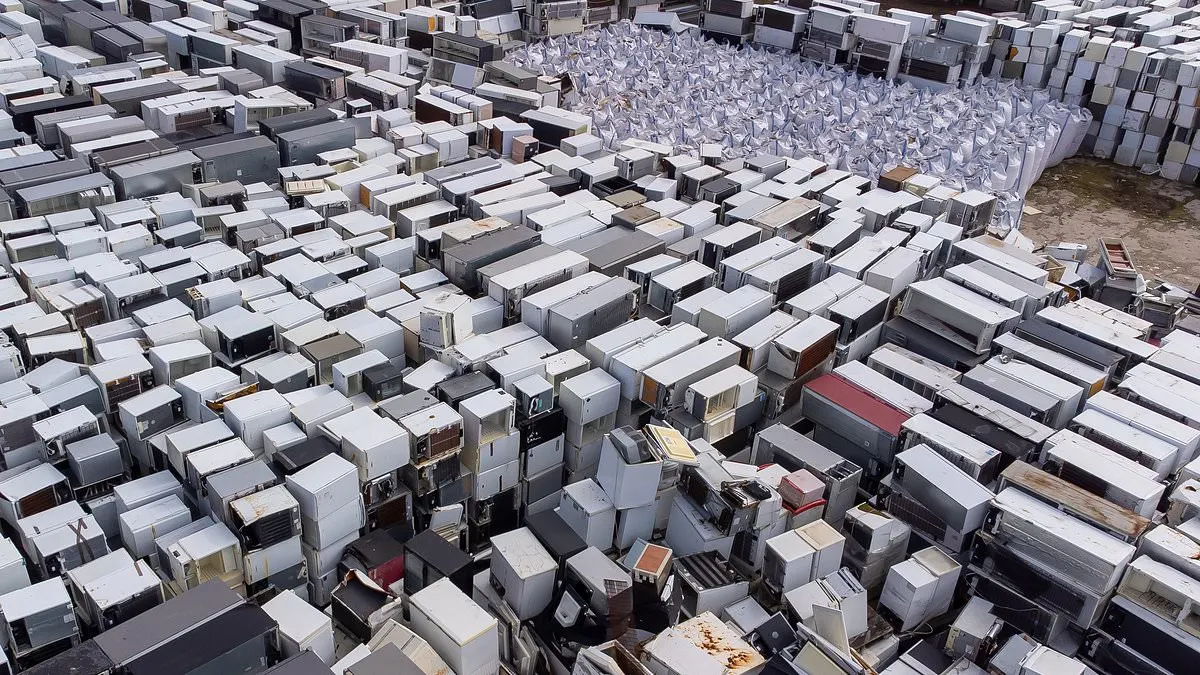
Around 80,000 discarded fridges are stacked several storeys high at a Newport docks site, which has stood idle since recycling firm Unimetals went into liquidation nearly a year ago. The backlog matters because fridges contain gases, oils and metals that need specialist removal, and the blocked facility is adding pressure to Britain’s already stretched recycling capacity.
The article says the UK discards an estimated three million cooling appliances each year. Nine other plants would normally take on extra work, but fires and technical problems at sites in Darlaston and Thetford have reduced capacity; a summer heatwave and the football World Cup also reportedly boosted fridge purchases. Landowner Associated British Ports says it is in advanced talks with a third party to take over the Newport site and that the material is being managed responsibly in the meantime.
- 80,000 fridges sit abandoned at a Newport recycling site.
- Fires and technical issues have reduced recycling capacity elsewhere.
- Britain discards about three million cooling appliances each year.
New here? Start with this
Fridges and other cooling appliances are classed as electrical waste, but they need specialist treatment when discarded. They can contain gases and oils that must be removed safely, as well as metals and other materials that can be recovered.
The UK throws away an estimated three million cooling appliances each year. Recycling plants process them, but fires and technical problems at some sites have reduced the capacity available to handle the waste.
Councils rely on this network to deal with appliances collected from households. When a major facility cannot process its stock, waste can build up and put extra pressure on other plants; Associated British Ports owns the Newport site where the appliances are stored.
Culture Entertainment Environment Food Music Science UK World