Helsing unveils lower-cost AI air defence system to counter mass attacks
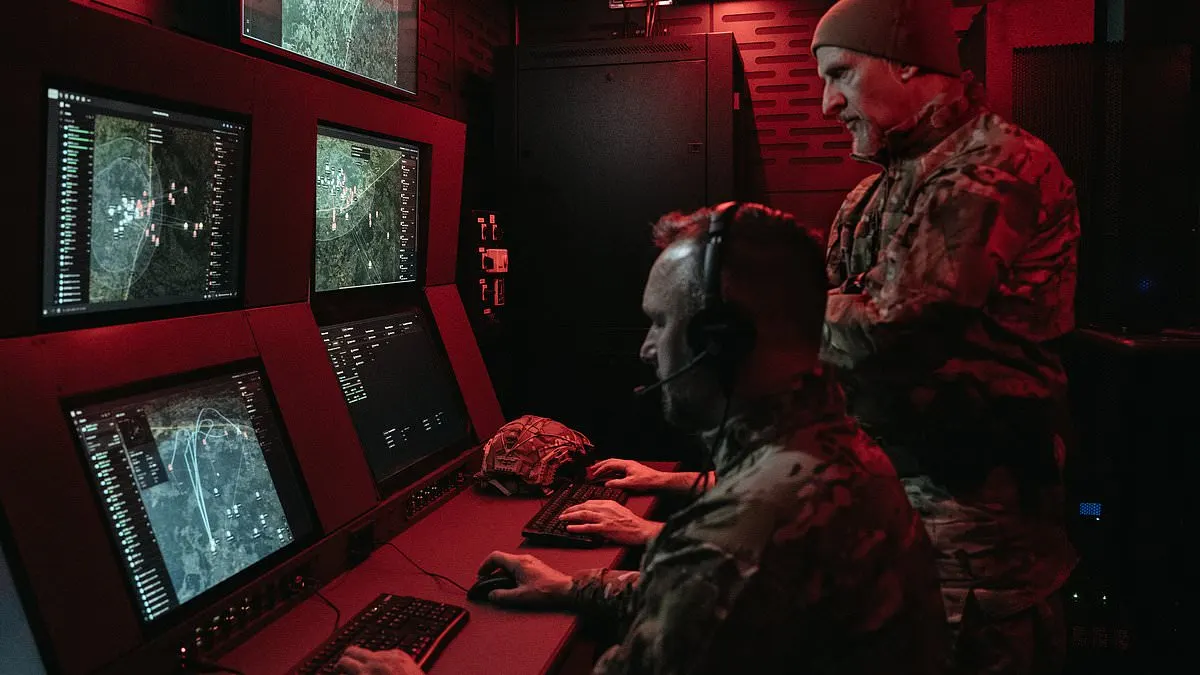
British defence technology firm Helsing has unveiled Contra, an AI-assisted air defence system designed to detect and intercept drones and cruise missiles. The system is intended to offer towns, cities and military sites a more affordable way to defend against large-scale aerial attacks, amid concerns about Russian drone production and possible sabotage activity across Europe.
Contra links existing radars and sensors to two new interceptors, the AD-1 Inferno and AD-2 Ambush, and is designed to coordinate responses to hundreds or thousands of threats. The Inferno can travel at more than 400mph, has a 12-mile range and can reach targets above five miles; the supersonic Ambush is intended for faster threats. Helsing says each missile costs under £100,000, compared with more than £3 million for a Patriot missile, and that people remain involved in launch decisions.
In short
- Helsing unveiled its AI-assisted Contra air defence system.
- Its two interceptor missiles each cost under £100,000.
- Human operators can oversee targeting and launch decisions.
Steelman: both sides, in good faith
The strongest fair case each way — we don't pick a winner.
The case for
Supporters can argue that a lower-cost system able to coordinate responses to many drones and missiles could help protect more towns and military sites, while reducing reliance on scarce, expensive interceptors. They may see AI assistance, with people retaining launch authority, as a practical way to manage large attacks and strengthen deterrence.
The case against
Sceptics can argue that a newly unveiled system’s claimed performance and cost need independent evidence before communities or governments rely on it, especially against fast or complex threats. They may also question whether AI-coordinated defences can be made sufficiently reliable and accountable under pressure, and whether investment in interception diverts resources from diplomacy or other forms of security.
Explained simply
Air defence systems use radars and other sensors to spot incoming aircraft or weapons, then try to stop them before they reach their targets. Drones and cruise missiles can be launched in large numbers, putting pressure on defenders to track many threats at once.
Helsing is a British defence technology firm. Its Contra system is designed to connect existing sensors with interceptors, while artificial intelligence helps coordinate responses; the company says a person remains involved in decisions to launch.
The system is aimed at protecting places such as towns, military sites and other important facilities. Its proposed lower cost per interceptor matters because defenders may need to respond to repeated attacks without relying only on much more expensive missiles.
Read the full article at the source →
Originally published by Daily Mail as “British experts design cheap AI missiles ‘that can create mini “Iron Domes” to protect towns and cities from Putin attack’”.