Sport news and discussion on TalkFuse.
British tennis player flying to Lithuania mistakenly told he had been deported and escorted from plane
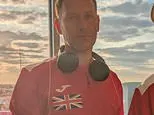
A British tennis player, Stuart Burden, was wrongly identified as a deportee and marched off a Wizz Air flight in Vilnius, despite wearing a Great Britain tracksuit and holding a valid UK passport. The mistake, which he only escaped after his teammates alerted cabin crew, raises concerns that a genuine deportee may have gone unquestioned as a result of the mix-up, and highlights a worrying lapse in airport and airline identification procedures.
Burden, 48, from London, was travelling to Lithuania on 23 August as a hitter for visually impaired players at the World Blind Tennis Championships when a security official boarded the plane and called him a "deportee from the UK". He was taken for questioning and briefly saw holding cells at customs before officials realised their error and released him without apology. Wizz Air said it was "extremely sorry" and is working with authorities to establish what happened, while the Home Office declined to comment.
In short
- Tennis player wrongly marched off plane in Lithuania as suspected deportee
- Was taken for police questioning despite showing valid UK passport
- Real deportee may have gone free due to the mix-up, he says
Steelman: both sides, in good faith
The strongest fair case each way — we don't pick a winner.
The case for
Those alarmed by this incident argue it exposes a genuinely dangerous gap in how deportees and ordinary travellers are distinguished at the border. If a British tennis player in national kit, holding a valid passport, could be marched off a plane and taken to holding cells on the strength of a mistaken name match, then the systems meant to verify identity are clearly too weak, and the flip side of the error is chilling: a real deportee could equally have been waved through. On this view, the case for tightening verification protocols, requiring photographic or biometric confirmation before removing anyone from a flight, and demanding a full public account from the airline, airport and Home Office is compelling, not because any individual acted with malice, but because the consequences of getting this wrong run in both directions and touch fundamental questions of liberty and due process.
The case against
Those more inclined to see this as a regrettable but understandable error argue that airport security and immigration staff operate under considerable time pressure with imperfect information, often relying on names and flight manifests that can coincidentally overlap, and that the system worked in the sense that the mistake was caught and corrected within the same encounter, with a swift apology from the airline. On this view, isolated human error, however distressing for the individual involved, is an inevitable feature of any system that must make rapid judgement calls at scale, and while lessons should be learned, treating a single quickly-resolved mix-up as proof of systemic failure risks demanding a level of infallibility that would slow legitimate enforcement action and inconvenience far more innocent travellers than it protects.
Explained simply
Stuart Burden, a 48-year-old from London, works as a hitter for visually impaired players, helping them train and compete by playing against them. He was travelling to Vilnius on 23 August for the World Blind Tennis Championships, an international competition for players with visual impairments, when the mix-up happened at the airport there.
Wizz Air is a low-cost airline that operates flights across Europe, including routes to and from Lithuania. Airlines and border officials routinely check passengers' identities against watchlists, including for people being deported, and this case has drawn attention because the checks failed so badly that a British tracksuit and a valid passport were not enough to stop the wrong man being pulled off a flight.
The episode has raised broader questions about how identification errors like this can happen, since a similar failure in reverse could mean a genuine deportee being waved through unchecked. Both Wizz Air and UK authorities have been asked to explain what went wrong.