Science news and discussion on TalkFuse.
British wind power to drive Maersk container ship
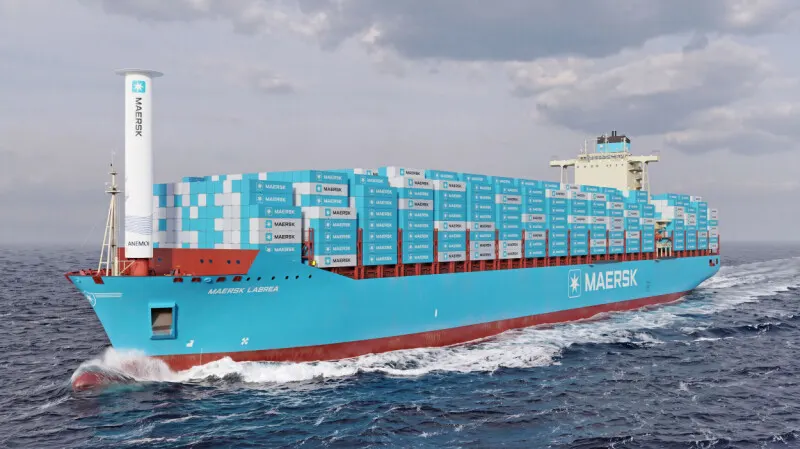
Shipping giant Maersk is trialling a rotor sail from British company Anemoi Marine Technologies on one of its container ships, as the industry looks for ways to cut fuel use and greenhouse gas emissions. The device will be fitted to the Maersk Labrea, an 8,700 TEU Lima-class vessel, with installation scheduled for mid-2027 followed by testing on regular North and South Atlantic routes. The move comes as the International Maritime Organization pushes shipping firms to slash emissions substantially over the coming decades.
Rotor sails, also known as Flettner rotors, work very differently from traditional sails, using the Magnus effect: a spinning cylinder moving through the air generates a pressure difference that produces thrust, easing the load on a ship's engines. Anemoi will design and build a sail measuring 5 metres in diameter and 35 metres high, and provide engineering support to integrate it with the vessel's systems. The company says ships fitted with three of its rotor sails have achieved average net fuel and emissions savings of 9.1%, rising to as much as 21% on some voyages. The IMO wants the sector to cut emissions by at least 20% (versus 2008 levels) by 2030, 70% by 2040, and reach net zero around 2050.
In short
- Maersk to trial a British-made rotor sail on a container ship
- Installation planned for mid-2027, tested on Atlantic routes
- Sails claim up to 21% fuel and emissions savings
Steelman: both sides, in good faith
The strongest fair case each way — we don't pick a winner.
The case for
The trial is a practical way to test whether wind assistance can reduce fuel use and emissions on a major ship operating regular routes. If the reported savings are achievable, rotor sails could help shipping meet climate targets while lowering fuel costs, using an existing technology without replacing the vessel’s engines.
The case against
A single trial cannot establish how well rotor sails will perform across ships, routes and weather conditions, and the reported savings may not translate to this vessel. The equipment also requires investment and integration with ship systems, so firms may reasonably want stronger evidence of reliable, cost-effective emissions cuts before adopting it widely.
Explained simply
Container ships carry goods between ports around the world and usually rely on engines burning fuel. Their emissions are a concern for the shipping industry, which is under pressure to reduce the greenhouse gases it produces. The International Maritime Organization, a United Nations agency, has set targets for cutting those emissions over the coming decades.
A rotor sail is a tall, spinning cylinder that uses wind to help push a ship forwards, reducing the work its engines need to do. It is different from a conventional sail, and its effect depends on conditions such as wind and the ship’s route. Anemoi Marine Technologies is a British company that makes rotor sails, while Maersk is a Danish shipping company that operates container ships.