Science news and discussion on TalkFuse.
Burnham has agreed EU reset deal with tuition fees issue unresolved, says No 10
Developed over time first seen 7 hours ago
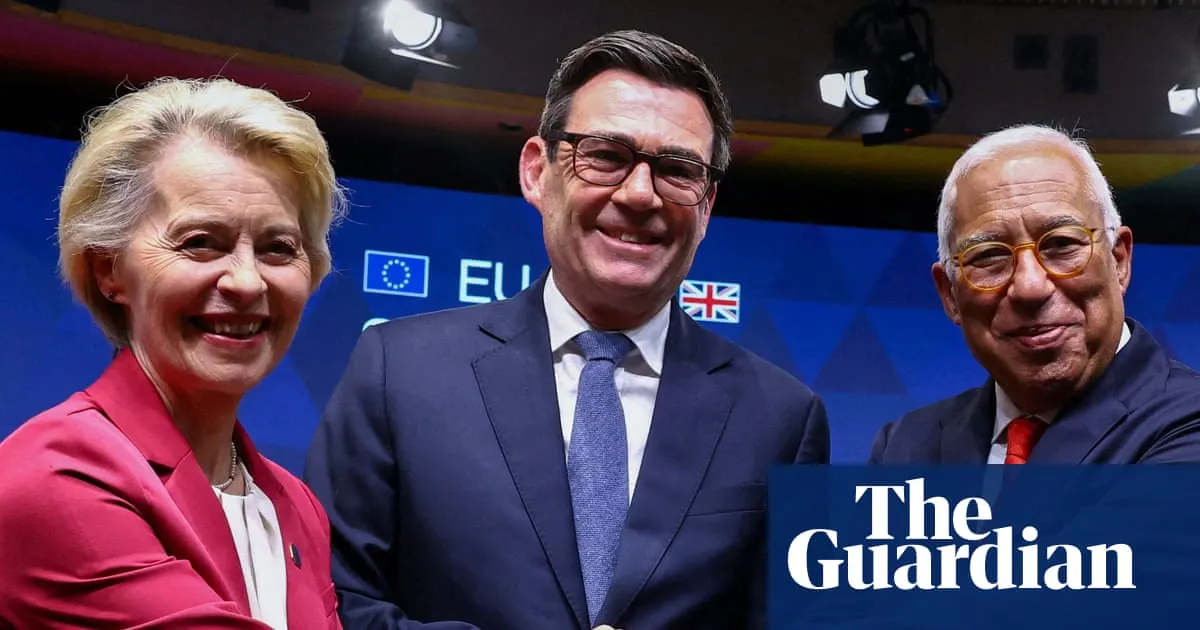
The UK and EU have agreed a reset deal covering food and drink, emissions trading and a youth mobility scheme, but have not settled how much EU students will pay at British universities. The disagreement matters because the EU regards tuition-fee arrangements as part of the wider package, while UK officials say the other deals are separate and should proceed regardless.
The EU wants European students to pay the domestic rate, capped at £9,790 for the current academic year, rather than international fees that can be four or five times higher. The sides have deferred tuition-fee talks for six months; EU sources said the UK had floated a rate as low as £12,000. The UK says the food and agriculture arrangements are due to take effect in March 2028 even without a fee agreement, and has also secured potential inclusion in the EU’s planned “Made in Europe” policy.
- Sources
- 2
- Outlets
- 1
- Left · Centre · Right
- 2 · 0 · 0
In short
- UK and EU say the reset deal is agreed.
- Tuition fees for EU students remain unsettled.
- The EU links the fee issue to the wider package.
How this story developed
- 4 hours ago The UK and EU have agreed a reset deal covering food and drink, emissions trading and a youth mobility scheme, but have not settled how much EU students will pay at British universities.
Steelman: both sides, in good faith
The strongest fair case each way — we don't pick a winner.
The case for
The UK can reasonably argue that the agreed food, emissions and youth mobility measures have value in their own right and should proceed without being held up by a separate dispute over university fees. International fees help universities fund teaching and research, and granting EU students domestic rates would carry a public cost that should be weighed against the benefits of closer ties; the six-month pause leaves room to negotiate that balance.
The case against
The EU can reasonably argue that affordable, predictable tuition is part of making the reset meaningful for young people and ensuring they can benefit from closer relations. Charging EU students several times the domestic rate may deter exchanges and study, weakening the mobility scheme’s practical value; linking progress on fees to the wider package can also be seen as a way to secure a coherent, mutually beneficial agreement.
Explained simply
The UK and EU are negotiating a closer relationship after Brexit, including arrangements for trade and travel. The reported reset covers food and drink rules, emissions trading and a youth mobility scheme, which would let young people live and work across borders for a limited period.
A separate dispute concerns the fees European students pay at UK universities. UK students currently pay up to £9,790 a year in England, while international students can be charged several times more; the EU wants its students to pay the lower domestic rate. The two sides have put off talks on fees for six months.
The issue matters because the EU sees student fees as part of the wider package, while the UK says other arrangements should go ahead independently. The outcome could affect European students’ costs and the scope of future UK-EU cooperation.
Coverage · 2 sources
Bias meters
From 2 rated sources.
Climate Culture Europe Food Geopolitics Politics Research Science Software Technology UK World