Science news and discussion on TalkFuse.
Burnham’s EU package faces delay over university tuition fees
Developed over time first seen 15 hours ago
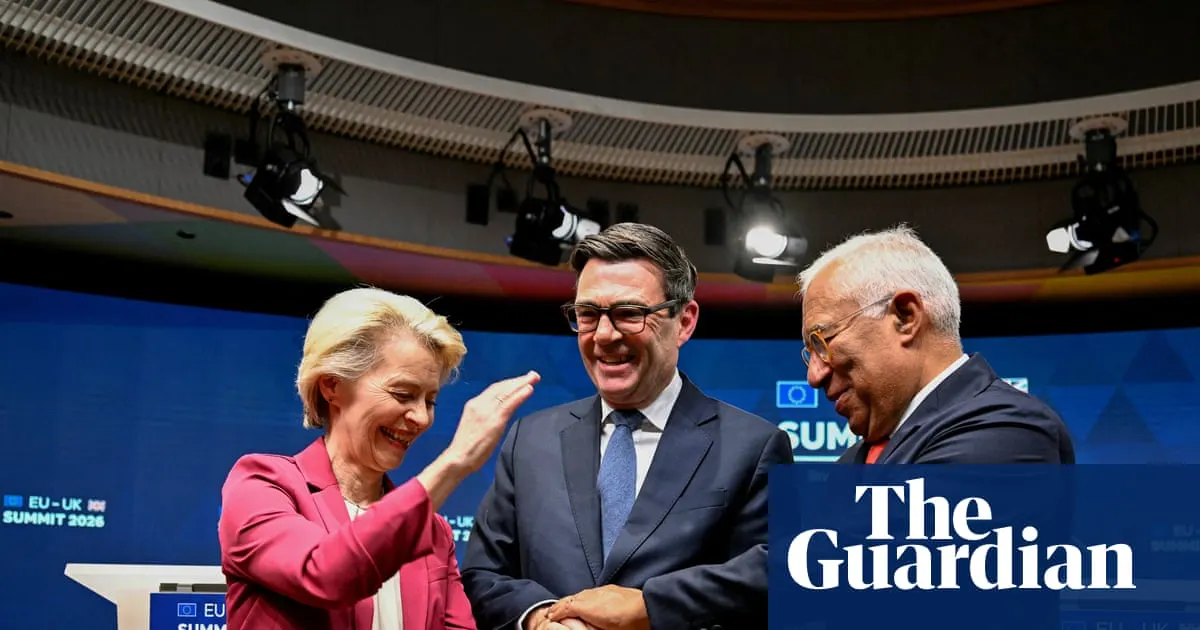
The UK and EU announced three agreements at a Brussels summit, marking a major step towards closer ties since Brexit. Their adoption is conditional on resolving a dispute over tuition fees for European students at British universities.
The package covers food and drink trade, emissions trading and a youth mobility scheme allowing 100,000 young Britons to live, work, study and travel in the EU, with reciprocal access for Europeans in the UK. Andy Burnham said the agreements could add 0.5% to UK GDP, or £17bn; the trade and emissions arrangements require the UK to align with EU rules, without voting rights.
- Sources
- 2
- Outlets
- 2
- Left · Centre · Right
- 2 · 0 · 0
In short
- Three UK-EU agreements were announced at a Brussels summit.
- The youth scheme would cover 100,000 young Britons.
- EU adoption depends on resolving student fee differences.
How this story developed
- 2 hours ago The EU’s fee condition remains a potential obstacle, while Burnham said legislation on the agreements would go to Parliament next week; the trade and emissions arrangements would require UK alignment with EU rules without a vote in their making.
- 8 hours ago Prime Minister Andy Burnham said the package could add £17bn to UK GDP and create opportunities for young people, while the EU made clear it would not adopt the deals until EU students received domestic-rate tuition fees.
- 9 hours ago The UK and EU unveiled three agreements at a Brussels summit, covering food and drink trade, emissions trading and reciprocal youth mobility for 100,000 young Britons, with adoption dependent on resolving a dispute over student fees.
Steelman: both sides, in good faith
The strongest fair case each way — we don't pick a winner.
The case for
Supporters can argue that closer practical ties with the EU would ease trade frictions, support growth and give young people valuable chances to live, work and study abroad. Accepting shared rules without a vote may be a reasonable price for access to a larger market, while reciprocal mobility and limits on further changes could make the package a pragmatic step rather than a wholesale reversal of Brexit.
The case against
Critics can argue that aligning with EU rules without a say over them gives up influence and could constrain future UK choices. They may also question whether the projected economic gains justify the commitments, especially if the EU makes adoption conditional on domestic-level university fees for EU students, which could carry costs for universities or taxpayers.
Explained simply
Brexit ended the UK’s membership of the European Union and its participation in many shared rules and programmes. Since then, the UK and EU have negotiated how to manage trade and other practical links between them.
The UK government is led by Prime Minister Andy Burnham, while the EU’s member countries negotiate through its institutions. The proposed arrangements cover food and drink trade, emissions permits and a scheme for young people to spend time living, working or studying on the other side.
Closer alignment with EU rules can affect how easily businesses trade and how the UK manages emissions, while youth mobility can open opportunities for participants. The agreements would require the UK to follow some EU rules without a vote on them, and the EU has linked adoption to the question of university fees for EU students in the UK.
Coverage · 2 sources
Bias meters
From 2 rated sources.
Climate Culture Europe Food Politics Science World
Read the full article at the source →
Originally published by The Guardian as “Burnham seals trade and youth mobility deals in biggest step towards EU since Brexit”.