Business news and discussion on TalkFuse.
Burnham urged to lobby EU leaders directly to waive EES border controls
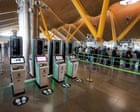
Liberal Democrats have urged Andy Burnham to ask European leaders to suspend the EU’s Entry/Exit System (EES) until at least September, as millions of Britons begin summer holidays abroad. The biometric border system requires non-EU travellers to be photographed and fingerprinted, and concerns remain that it could cause long queues, missed flights and disruption during the peak travel period.
About 2.2 million Britons are expected to travel overseas from Friday to Monday, with Spain the leading destination, followed by Greece, Portugal, Italy and Turkey. Greece has indicated it will not apply the extra checks to most UK visitors, while French automated booths have technical problems; French police are also not conducting biometric checks for motorists at Dover and Eurotunnel, where queues have so far remained below 40 minutes.
In short
- Lib Dems want EES checks suspended over the summer peak.
- Millions of Britons are travelling abroad this weekend.
- Some EU countries are easing or delaying biometric checks.
Steelman: both sides, in good faith
The strongest fair case each way — we don't pick a winner.
The case for
The most serious case for suspension emphasises practical disruption and implementation failures. With millions travelling and systems already failing in France, the economic and human cost—missed flights, extended queues—during peak season may justify temporary suspension. The fact that some EU nations are already not fully implementing the checks, combined with manageable queues so far, suggests the system is not yet mature enough for strict enforcement, and a brief deferral is reasonable.
The case against
The strongest argument against suspension is that established border security systems should not be suspended because of temporary implementation challenges or travel volume concerns. The EES is a legitimate, legally mandated EU security measure; yielding to pressure based on holiday season disruption sets a poor precedent and weakens EU governance. Allowing exceptions for one nation's convenience undermines uniform standards across the bloc and suggests such systems can be deferred whenever economically inconvenient.
Explained simply
The European Union has introduced a new biometric border system called the Entry/Exit System (EES) that applies to all non-EU travellers entering the bloc. The system requires visitors to be photographed and fingerprinted at border checkpoints, and applies to British citizens following the UK's departure from the EU.
The main concern is that the system could cause significant border delays, particularly during peak travel periods. With summer being a busy time for holidays, there are worries that the additional biometric checks could create long queues at airports and land borders, potentially leading to missed flights and disrupted travel plans across Europe.
The system's implementation has been uneven across different EU countries, with some nations delaying full application or not conducting the checks consistently. This variation has raised broader questions about whether Europe's border infrastructure is adequately prepared for the volume of travellers that the system will process.
Business Culture Europe Travel UK World