Video games news, releases, esports and culture — all the biggest gaming stories in one place.
Burnout Revenge Is Actually the Best One
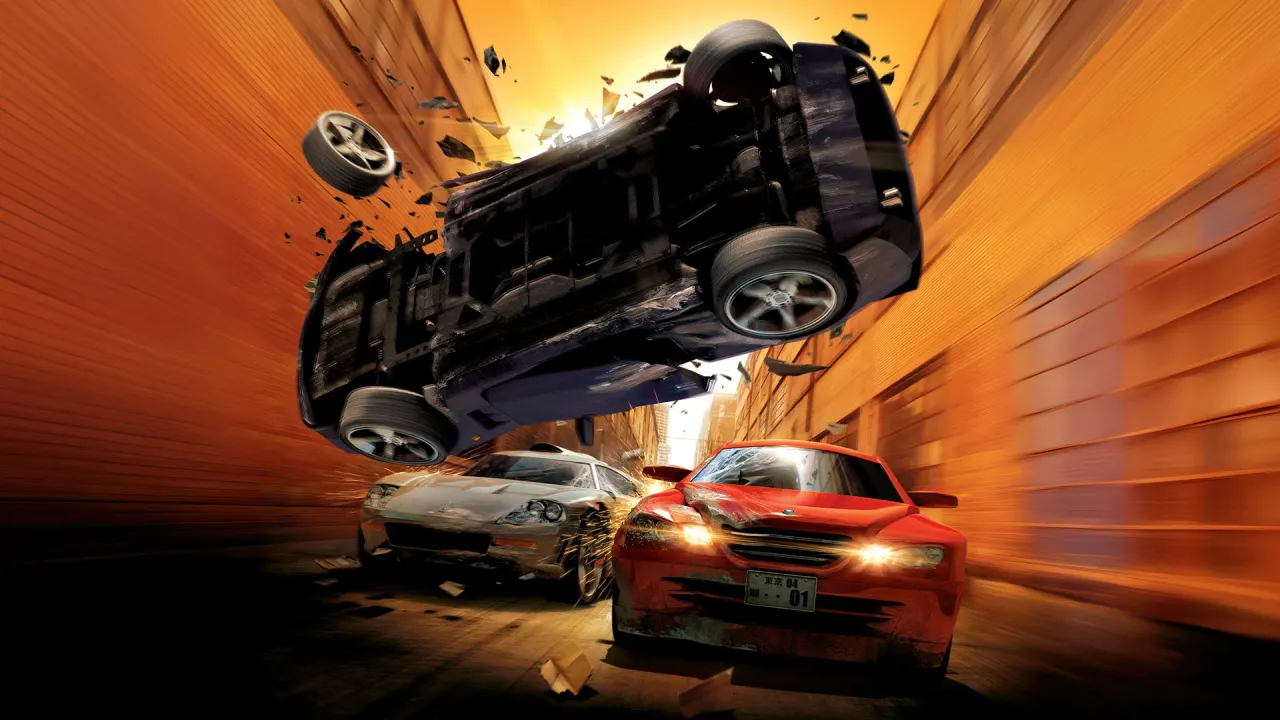
In an opinion piece for IGN, writer Simon Cardy argues that Burnout Revenge, not the more widely praised Burnout 3: Takedown, is the best entry in Criterion's racing series. Revisiting the 2005 game roughly 21 years after release, Cardy finds it holds up remarkably well, particularly praising its Crash mode and the addition of "traffic checking" as innovations that set it apart from its predecessor and from later racing games.
Cardy highlights Crash mode as the series' standout feature, offering short, replayable bursts of destruction that rewarded learning traffic patterns and vehicle behaviour, comparing its variety favourably to the later Forza Horizon series. He also credits Revenge's traffic-checking mechanic, which let players ram same-direction traffic to refill their boost meter, for making the game's traditional races feel more thrilling than Burnout 3's. The piece is framed as a personal reflection rather than a formal ranking, with Cardy noting that rivals such as Dangerous Driving and Dangerous Golf never quite recaptured what Revenge achieved.
In short
- Writer argues Burnout Revenge beats Burnout 3 as the best entry
- Praises Crash mode's variety and Revenge's traffic-checking boost mechanic
- Piece reflects on the 2005 game roughly 21 years after release
Steelman: both sides, in good faith
The strongest fair case each way — we don't pick a winner.
The case for
Burnout Revenge's innovations—particularly Crash mode's intricate design and the traffic-checking mechanic—represent the series at its creative peak. The traffic-checking system transforms racing into a fluid, reactive experience where moment-to-moment decisions matter more than rote track memorisation, whilst Crash mode's replayability genuinely rewards understanding traffic patterns and vehicle physics. That these mechanics remain engaging nearly two decades later, whilst few racing games have successfully matched their elegance, suggests Revenge achieved something distinctive within the franchise.
The case against
Burnout 3: Takedown refined the fundamental racing formula with focused, elegant design, prioritising clarity over Revenge's additional mechanical layers. Critics and fans argue that traffic-checking, whilst novel, actually diluted the purity of core racing gameplay that made Takedown special, and that Revenge's experimental direction represented overcomplication rather than improvement. The franchise's subsequent trajectory and enduring fan preference for Takedown suggest that refining a proven formula creates more lasting appeal than innovation for innovation's sake.
Explained simply
Burnout is a series of fast-paced racing games made by British studio Criterion Games. Rather than focusing on realistic driving, the games reward speed, risky manoeuvres and spectacular crashes.
Burnout Revenge was released in 2005, after Burnout 3: Takedown. It added “traffic checking”, which let players knock same-direction cars aside to build up boost, and included Crash mode, where players aimed to cause pile-ups.
The series has attracted debate over which game best combines racing and crashes. Its mix of short challenges and high-speed driving has also influenced how players and reviewers discuss arcade-style racing games.