Business news and discussion on TalkFuse.
California Democrats divided on billionaire tax
Developed over time first seen 1 day ago
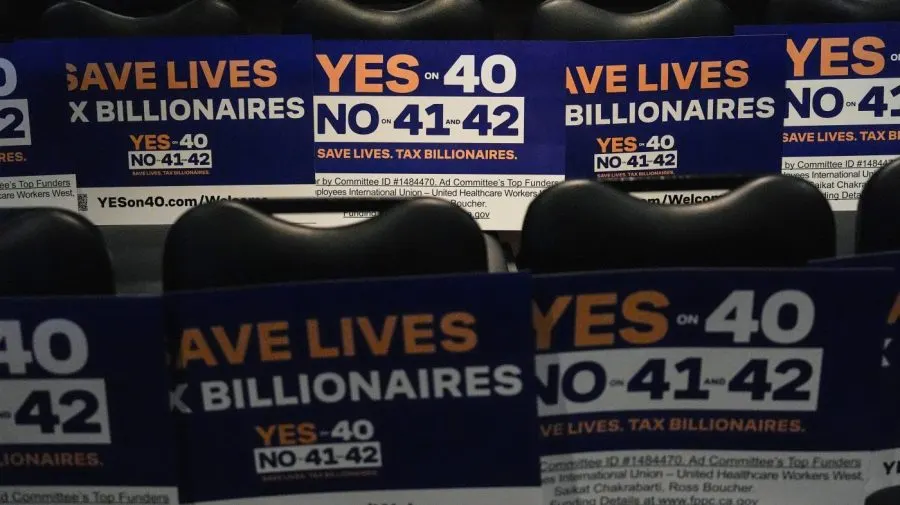
California Democrats are divided over Proposition 40, a ballot measure that would impose a one-off tax equal to 5% of the net worth of billionaires who lived in the state on 1 January 2026. The California Democratic Party has endorsed the proposal, which is backed by a healthcare workers’ union. Supporters say the money would help protect health services and other programmes facing federal funding cuts. California’s official voter guide estimates that the tax would raise tens of billions of dollars over several years, while acknowledging uncertainty about its longer-term effects.
Governor Gavin Newsom and Democratic candidate for governor Xavier Becerra oppose the measure, as do some unions and health organisations. Critics argue that wealthy residents could leave California, reducing future income tax receipts, and question whether a one-off levy is a sound way to fund continuing services. The split also extends to local party organisations: San Francisco Democrats have opposed the measure despite the state party’s endorsement. Voters are deciding Proposition 40 on 3 November alongside two other measures that, if approved with more votes, could prevent the billionaire tax from taking effect.
- Sources
- 4
- Outlets
- 4
- Left · Centre · Right
- 0 · 0 · 1
In short
- California Democrats are split over a one-off 5% billionaire wealth tax.
- Supporters want the revenue for healthcare; opponents fear future tax losses.
- Other ballot measures could block the tax even if voters approve it.
How this story developed
- 3 hours ago California Democrats are divided over Proposition 40, a ballot measure that would impose a one-off tax equal to 5% of the net worth of billionaires who lived in the state on 1 January 2026.
Full account
California Democrats are divided over Proposition 40, a proposed one-time tax on the state’s billionaires. The state party narrowly endorsed the November ballot measure, while Governor Gavin Newsom and Xavier Becerra, the Democratic candidate widely seen as the frontrunner to succeed him, oppose it. The San Francisco Democratic Party has also voted against it, in a 17–4 decision that followed a change to its bylaws allowing it to differ from state party endorsements.
Under the proposal, people with a net worth above $1 billion who lived in California on 1 January 2026 would pay a one-off tax of 5 per cent of their net worth. The measure generally exempts real estate, pensions and retirement accounts, and allows payments to be spread over five years at additional cost. Its campaign estimates the tax could raise about $100 billion from roughly 200 billionaires. The state’s official voter guide says collections would likely total tens of billions of dollars, while stressing that the timing and amount are difficult to predict.
The measure would direct 90 per cent of the proceeds to public health care services, with the balance allocated to education, food assistance and administration. Supporters, including health-care unions, argue the money could help offset federal reductions to Medi-Cal and food assistance. They say wealthy Californians can contribute more while working families continue to pay taxes. Senator Bernie Sanders and Representative Ro Khanna are among its prominent backers.
Opponents say a temporary levy cannot provide a lasting answer to health-care funding pressures, and warn that wealthy residents could leave, reducing other state revenues and spending. Newsom and Becerra are among those opposed, as are medical provider groups and Planned Parenthood Affiliates of California; the California Teachers Association is also listed among opponents in one report. The debate has exposed differences between progressive and moderate Democrats, with arguments in San Francisco focusing both on the proposal’s merits and on whether party members are defending powerful technology donors.
Where outlets differ
From the full account, which is AI-written from the sources:
The state Democratic Party’s narrow endorsement is the focus of one report, which describes it as a contentious statewide decision and notes that some prominent Democratic leaders and aligned organisations oppose the measure. Another report centres on the San Francisco party’s subsequent 17–4 vote against it, presenting the split as a rare local departure from the state party.
The outlets describe the proposed revenue differently: the campaign estimate reported by two outlets is about $100 billion, while the official voter guide characterises likely collections as tens of billions of dollars and says the total and timing are highly uncertain.
The official guide gives the clearest account of tax mechanics, exemptions, payment options and required spending shares. The news reports give more attention to political endorsements, campaign arguments, federal cuts and worries about wealthy residents leaving.
The reports vary in how they describe federal health funding reductions: one refers to cuts to Medicaid and food assistance, another says federal Medicare cuts have affected residents, and another discusses healthcare cuts from the federal budget law. These are the outlets’ descriptions of the policy context.
Coverage · 4 sources
Business Economy Elections Politics