Can MS Paint run Doom? (Yes)
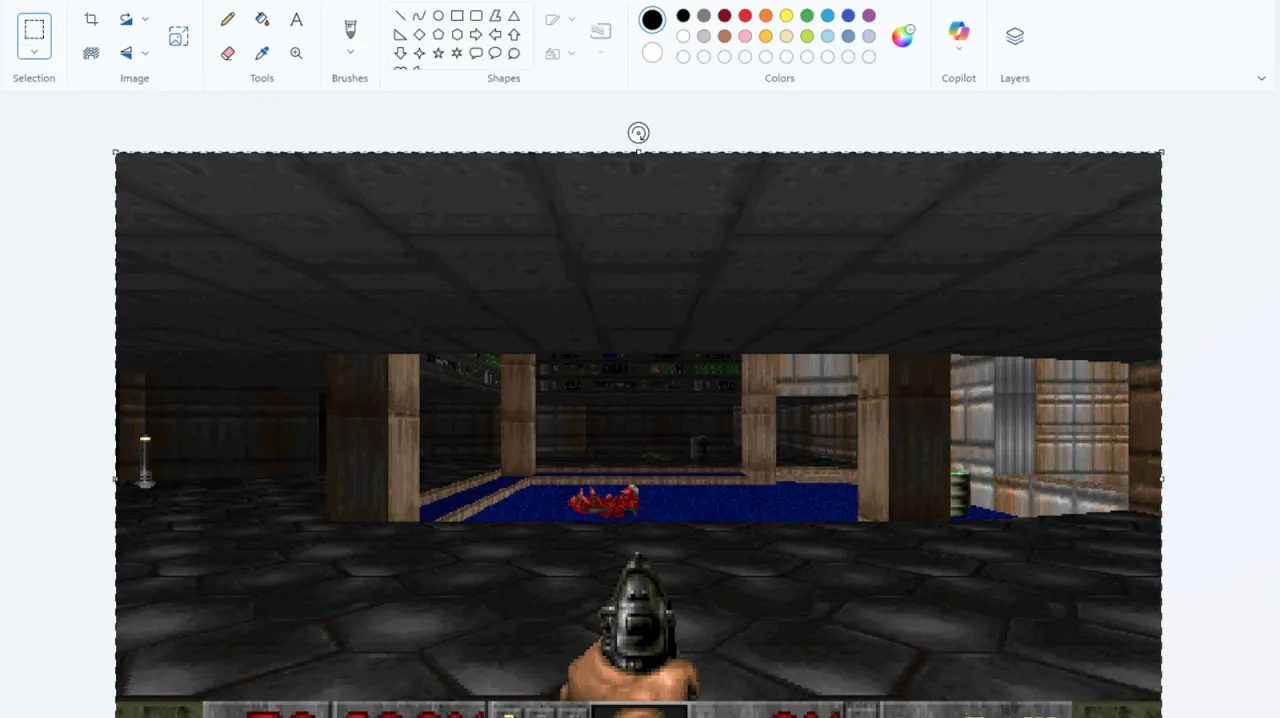
A project called DoomPaint has demonstrated that Microsoft's classic 1993 shareware release of Doom can be run using MS Paint as the display, according to a report by Tom's Hardware. The feat is notable both for its technical novelty and its source: it was created by Mark Russinovich, Chief Technology Officer of Microsoft Azure, adding a degree of institutional pedigree to what is otherwise a niche hobbyist tradition of running Doom on unlikely hardware and software.
The setup reportedly achieves frame rates of up to 35 frames per second, a respectable figure for a game of this vintage, and includes both sound and music. Russinovich explained on the project's GitHub page that each game frame is placed on the Windows clipboard and pasted into Paint's canvas as a genuine document edit, with instructions provided for others to replicate the setup. Doom's efficient, portable programming has long made it a favourite target for such unconventional ports, having previously been made to run on devices including lawnmowers, printers and even gut bacteria, the latter taking an estimated 600 years to complete the game.
In short
- DoomPaint runs the original 1993 Doom shareware inside MS Paint
- Achieves up to 35 FPS, with sound and music included
- Created by Microsoft Azure CTO Mark Russinovich, code on GitHub
Explained simply
Doom is a first-person video game released in 1993 as shareware, a way of distributing software that lets people try it before deciding whether to pay. Its fast-paced action and relatively compact design have made it a popular choice for experiments that run games on unusual devices or through unexpected software.
DoomPaint uses MS Paint, Microsoft’s basic drawing programme, to display the game. Mark Russinovich, who is Microsoft Azure’s chief technology officer, created the project; it sends each game image through the Windows clipboard and places it on Paint’s canvas.
The experiment is part of a long-running hobbyist tradition of adapting Doom to unlikely platforms. It shows how older software can be repurposed in creative ways, while also illustrating the technical curiosity behind these projects.