Politics news and discussion on TalkFuse.
Can the U.S. regain its measles elimination status? Here’s what to know
Developing story first seen 14 hours ago
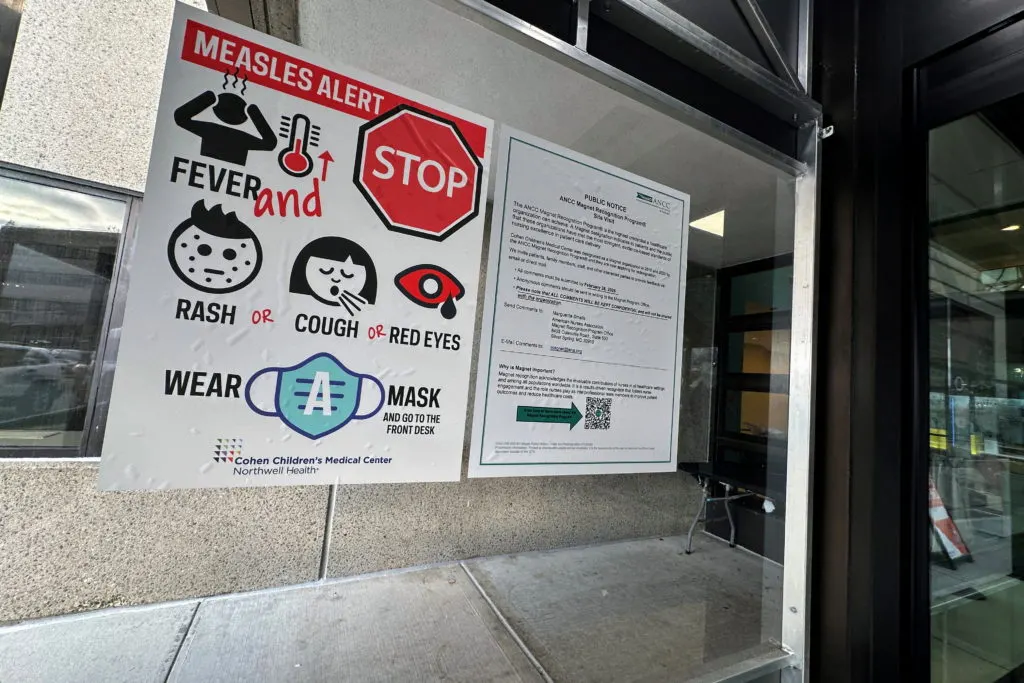
The United States has lost its measles-elimination status for the first time in 26 years, after sustained transmission led an international health organisation to classify the virus as endemic. The change carries no formal penalties, but experts say the rising spread puts people at risk and marks a setback against a preventable disease.
More than 5,400 cases and six deaths have been reported in the US so far in 2026, with 43 outbreaks, each defined as three or more related cases. Elimination does not mean zero cases: it means no large outbreaks or continuous transmission for 12 months or more. The US gained the status in 2000 after recording 85 cases; two MMR vaccine doses are 97% effective at preventing measles. Bolivia and Mexico also lost their status this year, while Canada lost it in 2025.
- Sources
- 2
- Outlets
- 2
- Left · Centre · Right
- 0 · 2 · 0
In short
- The US has lost measles-elimination status after 26 years.
- More than 5,400 cases and six deaths have been reported in 2026.
- Experts say falling vaccination rates have contributed to the setback.
How this story developed
- 5 hours ago The United States has lost its measles-elimination status for the first time in 26 years after sustained transmission led an international health organisation to classify spread as endemic.
- 5 hours ago The United States has lost its measles-elimination status for the first time in 26 years, after sustained transmission led an international health organisation to classify the virus as endemic.
Full account
The United States has lost its measles-elimination status for the first time in 26 years, after health officials concluded that the same strain of the virus had been spreading continuously in the country for more than 12 months. The Pan American Health Organization (PAHO), which reviews elimination claims across the Americas, announced the decision alongside the loss of status by Mexico and Bolivia. The ruling reflects sustained transmission, rather than a requirement that a country have no measles cases at all.
The designation was first awarded to the US in 2000, when 85 cases were recorded. In this context, elimination means that local transmission has been interrupted; cases can still occur, for example when infections are brought in from abroad. The US has reported more than 5,400 cases in 2026 so far. One source reports six deaths and 43 outbreaks, while the other gives 10 deaths, describing them as the highest toll since the 1990s. The figures may reflect different reporting dates or definitions, but the reports do not explain the discrepancy.
Measles spreads very easily and can cause serious illness. The BBC report also notes possible long-term complications, including encephalitis and immune amnesia, which can weaken the body’s ability to respond to later infections. Two doses of the measles, mumps and rubella (MMR) vaccine are about 97% effective against measles, according to the reports. US vaccination rates have fallen in recent years, while exemptions have risen. Public-health experts cited in the first report describe the loss of status as evidence of preventable disease gaining ground; PAHO’s director pointed to persistent gaps in vaccination across the region.
The status change carries no formal penalty, but it is a measure of a reversal in public-health progress and of ongoing risk to people in the US. PAHO’s immunisation officials said countries losing status would need to submit plans setting out how they intend to improve vaccination and interrupt transmission. The CDC said it would work with partners to encourage MMR vaccination, widen access and close gaps in protection, with the stated aim of regaining elimination status. Canada, which lost its designation last year, has made progress towards interrupting transmission, according to PAHO. The reports also differ in emphasis: one focuses on the significance of the designation and the response to vaccine misinformation, while the BBC account gives more attention to the virus’s health effects, regional developments and the US administration’s vaccine policy.
Where outlets differ
From the full account, which is AI-written from the sources:
The first report says there have been six measles-related deaths in 2026; the BBC report says 10, and calls this the highest number since the 1990s. Neither account clarifies the different totals or their reporting cut-off dates.
The first report highlights that elimination status has no formal penalties and quotes experts on the public-health setback and misinformation. The BBC report instead details PAHO’s requirement for corrective action plans and gives more space to the virus’s complications and US vaccine policy.
The first report says Canada lost its status in a 2025 review that found the Americas had lost elimination status; the BBC report says Canada lost its status last year and notes PAHO’s view that it has since made progress towards stopping transmission.
Steelman: both sides, in good faith
The strongest fair case each way — we don't pick a winner.
The case for
Regaining elimination status would show that sustained transmission has been interrupted and that vaccination and public-health measures are protecting communities. Given measles can cause serious illness and the MMR vaccine is highly effective, supporters argue that reducing transmission is a practical public-health goal, even though the designation carries no formal penalties.
The case against
The status is a useful measure, but it is not an end in itself: elimination allows occasional cases, and regaining the label would not mean measles has disappeared or that risks are gone. A thoughtful focus on the designation could divert attention from the practical work of preventing illness and protecting people, while the story gives little detail on the costs or trade-offs of particular measures.
Explained simply
Measles is a highly contagious disease that can cause serious illness and, in some cases, death. The MMR vaccine protects against measles, mumps and rubella; two doses are about 97% effective at preventing measles.
A country’s elimination status means it has stopped continuous spread for at least 12 months, not that it has had no cases. The United States was declared measles-free in 2000 after vaccination helped prevent sustained outbreaks.
The status is assessed by an international health organisation and carries no formal penalties. The United States is not alone in losing it: Bolivia and Mexico also lost theirs this year, while Canada did so in 2025.
Coverage · 2 sources
Bias meters
From 2 rated sources.