Entertainment news and discussion on TalkFuse.
Canon’s R8 II camera borrowed its styling from a classic SLR film camera
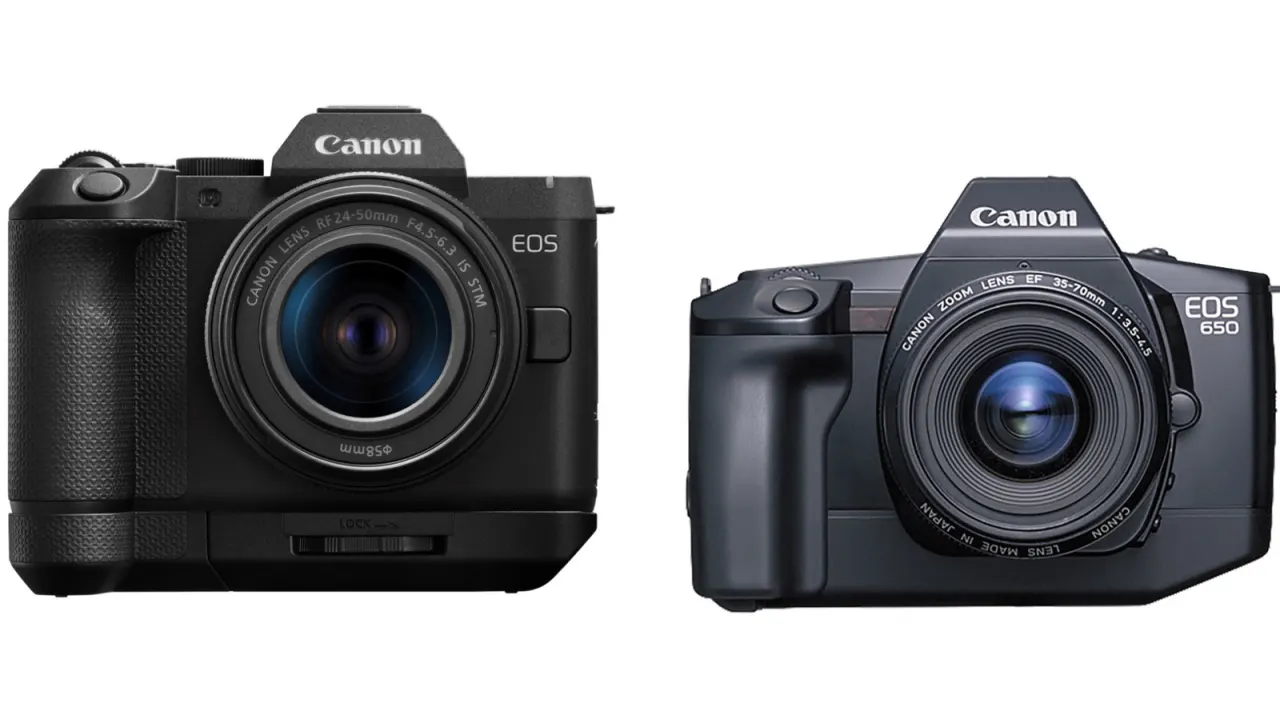
Canon has unveiled the EOS R8 II, a 24-megapixel entry-level full-frame camera whose boxy new design deliberately echoes the classic EOS 650 SLR film camera, marking a departure from the rounded look of the original R8. The refresh addresses several criticisms levelled at the previous model, adding in-body stabilisation, a faster burst rate and an improved autofocus system, making it a more compelling option for photographers even as Canon's recent product focus has leaned towards vlogging-oriented gear.
The camera can shoot at up to 40fps in electronic shutter mode and captures significantly larger bursts than its predecessor, while its 5-axis in-body stabilisation—absent from the original R8—reduces shake by up to 7.5 stops and makes it the lightest full-frame camera with this feature at 546 grams. Autofocus now uses Canon's Dual Pixel CMOS AF II with 100% coverage and the ability to register specific people for tracking, a feature previously reserved for higher-end models. Video capabilities remain largely unchanged from the R8, including oversampled 4K 60p and uncropped 1080p at 180fps, but benefit from the same improved autofocus tracking. The EOS R8 II is available to pre-order for $1,899 (or $2,099 with a kit lens), shipping from late October.
In short
- Canon's new EOS R8 II mimics the retro EOS 650 SLR design
- Adds 5-axis stabilisation, faster 40fps burst shooting and better autofocus
- Priced at $1,899, shipping late October
Explained simply
Canon is a Japanese camera maker whose EOS range includes both digital cameras and older film models. The EOS 650, released in the 1980s, was one of Canon’s early autofocus SLRs; SLR cameras use a mirror to show the photographer the view through the lens. The R8 is part of Canon’s newer mirrorless range, which has no such mirror.
The EOS R8 II is aimed at photographers looking for a relatively light, lower-priced full-frame camera. “Full-frame” refers to the size of the image sensor, while in-body stabilisation helps reduce blur caused by camera movement. The design recalls an older film camera, but the model uses digital technology and interchangeable lenses.
Canon competes with other camera makers for photographers who want both still photos and video. Improvements to stabilisation, burst shooting and autofocus may matter to people photographing moving subjects or working without a tripod. The camera also retains video features, so it may appeal to buyers who want one device for both photography and filming.