Cartels plan to smuggle cocaine into Europe inside booby-trapped drone submarines that will explode if police try to intercept them
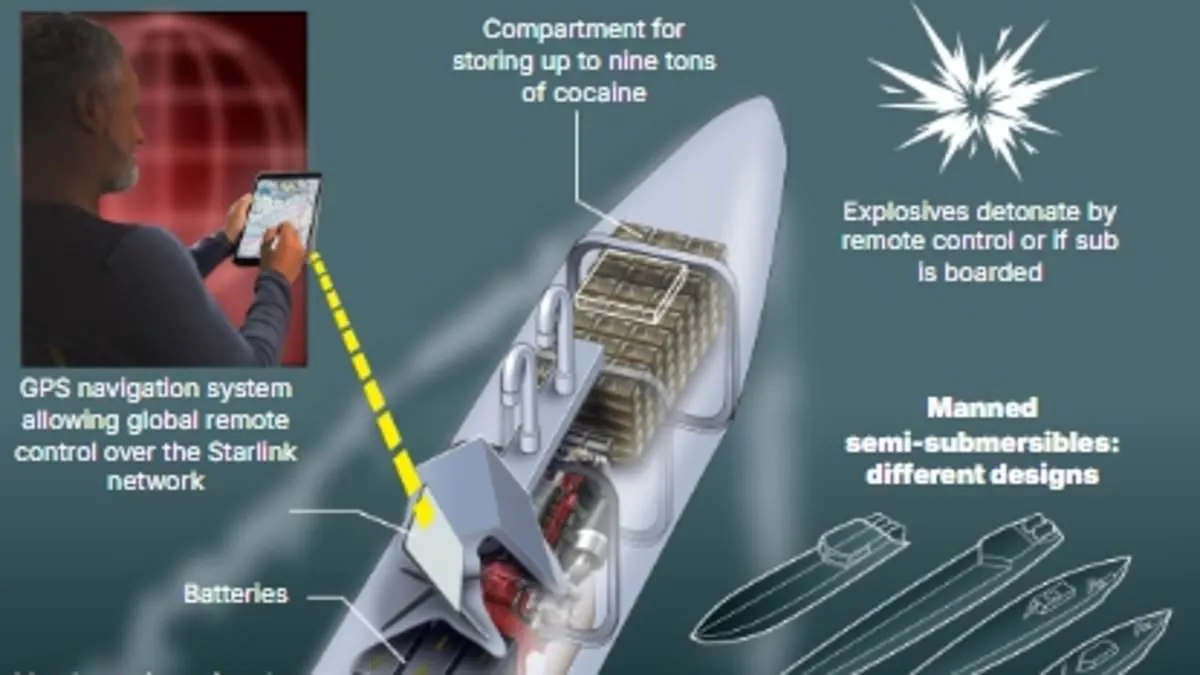
Colombian navy intelligence warns that drug cartels may use explosives-rigged, unmanned submarines to smuggle cocaine across the Atlantic to Europe. The craft could detonate if authorities try to intercept them, making seizures more dangerous and destroying evidence that might reveal where the drugs came from.
The report predicts the technology could be used by 2035, though some experts think it may appear within two years. Existing crewed narco-subs can carry up to nine tonnes of cocaine, while a prototype found near Santa Marta last year was believed capable of carrying 1.5 tonnes and travelling 800 nautical miles. Spain seized three drug-smuggling underwater drones in 2020, and a sub intercepted off Galicia in 2019 was believed to have crossed 4,778 nautical miles from Colombia.
- Cartels may use explosive drone submarines to move cocaine to Europe.
- Colombia’s navy predicts they could appear by 2035.
- Earlier unmanned drug-smuggling submarines have already been seized.
New here? Start with this
Drug cartels have long used submarines to smuggle cocaine across oceans to avoid detection. These vessels, often called "narco-subs," can carry large quantities of drugs and have made voyages from Colombia to Europe. Now, intelligence reports suggest cartels may soon equip unmanned versions with explosives that detonate if authorities attempt to intercept them.
The potential use of self-destructing unmanned submarines would create risks for authorities trying to stop drug shipments. If a submarine detonates when intercepted, it could harm officers and destroy evidence that might reveal how the operation works and who is responsible. This could make it harder for authorities to track and dismantle these smuggling networks.
Intelligence estimates these submarines could appear within two years or possibly by 2035. Cartels have already demonstrated technical capability with earlier submarines that have crossed thousands of nautical miles and carried substantial quantities of cocaine. Spanish authorities seized underwater drones being used for smuggling in 2020, showing that the technology is already in use.
Both sides, in good faith
The strongest fair case each way — we don't pick a winner.
The case for
Law enforcement agencies possess specialist intelligence and have legitimate grounds for concern given drug cartels' demonstrated capacity for sophisticated, constant innovation in smuggling methods. Submersible technology has already proven effective, and explosive devices are entirely within cartel capabilities, making the trajectory toward unmanned, booby-trapped vessels a credible evolution of existing tactics. Taking such warnings seriously represents prudent risk management that protects enforcement personnel from escalating dangers.
The case against
This describes a largely speculative scenario without concrete evidence of actual cartel development or deployment. The timeline predictions range from two years to 2035, betraying genuine uncertainty about feasibility or intent. Without proof of active capability-building programmes, this may reflect worst-case hypothesising rather than imminent threat. Security agencies have incentives to inflate threats to justify expanded budgets and authority, and resources might be better directed toward addressing proven current smuggling methods rather than theoretical future scenarios that may never materialise.