CERN switches to Debian following Red Hat support cuts
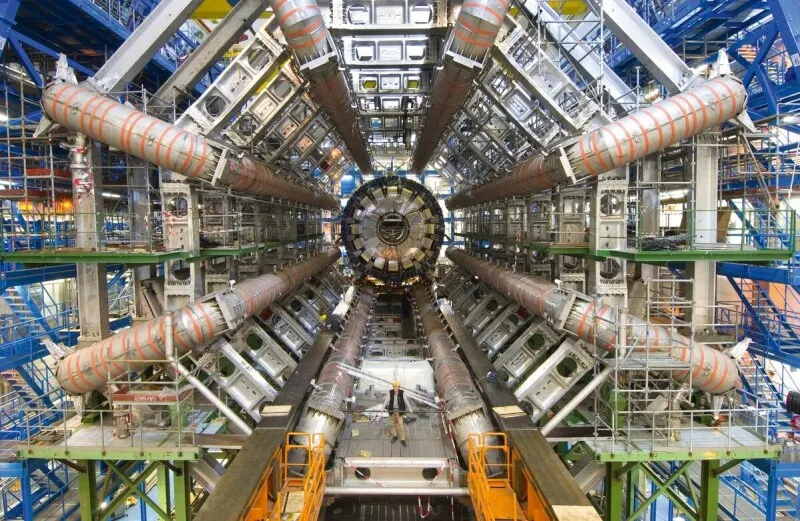
CERN, the operator of the Large Hadron Collider, is switching thousands of "front end" control computers underground from Red Hat-family Linux distributions to Debian. The move was prompted largely by Red Hat's 2020 decision to slash CentOS 8's support lifespan by eight years, leaving CERN unable to plan the long-term hardware and software lifecycles it needs for equipment that must run reliably for up to 15 years.
CERN had relied on Red Hat-derived systems for over two decades, including the jointly maintained Scientific Linux and later its own CentOS 7 build after Red Hat absorbed CentOS in 2014. A key blocker was that RHEL 9 and RHEL 10 raised minimum CPU requirements, which would have made roughly 65 percent of CERN's embedded control computers obsolete, some running specialised hardware such as VMEbus boards. Engineers estimated replacing this custom hardware would cost at least CHF 5.4 million (about £5 million), require new staff and even new underground tunnels, with only a 20 percent chance of success, prompting CERN to evaluate and ultimately adopt Debian instead.
In short
- CERN is moving thousands of accelerator control computers from Red Hat to Debian
- Red Hat's early CentOS 8 end-of-life and rising CPU requirements forced the switch
- Staying on Red Hat would have cost CERN millions with only a 20% success chance
Explained simply
CERN is the European particle physics laboratory near Geneva, best known for the Large Hadron Collider, which studies the particles that make up matter. Its experiments rely on many computers to monitor and control equipment, including systems installed underground.
Linux is an operating system, and Red Hat and Debian are organisations whose versions of Linux are used on servers and specialist computers. CERN had used Red Hat-based systems for decades, but its control equipment is built to work for many years, so changes to software support and hardware requirements can affect how long that equipment remains usable.
Some of CERN’s computers are connected to specialised hardware that would be costly and difficult to replace. The choice of operating system therefore matters for the reliability and long-term upkeep of the laboratory’s equipment, as well as for the resources needed to update it.
Read the full article at the source →
Originally published by The Register as “CERN moves thousands of accelerator control computers to Debian”.