Chancellor backs off Labour’s push to equalise minimum wage for under-21s… as rate is set to rise 3.9%
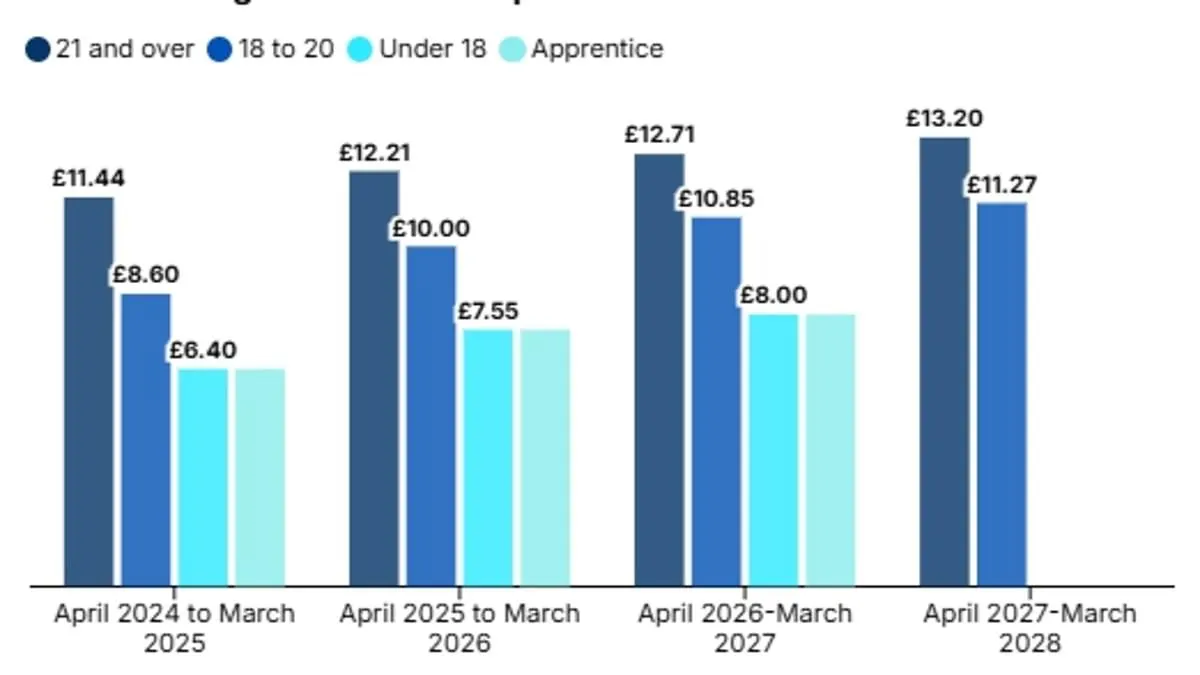
The Chancellor has confirmed a 3.9 per cent rise in the national living wage, from £12.71 to £13.20 an hour, but has not announced a larger increase for workers aged 18 to 20. The decision pauses Labour’s recent push towards equalising minimum wage rates for younger workers and leaves its manifesto promise to remove age bands without a timetable.
The article says the current minimum rate for 18 to 21-year-olds is £10.85 an hour, while 16 to 17-year-olds receive £8; London’s separate living wage is £14.80. Businesses have warned that higher wage costs and increased National Insurance contributions make it harder to employ young people, while almost a million are classed as not in employment, education or training. The Chancellor has acknowledged a trade-off between minimum wage levels and employment.
In short
- National living wage rises 3.9 per cent to £13.20 an hour.
- No larger increase was announced for workers aged 18 to 20.
- Labour’s pledge to remove age-based wage bands remains without a timetable.
Steelman: both sides, in good faith
The strongest fair case each way — we don't pick a winner.
The case for
Moving towards one minimum wage for adults would recognise that workers’ basic needs do not diminish because they are younger, and could reduce in-work hardship for young people facing the same living costs as older colleagues. A higher floor may also strengthen bargaining power and ensure employers compete on productivity rather than relying on age-based lower pay.
The case against
Keeping age bands can help employers account for differences in experience and productivity, and may make them more willing to offer young people a first job or training opportunity. With businesses already facing higher wage and National Insurance costs, raising younger workers’ rates too quickly could reduce entry-level vacancies, so a phased approach may better balance fair pay with access to work.
Explained simply
The UK national minimum wage sets the lowest hourly rate employers can pay, with different rates for different age groups. The national living wage is the highest of these rates and applies to workers aged 21 and over; London’s separate living wage is a voluntary benchmark.
Labour has pledged to remove age bands, which would bring younger workers’ minimum rates closer to the adult rate. The Chancellor sets the rates after advice from the independent Low Pay Commission, which considers workers’ incomes alongside the effect of wage costs on employers.
The issue matters to young workers and businesses deciding whether to hire them. The debate takes place as many young people are outside work, education or training, and employers have raised concerns about higher wage and National Insurance costs.