World news and discussion on TalkFuse.
China blocks Bloomberg reporter from Trump-Putin-Xi meeting over question to Trump
Developing story first seen 3 hours ago
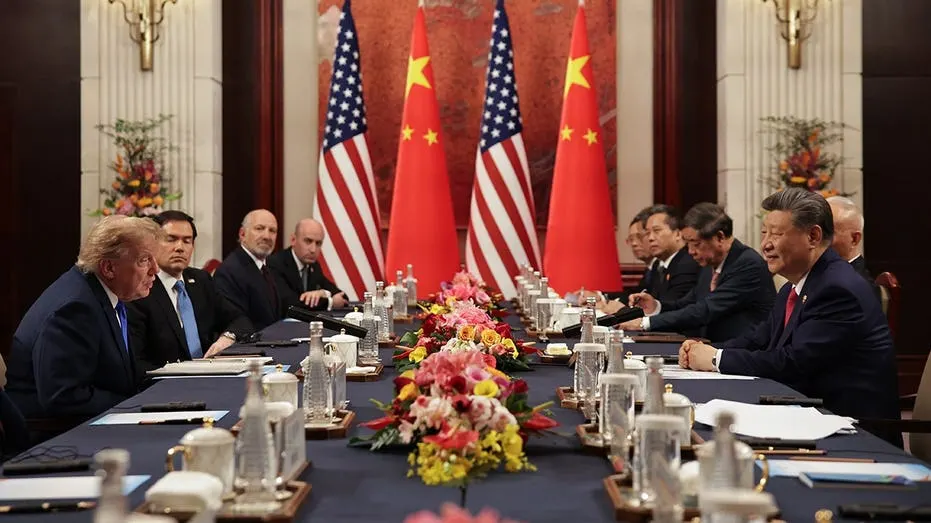
New details say the White House pressed Chinese officials to admit Bloomberg reporter Annmarie Hordern to a meeting between Donald Trump, Xi Jinping and Vladimir Putin, but they refused. Her exclusion followed a question she called out to Trump during his earlier meeting with Xi, making the dispute a point of friction over press access at a summit focused on major security and economic issues.
Hordern asked whether Nvidia chief Jensen Huang had been disloyal to the United States. Beijing told the US travel pool that shouting questions was “extremely rude” and warned journalists could be removed. The leaders’ talks covered nuclear arms control, trade and the wars in Ukraine and Iran; the article also links the question to Huang’s resignation after disclosing an affair and claims about access to advanced Nvidia chips in China.
- Sources
- 2
- Outlets
- 2
- Left · Centre · Right
- 1 · 0 · 1
In short
- China barred Bloomberg reporter Annmarie Hordern from the leaders’ meeting.
- The White House pushed for her admission but China refused.
- Her question to Trump concerned Nvidia’s Jensen Huang.
How this story developed
- 35 minutes ago Chinese officials barred Bloomberg reporter Annmarie Hordern from a meeting between Donald Trump, Xi Jinping and Vladimir Putin after she called out a question to Trump during an earlier session with Xi.
- 41 minutes ago New details say the White House pressed Chinese officials to admit Bloomberg reporter Annmarie Hordern to a meeting between Donald Trump, Xi Jinping and Vladimir Putin, but they refused.
Full account
Chinese officials excluded a Bloomberg correspondent from a meeting between Donald Trump, Xi Jinping and Vladimir Putin after she called out a question to Trump during an earlier session with Xi. The dispute over press access took place on the sidelines of the Apec summit in Shenzhen, where the three leaders held their first trilateral meeting of this kind. A White House official said the US side argued for the reporter’s inclusion, but Beijing maintained its decision to bar her.
The question concerned Jensen Huang, the Nvidia chief executive and a Trump ally: the reporter asked whether Huang had been disloyal to the United States. Another journalist also began asking a question at the earlier meeting, but Chinese officials stopped them. Beijing later warned the US travelling press pool that calling out questions was considered extremely rude and could lead to journalists being removed. The reports connect the episode to wider scrutiny of Nvidia and its access to China, while noting that Beijing has denied allegations that Alice Huang, whose company was said to have helped China obtain advanced chips, was a Chinese government agent.
The press dispute unfolded amid a meeting that both reports describe as historically unusual. Trump, Xi and Putin discussed nuclear arms control, Ukraine and international security, but announced no concrete agreement. Trump presented the three countries as having a special responsibility to discuss reducing nuclear stockpiles. Xi urged efforts to prevent nuclear war and called for nuclear weapons to be prohibited and destroyed. The talks came as the New Start treaty limiting US and Russian deployed strategic warheads approaches its expiry in February; no replacement accord was announced.
The accounts also place the gathering in the context of strained relations and ongoing conflicts. The report on the press row highlights the warm tone Trump adopted towards Xi and Putin, including his description of Putin as a friend and Xi’s welcome at the airport. The other account gives greater weight to the lack of progress on Ukraine and the absence of Kyiv from a subsequent joint declaration, as well as Trump’s criticism of the International Criminal Court. Together, the reports depict a cordial public presentation alongside unresolved disputes over security, war and access for journalists.
Where outlets differ
From the full account, which is AI-written from the sources:
The first report focuses on Bloomberg reporter Annmarie Hordern’s exclusion, the question to Trump and the disagreement between Chinese officials and the White House over access. The second centres on the leaders’ discussions and the absence of concrete outcomes, including on nuclear arms control and Ukraine; it does not cover the press-access dispute.
The first report foregrounds the leaders’ friendly public interactions and the Nvidia-related context for the reporter’s question. The second places more emphasis on the wars in Ukraine and Iran, the approaching expiry of New Start, and Trump’s remarks about the International Criminal Court.
Left-leaning outlets 1
Only here: really, making, history, five, takeaways
Right-leaning outlets 1
Only here: china, blocks, bloomberg, reporter, question
Every side used: meeting, trump, putin
Headline columns compared word for word; nothing in them is AI-written.
Steelman: both sides, in good faith
The strongest fair case each way — we don't pick a winner.
The case for
China can argue that access to a tightly controlled leaders’ meeting is a matter for its hosts, and that shouted questions can disrupt proceedings or breach agreed summit protocol. It may also say that restricting access after a journalist disregarded those rules is a legitimate way to manage security and order, provided the rules are applied consistently.
The case against
The United States and press-freedom advocates can argue that excluding a reporter because she asked a politically sensitive question punishes scrutiny and risks deterring other journalists from challenging powerful leaders. At a summit addressing security and economic issues, open reporting and equal access help the public assess what leaders discuss, so denying access may appear disproportionate even if the question was disruptive.
Explained simply
Bloomberg is a global news organisation, and Annmarie Hordern is one of its reporters covering the US presidency. At high-level meetings, journalists may travel with leaders and ask questions, but the host government can control who is allowed into particular events.
Donald Trump is the US president, Xi Jinping leads China and Vladimir Putin leads Russia. Their discussions often involve issues that affect other countries, including trade, nuclear weapons and conflicts such as the wars in Ukraine and Iran.
Nvidia makes computer chips used in artificial intelligence, and its chief executive, Jensen Huang, has become a prominent figure in debates over US technology and China. The episode raises questions about how reporters can scrutinise leaders and how press access is handled during sensitive diplomatic meetings.
Coverage · 2 sources
Bias meters
From 2 rated sources.
Asia Government Politics World