China’s economic growth picks up as AI boom boosts exports
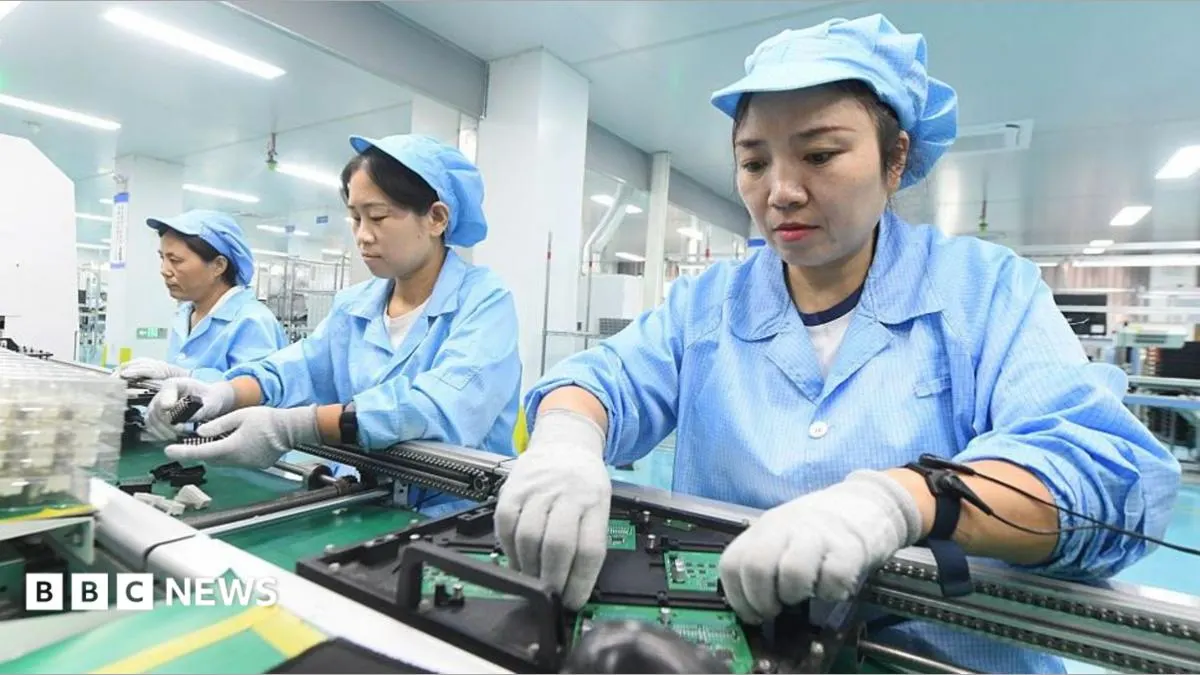
China’s economy grew by 4.5% in the third quarter, recovering from a three-year low as overseas demand for chips and other AI data-centre components lifted exports. The rebound matters because export growth is helping offset weak domestic spending, though trade tensions and uncertainty over AI investment cloud the outlook.
Growth was up from 4.3% in the previous quarter but below the 5% recorded in the first three months of the year, and sits at the lower end of Beijing’s 4.5%-5% annual target. China’s trade surplus is on course to exceed last year’s record $1.2tn, while a property slump, weak wage growth and high youth unemployment continue to weigh on consumers. Beijing has announced interest-rate cuts for some businesses and property-buyer subsidies, as Western economies raise concerns about competition from cheap Chinese goods.
- China’s third-quarter growth rose to 4.5%.
- AI-related exports helped offset weak consumer spending.
- Trade tensions and uncertain AI returns cloud the outlook.
Both sides, in good faith
The strongest fair case each way — we don't pick a winner.
The case for
The export-led rebound shows China can turn its strengths in manufacturing and technology into growth even while domestic demand is weak. Supporters of this approach may argue that AI-related exports sustain jobs and incomes, and that targeted rate cuts and housing support can help consumers recover over time.
The case against
The headline growth figure may mask an economy still reliant on overseas demand while households face weak wage growth, youth unemployment and a prolonged property slump. Critics may argue that an expanding trade surplus and reliance on AI investment leave growth exposed to trade tensions and uncertain demand, while cheap exports intensify competition for other economies.