World news and discussion on TalkFuse.
Clemson, South Carolina get into benches clearing brawl and every single player is assessed a penalty
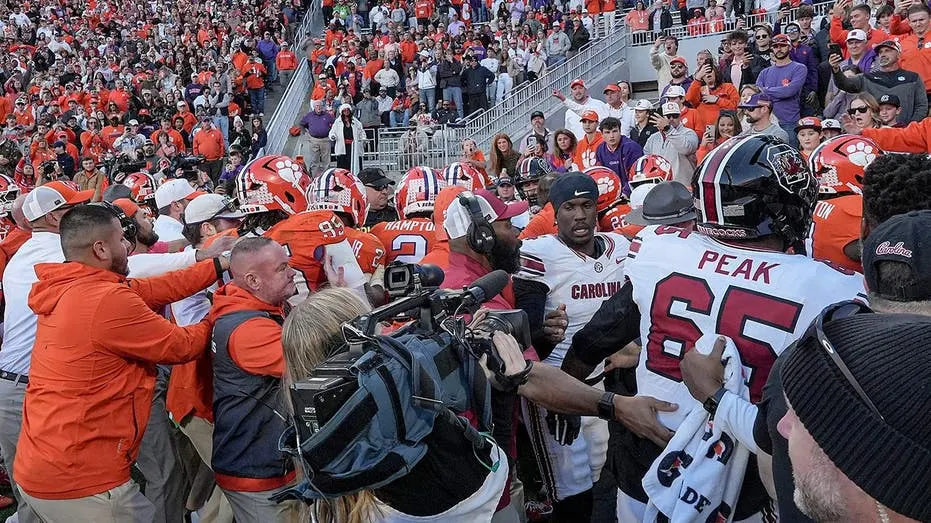
A late hit on South Carolina quarterback LaNorris Sellers sparked a benches-clearing fight with Clemson during the second quarter. The officials assessed an unsportsmanlike conduct penalty to every player in the game, an extraordinary response that underlined the tensions between the rival teams.
Clemson defensive back Ashton Hampton hit Sellers near the end zone after his touchdown run, prompting South Carolina players to confront him. A shove by Gamecocks lineman Hank Purvis led to a scrum, and Clemson defensive tackle Kourtney Kelly was seen throwing punches as both benches emptied. Hampton and Kelly, along with Purvis, received unnecessary roughness penalties; Clemson went on to win 21-17.
In short
- A late hit on LaNorris Sellers triggered a fight.
- Every player was assessed an unsportsmanlike conduct penalty.
- Clemson beat South Carolina 21-17.
Steelman: both sides, in good faith
The strongest fair case each way — we don't pick a winner.
The case for
Supporters of the officials' decision argue that a benches-clearing fight is a collective failure that no single player can fairly be blamed for, and that penalising everyone on the field sends a clear message that escalation will not be tolerated. They note that a uniform penalty avoids the difficulty of identifying exactly who started or joined each exchange, and that selective punishment would be harder to justify. From this view, the decision protects player safety and the integrity of the contest by making retaliation a losing prospect for everyone involved.
The case against
Critics contend that a blanket penalty punishes players who took no part in the violence, including those who stood by or moved to separate teammates, and that officials are better placed to identify the individuals who actually threw punches. They argue that collective sanctions sit uneasily with the principle that discipline should follow personal conduct, and that the scale of the response can overshadow a game that should be decided on the field. Their preferred approach would be to target specific acts, such as the punches thrown by Kelly, and to address the late hit that sparked the confrontation on its own terms.