Climate extremist is arrested over German electricity sabotage – after fears it was Russian hybrid war attack
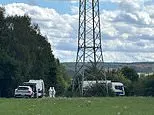
German authorities have arrested a 48-year-old man, identified only as Daniel V., on suspicion of carrying out a string of sabotage attacks on the country's electricity grid, easing fears that Russia was behind a hybrid campaign against critical infrastructure. He was detained near Weisweiler in western Germany carrying explosive devices, ending a manhunt sparked by letters claiming responsibility for attacks on substations across three German states and citing opposition to fossil fuels as the motive. Interior Minister Alexander Dobrindt had described the case as likely "climate extremism", though it remained unclear whether the suspect acted alone.
Prosecutors are investigating a 1 September attack near the Jaenschwalde coal-fired power plant in Brandenburg, where improvised explosive devices were found at a substation, alongside similar incidents in North Rhine-Westphalia and Saxony that have not yet been formally combined into one probe. The suspect also claimed attacks on a substation in Bergheim, which knocked five power generation units offline, and on one in Dormagen, where a passer-by spotted pipes fitted with cables and timers. The episode had heightened concern given Germany's recent experience of suspicious drone activity, including an explosive-laden drone found near a Ukrainian cargo plane at Leipzig airport in August, incidents Germany has linked to a wider pattern of suspected Russian hybrid attacks, which Moscow denies.
In short
- German man, 48, arrested over grid sabotage attacks
- Motive appears to be "climate extremism", not Russia
- Attacks hit substations in three states, one knocked out power units
Explained simply
Germany relies on a network of power stations and substations to generate and distribute electricity. Substations connect parts of that network and help direct power to homes, businesses and industry, so damage can disrupt electricity supplies and raise concerns about the security of essential services.
The incidents described involved sites in Brandenburg, North Rhine-Westphalia and Saxony, including facilities linked to coal-fired power generation. Letters claiming responsibility cited opposition to fossil fuels, while investigators have not established whether the incidents were connected or whether anyone else was involved.
The case drew attention amid German concerns about possible foreign interference in critical infrastructure, including suspected Russian activity that Moscow denies. Establishing who was responsible matters for assessing the risks to the electricity network and deciding how authorities should protect it.