Science news and discussion on TalkFuse.
Cloudy skies lead to mixed fortunes for Scotland’s eclipse hunters
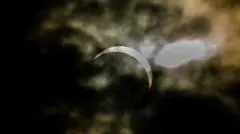
Cloud cover gave Scotland’s eclipse watchers mixed results, with many seeing only brief glimpses while others experienced the unusual dimming and cooling as the Moon blocked most of the Sun. The event was the most dramatic solar eclipse visible from the UK since August 1999, drawing crowds to locations including Edinburgh, Ayr and Whitelee Windfarm.
The eclipse began shortly after 18:00 on Wednesday and lasted about two hours, with Scotland seeing up to 95% of the Sun obscured at its peak. Clearer breaks in the cloud allowed some spectators, particularly in the east, to see a crescent of sunlight, while totality was visible in parts of Spain and Portugal. Smaller eclipses are expected in coming years, but the next total solar eclipse will not occur until 23 September 2090.
In short
- Clouds limited many Scottish views of the eclipse.
- Up to 95% of the Sun was obscured.
- Scotland’s next total eclipse is in 2090.
Explained simply
A solar eclipse happens when the Moon passes between Earth and the Sun, blocking some or all of the Sun from view. In a partial eclipse, the Sun appears as a narrowing crescent; during a total eclipse, the Moon covers it completely for a short time.
How much people can see depends on where they are and the weather. Clouds can hide the view, though an eclipse may still make the surroundings seem dimmer and cooler. Total eclipses are visible only along a limited path, while places outside it see a partial eclipse.
Eclipses are rare opportunities to watch the Sun change shape, but they must be viewed with proper eye protection. Scotland will see smaller eclipses in the coming years; a total eclipse visible there is not expected until 2090.