World news and discussion on TalkFuse.
CNA Explains: Why are stock markets falling so sharply, and could this become another dotcom crash?
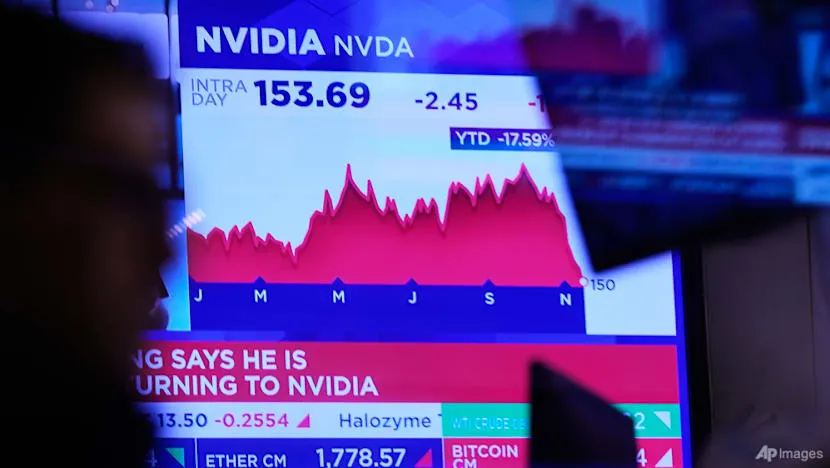
US and Asian stock markets have fallen sharply, with the S&P 500 and Nasdaq entering correction territory. The sell-off matters because it reflects doubts about the returns from heavy artificial intelligence investment, alongside concerns about interest rates and market risk-taking; a correction alone does not mean a recession is coming.
On Friday, 20 November, the S&P 500 fell 3.7 per cent, putting it 11.6 per cent below its 6 October peak, while the Nasdaq dropped 5.3 per cent. Asian markets also slid, with South Korea’s Kospi down more than 5 per cent at one point. Experts cited stretched technology valuations, large AI infrastructure costs, interest-rate concerns and automated selling, while cautioning that a sharp rebound would not necessarily signal a lasting recovery.
In short
- US stocks entered correction territory as technology shares led losses.
- Doubts about AI spending and interest rates are adding pressure.
- A rebound alone would not confirm a sustained recovery.
Steelman: both sides, in good faith
The strongest fair case each way — we don't pick a winner.
The case for
The sell-off may be a reasonable correction after technology shares rose on high expectations for AI, while the scale and uncertain returns of AI investment make some valuations harder to justify. Higher interest-rate concerns and automated selling can amplify a fall, but a market correction by itself does not show that a recession or another dotcom-style crash is inevitable.
The case against
Sharp falls across US and Asian markets, particularly in technology shares, may signal that investors are reassessing risks more broadly than the cost of AI infrastructure alone. If expectations for AI returns disappoint while financing remains costly, stretched valuations could fall further; a quick rebound would not necessarily mean the underlying risks have passed.
Explained simply
Stock markets let investors buy and sell small stakes in companies. The S&P 500 tracks many large US firms, while the Nasdaq has a strong focus on technology companies; a fall of 10 per cent or more from a recent peak is commonly called a correction.
Investors have poured money into artificial intelligence, including the data centres and computer chips needed to run it, and some are questioning whether the profits will justify the cost. Higher interest rates can also make borrowing more expensive and future company earnings less attractive, while automated trading can speed up a sell-off.
The dotcom crash was the collapse of technology share prices around 2000, after enthusiasm for internet companies had pushed many valuations to high levels. The comparison matters because both episodes involve strong hopes for new technology, but a market correction by itself does not show that a similar crash or recession will follow.
Americas Asia Business Markets World