World news and discussion on TalkFuse.
Commentary: What the timing of Najib’s house arrest says about Malaysian politics
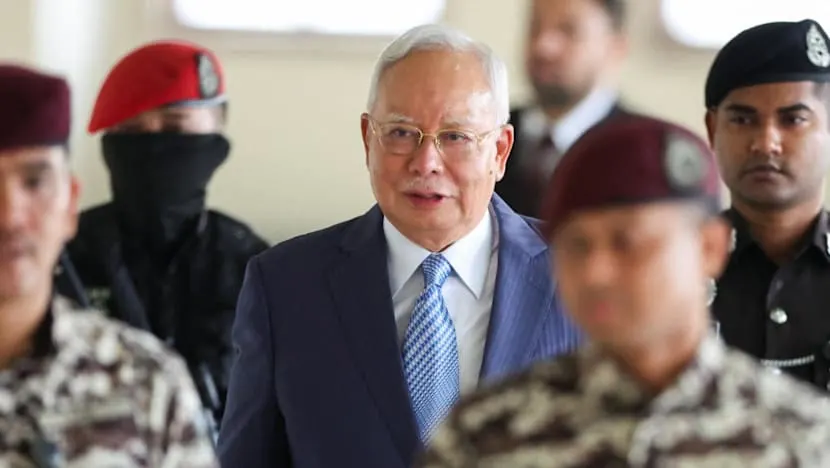
Former Malaysian prime minister Najib Razak left Kajang Prison on 6 November after a RM50 million fine was paid, but was returned hours later while officials sought legal clarification about his house arrest. The commentary argues that the timing reflects electoral calculations: moving Najib’s case out of the spotlight before state elections may help UMNO avoid making his corruption convictions a campaign issue.
Najib’s conditional pardon allows him to serve his reduced sentence in the SRC International case under house arrest until 23 August 2028, but questions remain about how it relates to his separate 15-year sentence linked to 1MDB. The article says UMNO faces little electoral risk in Melaka, where its coalition won 21 of 28 seats last time and is now cooperating with PAS, while it has no presence in Sarawak. It suggests the party is focused on the general election due by early 2028, expecting voters’ attention to have shifted by then.
In short
- Najib’s release was briefly halted over legal questions.
- The timing may keep his case out of state election campaigns.
- UMNO is looking ahead to the general election due by early 2028.
Steelman: both sides, in good faith
The strongest fair case each way — we don't pick a winner.
The case for
Keeping Najib’s case out of the immediate campaign spotlight could be seen as prudent electoral management: UMNO may want voters to judge its current policies and candidates rather than let a divisive, unresolved legal dispute dominate state elections. If the party expects the issue to matter more at the next general election, it may also believe that time will allow legal questions to be settled and public attention to move on.
The case against
The timing may reasonably be viewed as politically calculated, because postponing scrutiny until a later election could reduce the immediate cost to UMNO of Najib’s convictions and disputed house arrest. Voters have a legitimate interest in whether party strategy is shaping the public handling of a high-profile case, and delaying that debate may weaken confidence in equal treatment and accountability.
Explained simply
Najib Razak was Malaysia’s prime minister from 2009 to 2018 and a senior figure in UMNO, one of the country’s major political parties. He was convicted in a case involving SRC International, a former state investment company, and in a separate case linked to 1MDB, a state fund.
Malaysia’s king granted Najib a conditional pardon that reduced his sentence in the SRC International case and provided for him to serve the remainder under house arrest. The arrangement applies until August 2028, while its relationship to his separate 1MDB sentence remains a legal question.
UMNO is part of a governing coalition and must weigh Najib’s prominence against the political cost of his convictions. State and national elections matter to the party because they shape its influence and prospects in government.
Asia Elections Government Politics World