Business news and discussion on TalkFuse.
Sheffield plans second climate bond after £1m school solar investment
Developed over time first seen 2 months ago
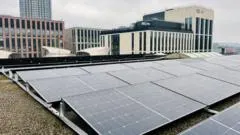
Sheffield City Council plans to launch a second climate bond in 2026, after the first raised £1m to support solar panel installations at schools. The scheme aims to expand renewable energy generation, reduce schools’ electricity costs and help the council progress towards its net-zero goals, while potentially funding other climate projects.
The council has agreed to commission a 25-year contract to operate and maintain solar panels on the roofs of 21 schools. Schools will use the electricity generated, with surplus power sold to the national grid. Launched in December 2025, the bond allowed residents to invest from £5 for five years, receiving a return as well as their original investment.
- Sources
- 2
- Outlets
- 2
- Left · Centre · Right
- 0 · 1 · 0
In short
- Sheffield’s first climate bond raised £1m.
- Solar panels are planned for 21 schools.
- A second bond is expected later in 2026.
How this story developed
- 2 months ago The council’s transport and regeneration committee has now approved a 25-year contract to operate and maintain the school installations, while confirming the second bond will also support extra solar capacity and other climate projects.
- 2 months ago The first bond has reduced schools’ energy costs and carbon emissions while giving pupils practical experience of renewable energy, prompting plans for a further offer in late 2026.
- 2 months ago Sheffield City Council launched a £1 million climate bond to install solar panels at 21 schools, with residents investing from £5 for five years to support its net-zero plans.
Full account
Sheffield City Council is preparing a second community climate bond after the first phase raised £1 million for renewable-energy work. The scheme is intended to support projects that cut emissions while reducing operating costs for public institutions, with schools among the main beneficiaries.
Money from the initial bond will help finance solar panels on the roofs of 21 schools. Under a proposed 25-year operating and maintenance arrangement, the schools are expected to use the electricity they generate, while surplus power could be exported to the national grid. The council says the arrangement should contribute to its net-zero ambitions and ease pressure on school energy budgets.
The first bond, launched through a specialist investment company in December 2025, allowed residents to invest from £5. Investors were promised a return over five years, together with repayment of their original contribution, according to the council. Officials have described the model as a way of directing local investment towards schemes capable of generating both environmental and financial benefits.
A further bond is expected later in 2026 and could support additional school solar installations alongside other climate projects. Councillor Alexi Dimond presented the next phase as part of a broader programme for schools, communities and the council, while councillor Minesh Parekh placed greater emphasis on the direct educational benefit of lower energy bills. The available reports do not indicate whether the second bond’s size, terms or final list of projects has yet been confirmed.
Where outlets differ
From the full account, which is AI-written from the sources:
Source 2 provides the substantive account, including the £1 million raised, the 21 schools, the proposed 25-year contract and the planned 2026 bond. Source 1 contains only a sign-in and cookie notice and does not present an independently usable news report, so it offers no additional facts or contrasting emphasis.
Steelman: both sides, in good faith
The strongest fair case each way — we don't pick a winner.
The case for
The climate bond scheme represents genuine innovation in public climate finance—it mobilises community wealth for environmental infrastructure whilst maintaining accountability, offers residents fair returns on investment, and tangibly reduces school operational costs that can be redirected to educational provision. This model demonstrates how councils can deliver climate ambitions through financially sustainable mechanisms that align public benefit with citizen participation, expanding capacity beyond traditional budgets.
The case against
Whilst well-intentioned, the scheme risks privatising public infrastructure costs onto residents and communities, obscuring the council's primary responsibility to fund schools directly through transparent taxation. A 25-year contract creates institutional dependence on volatile energy market returns and technology that may become obsolete, whilst potentially favouring wealthier residents who can invest capital over those who cannot, raising questions of equity in who bears the costs of the climate transition.
Explained simply
A climate bond is a way for ordinary people to invest money in their council's environmental projects and get their money back with a return. Sheffield City Council launched this scheme to help fund renewable energy installations and other green projects whilst meeting its target to reach net-zero carbon emissions.
Residents can invest as little as £5 in the scheme for five years, and receive both their investment back and a financial return when the term ends. The money raised so far has been used to install solar panels on school buildings, which generate electricity to power the schools and reduce their energy bills.
By funding solar panels on schools, the scheme achieves two things at once: it helps Sheffield move towards its climate goals, and it frees up school budgets that would otherwise go to energy costs. The council has now committed to expanding the programme, suggesting the approach has proven successful enough to warrant further investment in renewable energy across more schools.
Coverage · 2 sources
Business Climate Markets Science Sheffield