World news and discussion on TalkFuse.
Copernicus! Tony Soprano! The inventor of the semicolon! The heroic obsessions of artist Isabel Nolan
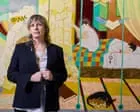
Isabel Nolan, a Dublin-based artist, has created Ireland's presentation for the Venice Biennale, transforming the national pavilion into a secular chapel-like installation titled "Dreamshook". The work borrows heavily from Christian visual language, such as stained-glass-style arches and radiant tapestries, but redirects that aesthetic power towards celebrating secular figures including scientists and humanists, reflecting Nolan's belief that Christianity has long been skilled at "weaponising aesthetics" for its own ends.
Central to the installation is the story of Aldo Manuzio, a Venetian printer and humanist working around 1500, credited with innovations including italics, blank margins, the semicolon and an early precursor to the paperback book. One tapestry depicts Manuzio visited in a dream by an angel amid a swirl of winged books, symbolising his vision of making knowledge widely accessible rather than confined to the church and nobility; despite being a Christian, he was one of history's most prolific printers of classical Greek and Roman texts. The exhibition, rich in sculpture, textile and drawing, also includes benches for weary visitors, and coincides with a retrospective of Nolan's work, "Some Fundamental Forces", opening at Southwark Park.
In short
- Isabel Nolan represents Ireland at the Venice Biennale with "Dreamshook" installation.
- The work reimagines Christian aesthetics to celebrate secular humanist figures.
- It centres on Renaissance printer Aldo Manuzio, inventor of the semicolon.
Steelman: both sides, in good faith
The strongest fair case each way — we don't pick a winner.
The case for
Religious institutions have long wielded extraordinary aesthetic power—architecture, iconography, ritual—to shape human consciousness and values. Nolan's essential insight is that secular humanist aspirations for knowledge, reason and human flourishing deserve equal aesthetic authority; figures like Manuzio, who democratised access to learning, merit visual language as resonant as any saint. Reclaiming these proven forms for secular celebration is neither mockery nor theft but a clear-eyed recognition that aesthetics serve whoever commands them most powerfully.
The case against
There is a tension between critiquing Christianity as having 'weaponised aesthetics' whilst simultaneously appropriating those very forms as tools for secular ends. The visual language Nolan employs emerged from believers' genuine spiritual experience, not calculated propaganda; repurposing it risks both disrespect and reduction of religious faith to mere cynicism. If secular humanism truly has equal aesthetic authority, a more honest approach might be developing its own visual language rather than borrowing forms whose power it simultaneously condemns as manipulative.
Explained simply
The Venice Biennale is a major international art exhibition held in Venice, where countries present work by artists they select. Ireland’s pavilion is a space for its chosen artist to show work, and Dublin-based Isabel Nolan is representing the country.
Nolan’s installation draws on the look of Christian chapels, including arches and tapestries, but uses it to honour people outside religious tradition. One focus is Aldo Manuzio, a Venetian printer and humanist around 1500 who helped spread classical writing and is associated with innovations such as italics and the semicolon.
The work reflects Nolan’s interest in how images and grand settings can shape what people value. By linking religious forms with figures associated with learning and humanism, it asks visitors to consider who gets honoured and how knowledge has been shared.
Americas Art Culture Entertainment Music Research Science World