Politics news and discussion on TalkFuse.
Czech mass protests: Media is the first casualty ‘when you want to attack democracy’
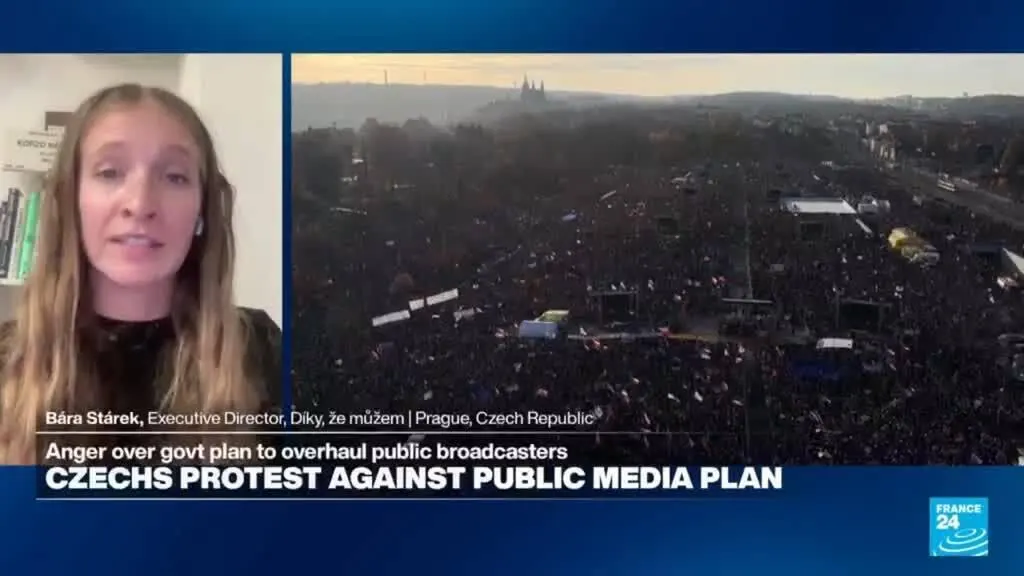
Hundreds of thousands gathered in Prague to protest a Czech government proposal to replace public broadcasting licence fees with direct state funding. Bára Stárek, head of civic group Díky, že můžem, warned that the plan could leave broadcasters vulnerable to political influence, making the dispute a test of protections for independent media.
Stárek said the proposal contains “no real safeguards” and pointed to Slovakia and Hungary as examples of concerns about political influence over media. She also compared the issue with communist-era Czechoslovakia, when, she recalled, there was no free media. The legislation is expected to reach Parliament in January, and she said protests could continue if the government declines to discuss the changes.
In short
- Large demonstrations oppose Czech plans for state-funded public broadcasting.
- Bára Stárek says the proposal lacks safeguards against political influence.
- Legislation is expected in Parliament in January.
Steelman: both sides, in good faith
The strongest fair case each way — we don't pick a winner.
The case for
Replacing licence fees with direct state funding could make public broadcasting more dependent on the government of the day, especially if the proposal lacks firm safeguards for editorial independence. Supporters of the protest argue that independent public media are essential to democratic accountability, and that examples from neighbouring countries make it prudent to protect their funding arrangements before political influence takes hold.
The case against
Direct state funding can be a legitimate way to finance public broadcasting, provided the system includes transparent, durable protections for editorial independence. Advocates of reform could argue that licence fees are an outdated or unfair burden and that changing the funding model does not itself compromise journalism; Parliament can scrutinise the proposal and strengthen safeguards as needed.
Explained simply
Czech public broadcasters provide television, radio and online news for people across the country. They are funded through licence fees paid by households and businesses, a system intended to keep their income separate from day-to-day government decisions.
The proposed change would replace those fees with money from the state budget. The government and Parliament would shape how that funding is set, while broadcasters and their supporters are concerned about how to protect editorial independence. The debate matters because public media can help people scrutinise those in power, and the Czech Republic’s history includes decades of communist rule without a free press.