Damaged fragment deemed ‘unremarkable’ turns out to be rare piece of Homer’s ‘Odyssey’ history
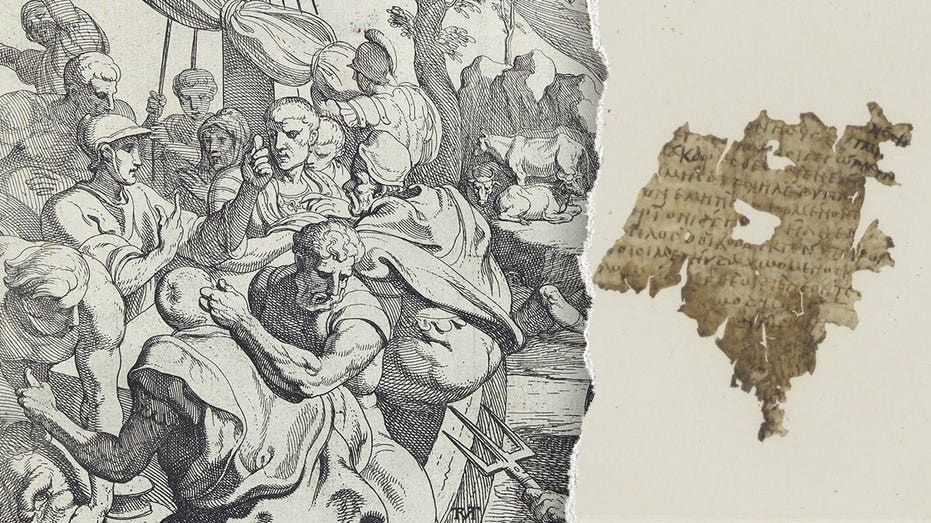
A damaged parchment fragment long regarded as an unremarkable seventh-century item has been identified as a rare surviving piece of Homer’s *Odyssey*. Mark de Kreij recognised Greek phrases while examining manuscripts at Utrecht University, revealing verses from Book 12 describing Helios discovering that Odysseus’ crew had eaten his sacred cattle and demanding punishment from Zeus.
Researchers date the fragment to the third or fourth century AD and believe it was owned by a reader in Egypt’s Fayum oasis around 300 AD. Utrecht University estimates that only about 30 comparable fragments exist worldwide, although experts disagree over whether it came from a complete copy of the *Odyssey* or from a smaller anthology or educational collection; the writing style and compact format have prompted debate.
- Ancient Utrecht fragment identified as part of Homer’s *Odyssey*
- It preserves a dramatic episode involving Helios and Odysseus’ crew
- Experts debate whether it came from a full epic or anthology
Both sides, in good faith
The strongest fair case each way — we don't pick a winner.
The case for
A complete copy of the Odyssey represented a significant investment in materials and scribal labour, indicating serious commitment to preserving Homer's foundational text. The care taken in transcription and the selection of this particular passage—depicting divine justice and consequences for human transgression—suggests the fragment belonged to a comprehensive manuscript intended for serious study or enduring collection, not merely temporary educational use.
The case against
The compact writing style and physical format strongly suggest this fragment derives from an educational anthology or miscellany rather than a complete copy. Such compilations were far more economical to produce and distribute, particularly in provincial Egypt, and commonly featured carefully selected excerpts from celebrated works to serve pedagogical purposes. The specific section preserved here, with its moral and narrative weight, would be precisely the kind of passage worth extracting for instructional value.