Badenoch rejects Reform alliance and sets out Conservative policy contrasts in speech
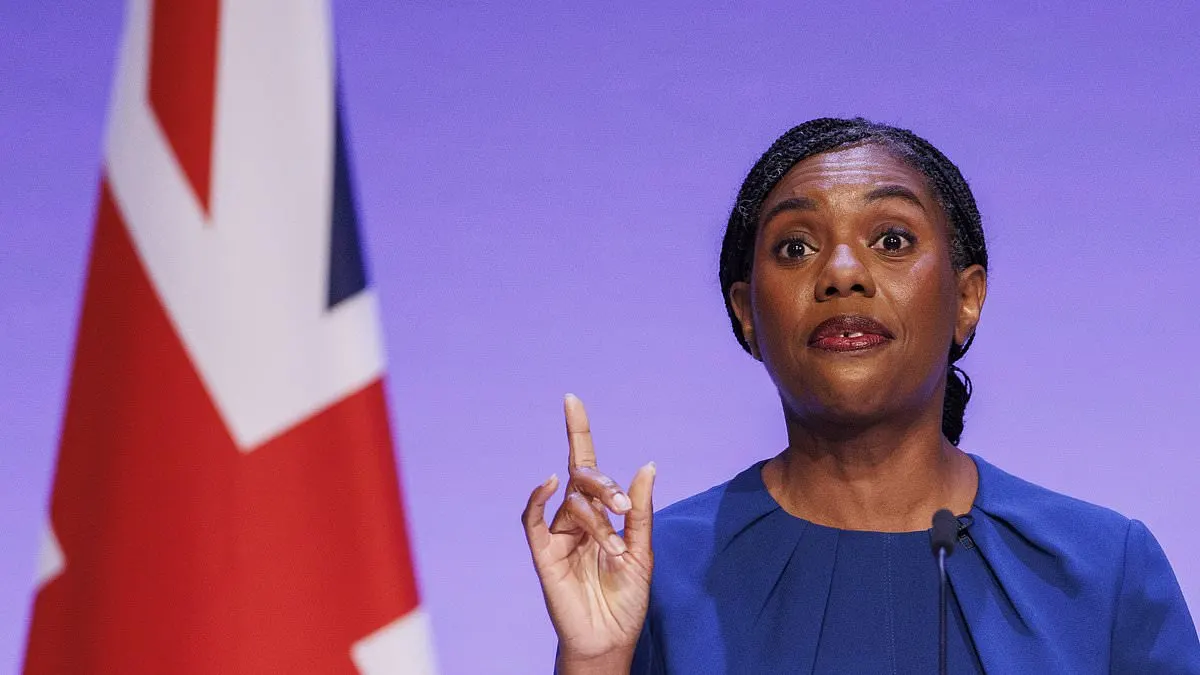
The article argues that Kemi Badenoch’s Conservative Party conference speech marked a forceful break with Reform UK, rejecting calls to unite with Nigel Farage’s party and challenging claims that British identity is tied to being white. It says her comments on her mixed-race children and black England players framed the speech as an anti-racism statement and a defence of a broader British identity.
The writer also says Badenoch used the speech to set out contrasts with Labour on welfare, economic growth and national security. She proposed a card restricting benefit spending to essentials, called economic growth the next Conservative government’s central priority, and argued that economic and national security depend on each other. The supplied article text ends mid-sentence, so its final analysis is unavailable.
- Badenoch rejected calls for the Conservatives to unite with Reform UK.
- Her speech challenged racial tests of British identity.
- She outlined positions on benefits, growth and security.
New here? Start with this
Kemi Badenoch leads the Conservative Party following the Conservatives' defeat in the July 2024 general election. There have been calls for the Conservatives and Reform UK, led by Nigel Farage, to unite as right-wing parties. Badenoch's speech firmly rejected such an alliance, setting out a contrasting direction for the Conservative Party.
Badenoch used the speech to defend a broad definition of British identity and to push back against the suggestion that being British is inherently tied to race or skin colour. She referenced her own mixed-race children and black England football players, implicitly challenging claims that Britishness is exclusive or racial. This positioning signals how the Conservatives intend to compete for voters without simply adopting Reform's more hardline approach.
The speech outlined policy contrasts between the Conservatives and Labour, the party currently in government. Badenoch proposed a system restricting welfare spending to essentials, positioned economic growth as the top priority for a future Conservative government, and argued that economic and national security are intertwined. These proposals set the terms on which she plans to compete ahead of the next general election.
Both sides, in good faith
The strongest fair case each way — we don't pick a winner.
The case for
Badenoch's strategy of maintaining Conservative Party independence and articulating distinct policies allows the party to appeal to a broader electoral coalition than alliance with Reform would permit. By emphasising inclusive British identity and setting clear policy contrasts on welfare and economic growth, she positions Conservatism as forward-looking and governing-focused rather than protest-focused, which appeals to general election voters concerned with practical solutions and social cohesion.
The case against
Reform UK represents significant grassroots Conservative voter dissatisfaction that has been neglected by successive Conservative governments, and rejecting alliance risks splitting the anti-Labour vote fatally. A unified right would be far more electorally competitive and better reflect the genuine concerns of voters about cultural change and establishment responsiveness; Badenoch's inclusive rhetoric, however sincere, may alienate the very voters whose support is essential for any Conservative revival.
Art Culture Elections Government Politics UK World
Read the full article at the source →
Originally published by Daily Mail as “DAN HODGES: This was Kemi’s best speech yet. She exploited glaring gaps in Labour policy, drew a crystal-clear line between the Tories and Reform – and delivered the most powerful anti-racism speech ever heard from a British party leader”.