Science news and discussion on TalkFuse.
Dark Matter Might Have Its Own Periodic Table of Invisible Particles
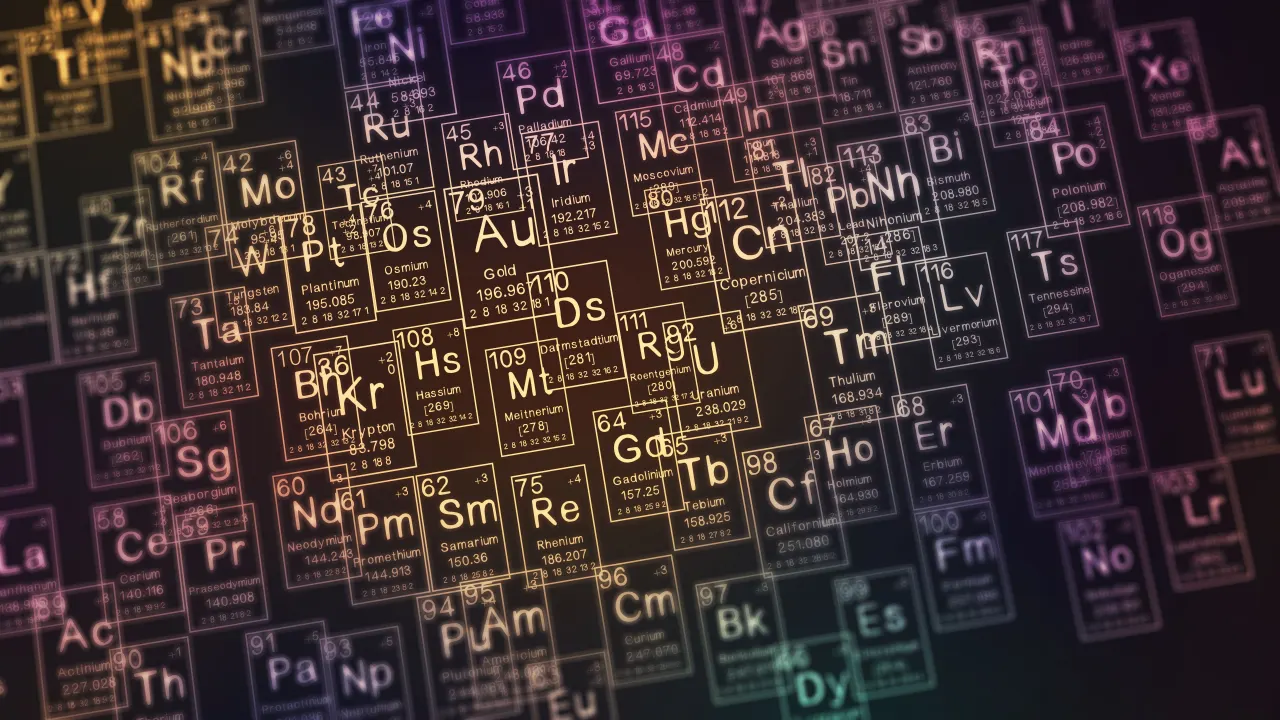
Physicists have explored whether dark matter could contain several kinds of particles that interact with one another, forming dark atoms and nuclei. If such structures exist, a system resembling the periodic table could help explain their properties and organise a hidden sector of matter.
The team’s preprint examines a hypothetical “mirror sector” with its own particles and forces, an idea also proposed to address a puzzle about the Higgs boson’s mass. Their calculations suggest dark elements could range from simple forms to carbon-like structures, but with different rules from ordinary matter; in their model, dark hydrogen would be unstable. No dark atoms have been observed, and whether they could form remains uncertain.
In short
- Dark matter may contain interacting particles.
- A “dark periodic table” could classify their possible structures.
- The idea is theoretical, and dark hydrogen may be unstable.
Explained simply
Dark matter is an invisible substance thought to make up most of the matter in the universe. Scientists cannot see it directly, but they can detect its gravitational pull on galaxies and other visible objects. Its true nature remains unknown, and the most common assumption is that it consists of as-yet undiscovered particles.
One idea explored by physicists is a "mirror sector", a hypothetical hidden world with its own particles and forces, separate from those we know. Some researchers have proposed this as a way to explain a puzzle about the Higgs boson, the particle linked to how other particles acquire mass. In such a model, dark matter particles could bind together into dark atoms and nuclei, much as ordinary particles form the atoms of the periodic table.
Calculations suggest these dark elements could range from simple structures to ones resembling carbon, although they would follow different rules from ordinary matter. In one version of the model, dark hydrogen would be unstable. No dark atoms have been observed, so whether they can form at all is still an open question.