World news and discussion on TalkFuse.
EU agreements to proceed regardless of tuition fee talks, Miliband says
Developing story first seen 5 hours ago
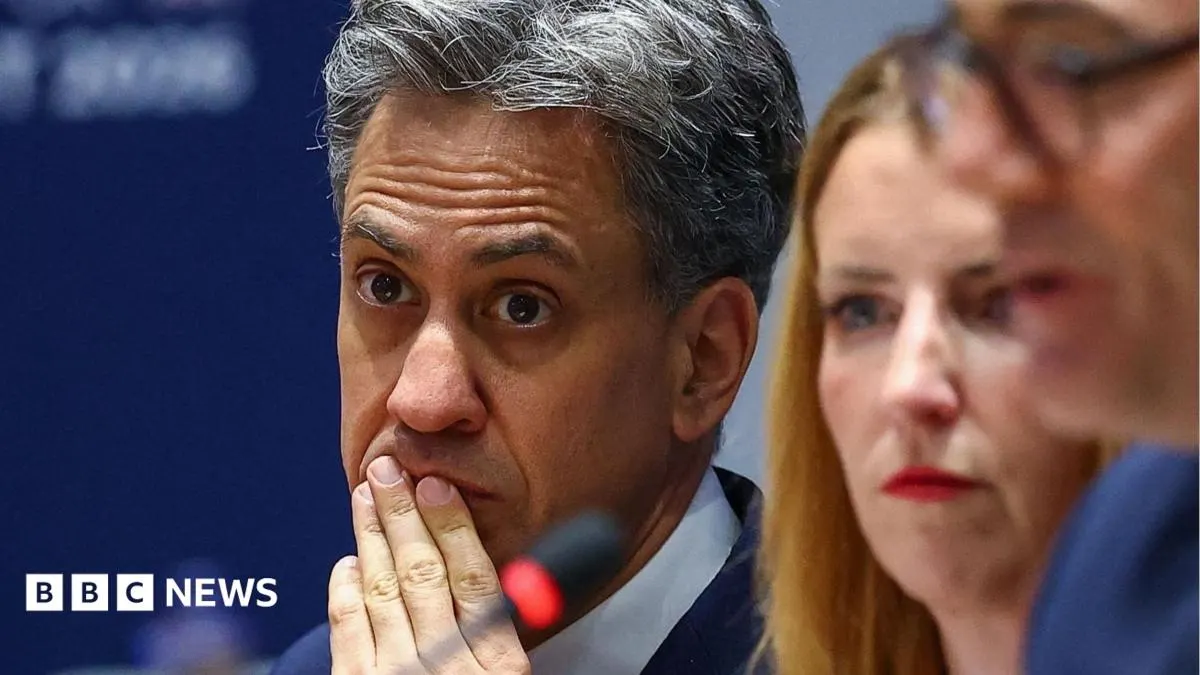
Ed Miliband says the UK’s agreements with the EU on food exports, energy and youth mobility will take effect even if talks over tuition fees for EU students do not produce a separate deal. His comments clarify that the unresolved fees question will not hold up the wider package, which leaders have presented as a step towards closer cooperation.
The deal is due to bring in changes from 2028, including removing most checks on British food exports in return for the UK following some EU rules. Prime Minister Andy Burnham said the Treasury estimates the agreement could boost the UK economy by up to £17bn a year, a figure challenged by Conservative leader Kemi Badenoch. Miliband said there would be no new contribution to the EU budget and that future options, including closer ties, would be considered.
- Sources
- 2
- Outlets
- 2
- Left · Centre · Right
- 0 · 1 · 1
In short
- EU agreements will proceed without a tuition fees deal.
- Food export changes and youth mobility are part of the package.
- The economy could gain up to £17bn a year, Burnham says.
How this story developed
- 19 minutes ago Miliband added that rejoining the EU was among future options for consideration, while the government would maintain its current red lines.
- 24 minutes ago Ed Miliband said the UK’s EU agreements on food exports, energy and youth mobility would proceed from 2028 even without a separate tuition-fees deal, with no new UK contribution to the EU budget; Andy Burnham cited a potential £17bn annual economic boost, disputed by Kemi Badenoch.
Where outlets differ
Centre outlets 1
Only here: agreements, proceed, regardless, tuition, talks
Right-leaning outlets 1
Only here: confirms, labour, tear, brexit, rejoin
Every side used: miliband
Headline columns compared word for word; nothing in them is AI-written.
Steelman: both sides, in good faith
The strongest fair case each way — we don't pick a winner.
The case for
Supporters can argue that putting the food, energy and youth mobility arrangements into effect independently of tuition-fee talks protects practical benefits for businesses and young people from a separate dispute. They may see cooperation on food standards and energy as worthwhile if it reduces trade friction and strengthens the UK’s relationship with Europe, while retaining the government’s stated limits on budget contributions and membership.
The case against
Critics can argue that the package should be judged against its costs and obligations, including adopting some EU rules, rather than presented chiefly as a route to closer cooperation. They may also question the projected economic gains and contend that proceeding without agreement on student fees leaves an important issue unresolved for EU students and universities.
Explained simply
The UK left the EU in 2020, changing the rules for trade and cooperation between them. Since then, the two sides have negotiated agreements in areas including food exports, energy and travel for young people.
The latest package would reduce checks on many British food exports, with the UK agreeing to follow some EU rules from 2028. It also includes a youth mobility scheme, which would allow eligible young people to live or work across borders for a limited time.
The UK and EU are also discussing tuition fees for EU students, a separate issue from the wider package. The agreements matter because they could affect trade, opportunities for young people and the UK’s economic relationship with its largest nearby trading partner.
Coverage · 2 sources
Bias meters
From 2 rated sources.
Read the full article at the source →
Originally published by BBC Politics as “Deal with EU not dependent on tuition fees agreement, Miliband says”.