Democrat darling issues lukewarm apology for his outrageous comment when Muslim terrorist attacked Michigan synagogue
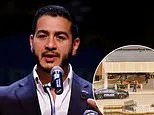
Michigan Democratic Senate candidate Abdul El-Sayed has apologised for controversial comments he made following a terrorist attack on a synagogue in his state earlier this year. Speaking at a Michigan Democratic Jewish Caucus event, the 41-year-old admitted he "made a mistake" and should simply have condemned the attack rather than offering additional commentary, which many felt appeared to excuse the perpetrator's actions.
The attack took place on 12 March at Temple Israel in West Bloomfield Township, allegedly carried out by Ayman Mohamad Ghazali after he lost several family members in an Israeli strike in Lebanon; no one was killed. At the time, El-Sayed, who is Muslim, condemned the attack but also said "hurt people hurt people", a remark critics said seemed to justify the assault by referencing the alleged attacker's own losses. Roughly six months on, he has now said his comments "may have been misconstrued" and apologised to anyone who found them hurtful. El-Sayed, who beat Rep. Haley Stevens in the Democratic primary, is now preparing to face Republican Mike Rogers in the Senate race.
- Abdul El-Sayed apologises for remarks after Michigan synagogue attack
- Original comments seemed to excuse attacker, sparking backlash
- El-Sayed now faces Republican Mike Rogers in Senate race
New here? Start with this
Michigan Democrat Abdul El-Sayed, a candidate for the US Senate, is running to succeed retiring Senator Gary Peters. Earlier this year, on 12 March, a synagogue in West Bloomfield Township was targeted in an attack that authorities have linked to the war in Gaza and Lebanon, though no one was killed. El-Sayed, who is Muslim, condemned the attack at the time but also made comments that some Jewish community members felt seemed to explain or partly excuse the attacker's motives.
El-Sayed, a doctor and former Michigan health official, has built a national profile as a progressive figure and won a competitive Democratic primary earlier this year against Representative Haley Stevens. He now faces Republican Mike Rogers in the general election for the Senate seat.
The row matters because it touches on sensitive questions of how political figures respond to violence linked to the Israel-Gaza conflict, and because it could affect El-Sayed's standing with Jewish voters and donors in a competitive swing-state Senate race.
Both sides, in good faith
The strongest fair case each way — we don't pick a winner.
The case for
El-Sayed’s apology may be seen as an effort to take responsibility for words that caused pain, while clarifying that he meant to condemn the attack rather than excuse it. His original remark may also have been intended to acknowledge how grief and trauma can shape people’s actions, without diminishing the need to hold an attacker accountable.
The case against
Critics may argue that after an attack on a synagogue, the priority should have been an unambiguous condemnation, and that linking the attacker’s actions to personal loss risked sounding like justification. They may also find the apology incomplete because saying the remarks “may have been misconstrued” can seem to place responsibility on listeners’ interpretation rather than squarely acknowledging the harm.