Politics news and discussion on TalkFuse.
Dems eye 56-seat Senate majority as blue tsunami washes out GOP
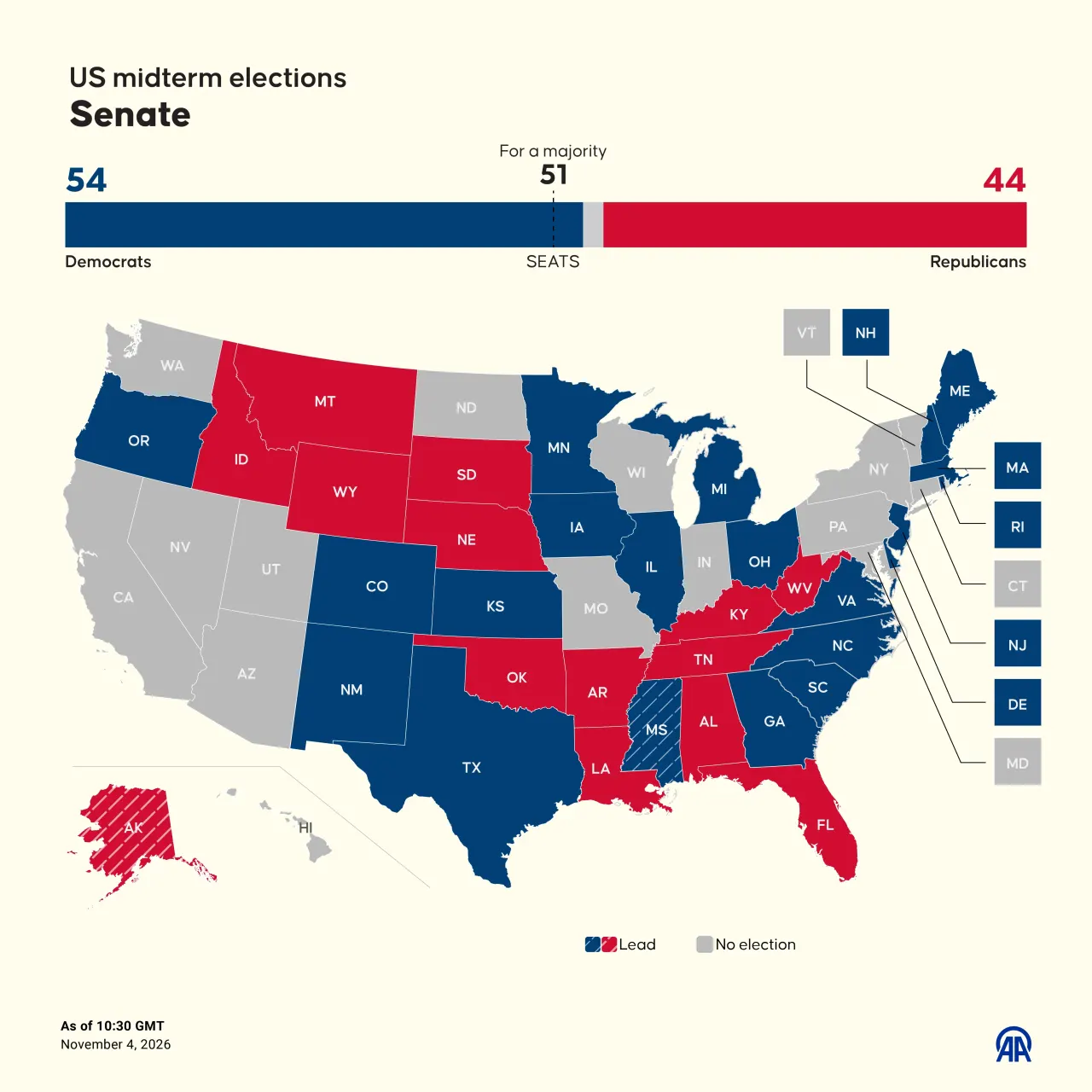
Democrats are projected to take control of both chambers of Congress after sweeping a series of races, in a major setback for President Trump and Republicans. The result reverses the Republican sweep of 2024 and could give Democrats a substantial mandate to challenge the administration’s agenda.
NBC projected Democrats could win 258 House seats to Republicans’ 177, potentially making Hakeem Jeffries Speaker. Democrats have secured 54 Senate seats after flipping seven Republican-held seats; they could reach 56 if they win close contests in Alaska and Mississippi. In Alaska, Mary Peltola led Dan Sullivan by 626 votes with 74% counted, but ranked-choice voting and outstanding ballots mean the result may take weeks. In Mississippi, Scott Colom led Cindy Hyde-Smith by 65 votes with about 96% counted.
In short
- Democrats are projected to control both chambers of Congress.
- They have secured 54 Senate seats, with two races unresolved.
- The House projection gives Democrats a possible 258 seats.
Steelman: both sides, in good faith
The strongest fair case each way — we don't pick a winner.
The case for
Democrats could argue that flipping both chambers, and potentially reaching 56 Senate seats, gives voters a clear mandate to check the Trump administration and pursue their priorities. The scale of the projected House advantage would also let them advance legislation and scrutinise the executive more effectively.
The case against
Republicans could argue that narrow, unresolved Senate races do not yet establish the size of any Democratic mandate, and that election results alone do not settle which policies voters endorsed. They may also contend that a large Democratic majority could sideline Republican voters and weaken scrutiny of the other party’s agenda.
Explained simply
The Senate and House are the two chambers of the US Congress, which makes federal laws and oversees the government. Senate seats are contested by state, while House seats are divided among districts; control of either chamber can affect which bills advance and how closely the president’s administration is scrutinised.
The president is a Republican, and Republicans held both chambers after the 2024 election. Democrats are the opposition party, led in the House by Hakeem Jeffries; in the Senate, their ability to pass legislation can depend on party unity and the support of other senators. A change in control could therefore shape the administration’s ability to advance its plans, as well as Congress’s oversight of them.