Desperate Zack Polanski insists Greens have ‘principled’ stance on Palestine despite fury at ‘anti-Semitic’ motion declaring ‘Zionism is racism’
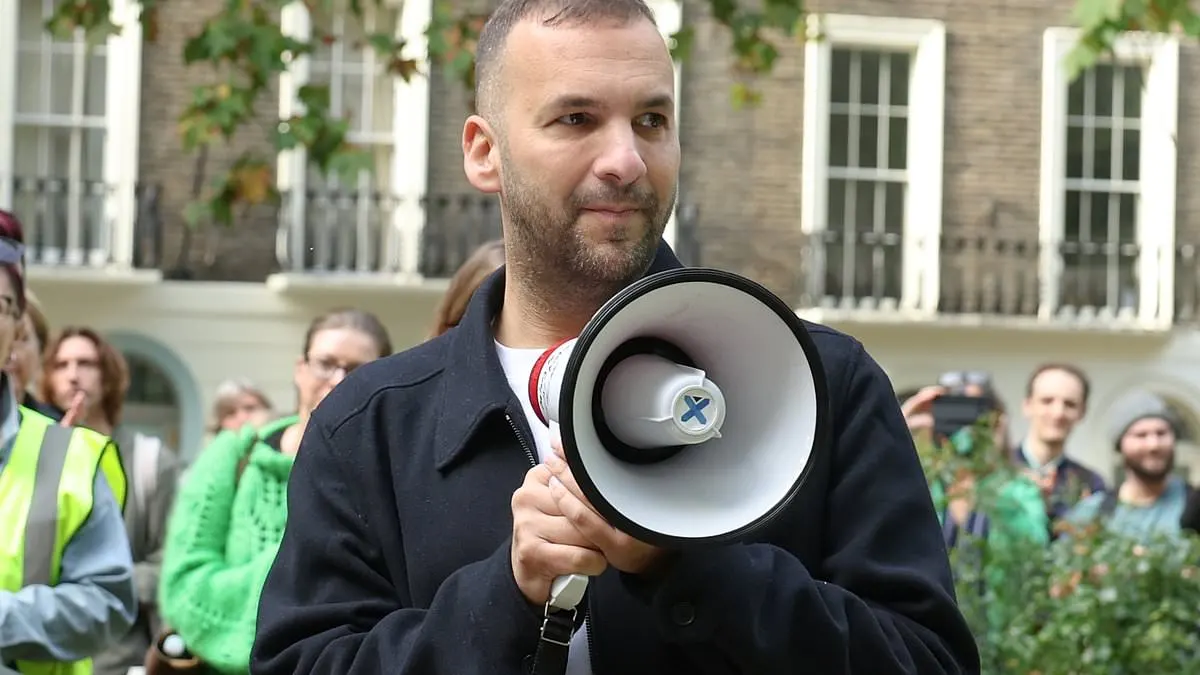
Green Party leader Zack Polanski said he would protect the rights of Palestinians and British Jews after party members voted to define the Greens as anti-Zionist. The motion has prompted accusations of antisemitism and calls for investigations, intensifying scrutiny of how the party distinguishes criticism of Israel from hostility towards Jewish people.
At the party conference in Brighton, 1,022 members backed the motion and 813 opposed it. It says Zionism should be treated as a form of racism and supports a single democratic Palestinian state across historic Palestine, with Jerusalem as its capital. Labour MPs have asked Sussex Police and the Equality and Human Rights Commission to examine the conference events; Polanski said the party should welcome people of all faiths and backgrounds.
- Polanski pledged to protect Palestinians and British Jews.
- Greens backed an anti-Zionist motion by 1,022 votes to 813.
- Labour MPs called for police and equality watchdog scrutiny.
New here? Start with this
The Green Party of England and Wales, a progressive political party, voted at its conference to define Zionism—the political movement supporting a Jewish state in the Middle East—as a form of racism. This vote touches on a sensitive and much-debated distinction in contemporary politics: the difference between legitimate criticism of Israeli government policy and antisemitism, which is hostility towards Jewish people.
The party is divided on the issue. Whilst a majority of those voting supported the motion, a substantial minority opposed it, and the move has prompted accusations of antisemitism from outside groups and calls for official investigations. This disagreement reflects broader tensions about whether it is possible to criticise Israeli policy without being antisemitic, or whether certain framings cross an important line.
The party's leader, Zack Polanski, has responded by emphasising that the Greens are committed to protecting the rights of both Palestinians and British Jews, and that the party welcomes people of all backgrounds. The issue remains contested, with ongoing questions about how the party should balance its political positions with protecting against discrimination.
Both sides, in good faith
The strongest fair case each way — we don't pick a winner.
The case for
The motion represents legitimate political criticism of Zionism as a political ideology, which can be subject to democratic scrutiny and debate without constituting prejudice against Jewish people. Supporters argue that one can critique a political doctrine whilst respecting the rights of all individuals regardless of their faith or background, and note that many Jews themselves hold diverse views on Zionism and Palestinian statehood. Supporting Palestinian self-determination and equality is a valid political principle in its own right.
The case against
Equating Zionism—an ideology held by many Jews—with racism creates institutional hostility directed at the Jewish community, even if that is not the intent. Critics argue that the motion blurs the crucial distinction between legitimate criticism of Israeli policy and ethnic or religious prejudice, leaving Jewish people uniquely exposed to institutional judgement of a position many in their community hold. Protecting Jewish people from such institutional discrimination and exclusion is itself a matter of equality and community belonging.